


- 1 What Minimalism Actually Means (And What It Doesn’t)
- 2 Why Small Spaces Feel Overwhelming
- 3 Furniture Strategy: Less, But Smarter
- 4 Color and Materials: How to Expand Space Visually
- 5 Lighting: The Hidden Architecture of Space
- 6 Storage Without Visual Noise
- 7 Zoning Without Walls
- 8 Typical Mistakes in Minimalist Small Space Design
- 9 Typical Mistakes When Decorating Small Apartments
- 10 How Minimalism Changes Everyday Life
- 11 FAQ: Minimalist Apartment Decor for Small Spaces
- 12 Quick Action Plan: What to Do Right Now
- 13 Conclusion
- 14 Sources


Does your apartment feel cramped even when it’s not that small? You clean, rearrange things, maybe even buy storage—but the space still feels heavy.
This is a common problem. And in most cases, it’s not about square meters. It’s about how the space is designed and how your brain perceives it.
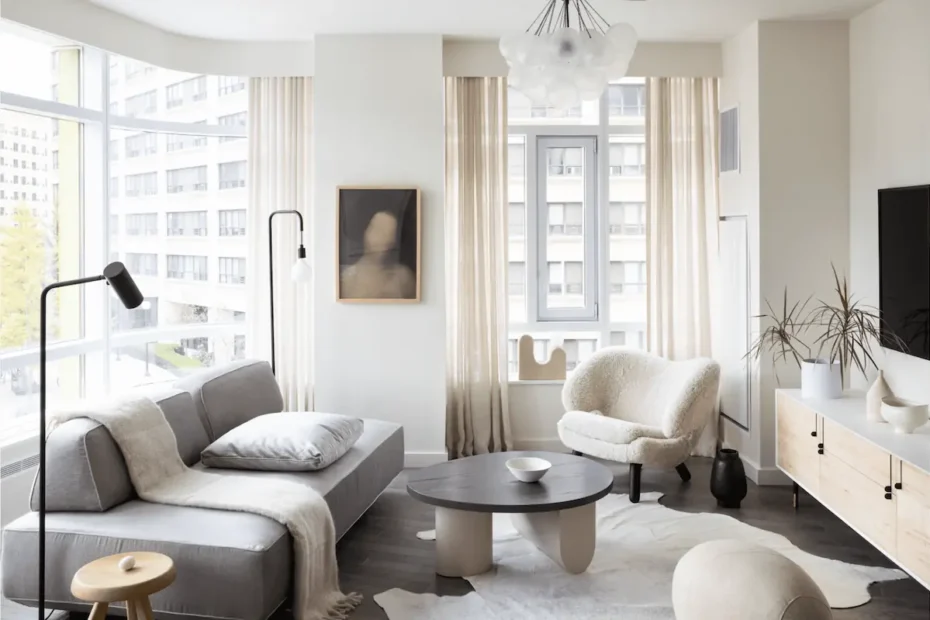
Minimalist apartment decor for small spaces works not because it removes things—but because it removes visual stress. When done right, it changes how a room feels the moment you walk in.
What Minimalism Actually Means (And What It Doesn’t)
Minimalism isn’t about empty rooms or living with the bare minimum. It’s about clarity.
Instead of asking “how little can I live with?”, a more useful question is:
“What truly deserves space in my home?”
In small apartments, every object competes for attention. The more competition, the more tension you feel—even if you don’t notice it consciously.
Core principles of minimalist decor
- Intentionality — everything has a reason to be there
- Visual consistency — fewer contrasting shapes and colors
- Breathing space — empty areas are part of the design
- Functionality — beauty supports everyday use
Why Small Spaces Feel Overwhelming
Sometimes a room feels cluttered even when it’s technically clean. That’s because your brain reacts not just to objects—but to how they are organized.
| What you notice | What’s actually happening |
|---|---|
| The room feels crowded | Too many visual elements compete for attention |
| Low or “heavy” ceiling feeling | Furniture and lines emphasize horizontal space |
| Messy corners | No clear zoning or purpose for areas |
| Dim, closed feeling | Lighting is flat or insufficient |
Minimalist apartment decor focuses on reducing this invisible overload.
Furniture Strategy: Less, But Smarter
One of the biggest mistakes in small apartments is trying to fit everything in. More furniture doesn’t mean more comfort—it often creates friction.
What works better
- Fewer pieces, better quality — avoid filling every corner
- Elevated furniture — visible legs create a sense of openness
- Multi-functional items — beds with storage, foldable desks, modular sofas
Real comparison
| Overloaded setup | Minimalist setup |
|---|---|
| Several small storage units | One integrated storage system |
| Heavy sofa pushed against walls | Compact sofa with space around it |
| Different styles of chairs | Matching, simple seating |
The goal is not to maximize quantity—but to improve flow and usability.
Color and Materials: How to Expand Space Visually
Color is one of the fastest ways to change how large or small a space feels.
Too many contrasting colors break the room into fragments. Your eyes keep switching focus—and the space feels chaotic.
A practical minimalist palette
- Base: white, warm beige, light gray
- Accents: 1–2 muted tones (olive, sand, soft blue)
- Materials: wood, linen, matte metal for depth
“A calm palette allows the eye to move smoothly—this is what creates the feeling of space.”
You don’t need everything to match perfectly. But elements should feel connected.
Lighting: The Hidden Architecture of Space
Lighting is often underestimated. But it directly affects how large your apartment feels.
Common mistake
One central ceiling light.
This creates flat lighting and harsh shadows, making the room feel smaller.
Better approach
- Layered lighting: ceiling + floor + table lamps
- Warm light tones for comfort
- Wall-directed lighting to create depth
Think of light as something that shapes the room—not just illuminates it.
Storage Without Visual Noise
Storage is necessary, especially in small apartments. But visible storage can quickly turn into clutter.
How to keep it clean
- Prioritize closed storage — cabinets hide complexity
- Use uniform containers — avoid visual randomness
- Go vertical — use wall height instead of floor space
Open shelves can work—but only if you control what goes on them.
Zoning Without Walls
In small apartments, adding walls is not an option. But that doesn’t mean you can’t create structure.
Simple zoning techniques
- Rugs to define functional areas
- Different lighting for each zone
- Furniture placement as boundaries
For example, a sofa can separate a living area from a sleeping space without closing it off.
Typical Mistakes in Minimalist Small Space Design
1. Making the space too empty
A lack of personality can make a room feel uncomfortable instead of calm.
2. Ignoring daily habits
If the design doesn’t match how you live, clutter will return quickly.
3. Chasing trends
Minimalism works best when it reflects your lifestyle, not just visual inspiration.
4. Keeping unnecessary items “just in case”
This slowly rebuilds clutter and breaks the system.
Typical Mistakes When Decorating Small Apartments
- Using too many decorative items instead of a few meaningful ones
- Mixing too many styles and textures
- Blocking natural light with heavy curtains or furniture
- Ignoring vertical space (walls remain unused)
These mistakes don’t seem critical—but together they create a heavy, compressed feeling.
How Minimalism Changes Everyday Life
Imagine entering your apartment after a long day.
No visual chaos. No constant need to move things around. Everything has its place.
You spend less time cleaning. Less time searching for things. And more time actually living.
This is the real benefit of minimalist apartment decor: it reduces mental load.
FAQ: Minimalist Apartment Decor for Small Spaces
Does minimalism make a space feel cold?
No. When you use warm materials and soft lighting, minimalist interiors feel cozy and inviting.
How do I start if my apartment is already cluttered?
Start with visible surfaces. Clear them first, then move to storage areas.
Can I still decorate?
Yes. Focus on fewer, larger decor elements instead of many small ones.
Is minimalist decor expensive?
It can actually reduce spending. You buy fewer items, but choose them more carefully.
What if I need a lot of storage?
Use hidden storage solutions and keep visible areas simple.
How long does it take to transform a small apartment?
It depends on your starting point. But even small changes can make a noticeable difference within days.
Quick Action Plan: What to Do Right Now
- Remove 20–30% of items from visible surfaces
- Limit your color palette to 2–3 tones
- Replace one bulky item with a lighter alternative
- Add at least one additional light source
- Define zones using rugs or furniture placement
Conclusion
Minimalist apartment decor for small spaces is not about strict rules or perfect aesthetics.
It’s about creating a space that supports your daily life—visually, physically, and mentally.
When everything has a purpose and the room has space to breathe, even a small apartment can feel open, calm, and comfortable.
Sources
- Marie Kondo — “The Life-Changing Magic of Tidying Up”
- Joshua Becker — “The More of Less”
- Francine Jay — “The Joy of Less”
- Ilse Crawford — Human-centered interior design principles
- Journal of Environmental Psychology — studies on spatial perception and clutter

