


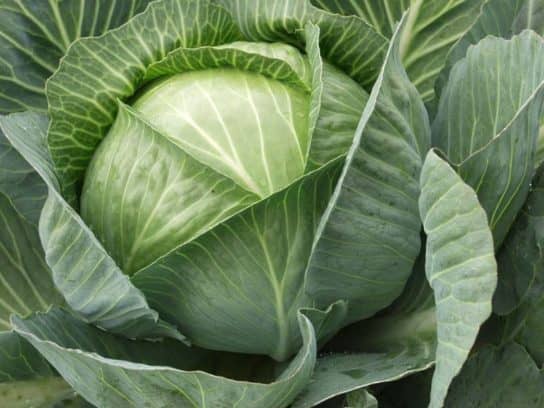


Plants from the cruciferous family include a wide variety of herbs, both annuals and perennials (including shrubs and shrubs). This family is quite voluminous and includes 372 genera, comprising almost 4 thousand species.
These cruciferous flowers got their name due to the shape of the flower – it is formed in a criss-cross pattern of petals and sepals. And this type of flower is typical for all species of the family.
Description of cruciferous
The cruciferous family is a large number of common cultivated plants that are important in agriculture: cabbage, radish, turnip, radish, mustard and many others.
Flowers of this family are distinguished by bright-smelling inflorescences, since most of them are pollinated by insects. And they are all honey plants.
Another significant role of cabbage is that many of the species of this family are distinguished by a high content of vegetable oils (rapeseed is a great example), which are necessary for humans in the food chain.
At the same time, a significant number of cruciferous plants are redundant on agricultural land, i.e. just weeds.
Fruit cabbage plants
Cabbage
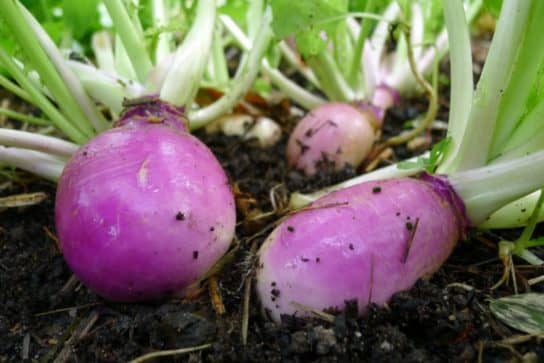
Turnip


Horseradish


Tar


Radish


Radish

Daikon


Turneps
Mustard

Swede


Rape

Ornamental cabbage plants
Alissum

Arabis
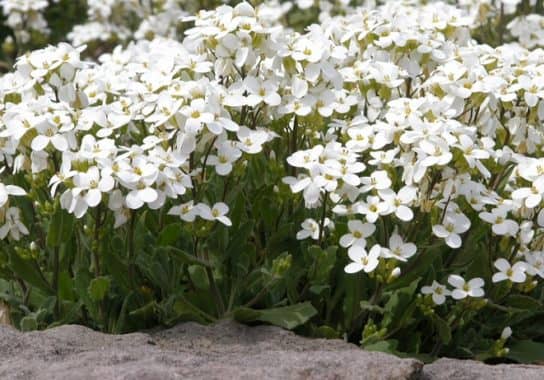

Iberis
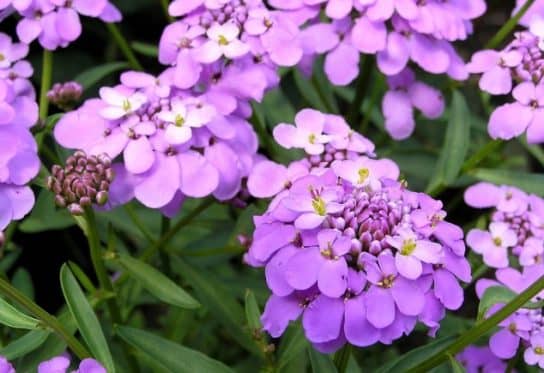

Levkoy

Ornamental cabbage

Signs of a cruciferous
All cruciferous plants have certain characteristics in common. First of all, these are flowers of the same structure – with cruciform petals and a calyx with a certain number of sepals. Usually the flowers form a brush, and after flowering they delight with fruits – pods or pods – and their length cannot exceed the width by significant numbers (no more than three times).
If we take typical representatives of cruciferous plants, then wild radish can be considered as a widespread weed-type herb.
This dicotyledonous plant has all the typical traits of the family: an erect stem covered with coarse hair in the lower level. The leaves are lyre-shaped and arranged alternately, and the large flowers are characterized by a typical structure of the family and a yellow color.
Cruciferous formula
The chart, together with the cruciferous flower formula, contains all the information about the structure of this plant.
Ч4Л4Т2 + 4П1: 4 sepals, 4 petals, 6 stamens (2 + 4) and a pistil.
The numbers indicate the number of elements, and the letters are the first in the name of the parts. From this formula it becomes clear that all plants with such a structure are bisexual, i.e. have both pistils and stamens as the main parts of any flower.
Cruciferous inflorescences
It was the structural features of the plant that gave the name to this family – cruciferous. Moreover, they not only have a corolla and petals consist of 4 parts. The calyx is built in the same way – it has four sepals. As a rule, small flowers of this family form an inflorescence – a brush.
And according to the formula of plants of this family, we can safely say that they are capable of self-pollination, which under normal conditions occurs within not only a plant – a flower.
Although sometimes there is a process of cross-pollination, when the wind or flying insects come into play. And it is insects that can be called the most effective pollinators and pollen carriers. And usually such insects are bees, bumblebees, flies, butterflies and many other species, which are attracted by the color of inflorescences and the smell of honey flowers.
Cruciferous plant leaves
Cruciferous leaves are distinguished by a simple shape, solid or dissected structure: they do not have stipules. At the same time, the leaves of the lower and upper levels do not have similarities in shape and size.
The organs of cruciferous plants (including leaves) have glandular hairs, which form the peculiar bright odor characteristic of these plants. As a rule, the leaves on the stem are arranged in alternating order. Or they can be formed into a root socket.
Plants are characterized by a taproot system, with some plants from this family forming root crops. Due to their properties, crucifers are widely used as honey plants, as medicinal plants, and for decoration (levkoi, mattiola).
Cruciferous plants – video


