


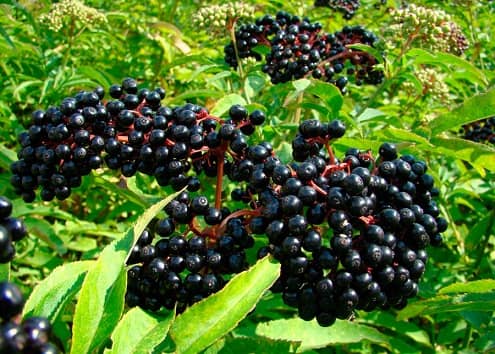


Surely everyone has heard of such a shrub as black elderberry. A perennial plant has many useful properties and is widely used in the field of medicine. Moreover, not only the elderberry fruits are healing, but also the leaves. Most often, the shrub is found in countries such as Russia, Ukraine, North America and North Africa. The plant spreads along roads, it is easy to find in settlements, as well as in coniferous and deciduous forests. Black elderberry is also planted for decorative purposes.
Description and chemical composition
The wild black elderberry belongs to the honeysuckle family. A short, deciduous shrub with branched, brownish-gray stems, opposite, petiolate, pinnate leaves and small, fragrant, yellowish-white flowers. The flowering period of the plant begins in May-June. As a result, black-purple berries appear with 2-4 seeds and a juicy drupe.
Black elderberry is used in cooking, medicine, veterinary medicine. In the food industry, a variety of mousses, pastries, wines, syrups, and jams are made from the berries of the bush. Elderberry is also added to tea. The berries have a pleasant sweet taste and a spherical shape.
Each part of the plant has its own unique chemical composition, which has a beneficial effect on the human body and is able to heal the patient from many ailments. Shrub flowers are rich in glycosides, vitamins, essential oils, tannins, sugar and organic acids. Fresh leaves are a storehouse of carotene and vitamin C. The bark of the plant contains choline, essential oil and phytosterols. Elderberry berries contain carotenoids, tannins, amino acids and mucus.
The healing properties of the plant
The most useful elements of the plant are berries and flowers. They have a diuretic, astringent, diaphoretic, disinfectant effect. The use of black elderberry tea helps suppress various viral and bacterial infections, cure colds and improve overall well-being.
Black elderberry can be used as infusions, decoctions, lotions, which help to improve the condition of the skin with wounds, burns, boils, and also have an analgesic and anti-inflammatory effect. The use of drugs based on a medicinal plant is also indicated for the following diseases:
- arthritis;
- arthrosis;
- rheumatism;
- gout;
- liver disease;
- stomach ulcer;
- chronic constipation;
- kidney disease.
In addition, black elderberries help to remove toxins from the body, replenish vitamins during early spring and autumn, and strengthen immunity. The plant has a decongestant effect, and is also used as an antipyretic and expectorant.
Fresh berries, as well as decoctions, are used as an anthelmintic, used in gynecology for douching, and are suitable for gargling with sore throat and tonsillitis. Preparations containing elderberry root are used for bronchial and cardiac asthma, spasm of blood vessels.
Contraindications for use
Before using medicines based on black elderberry, you should carefully study the contraindications and side effects. Also, keep in mind that the stems of the plant are toxic and contain cyanide, so they need to be used very carefully. Contraindications to the use of black elderberry are the presence of diseases such as diabetes insipidus, ulcerative colitis, Crohn’s disease, as well as pregnancy and lactation.

