


The cat family includes 37 species, including cheetahs, cougars, jaguars, leopards, lions, lynxes, tigers and domestic cats. Wild cats are found in all regions except Australia and Antarctica. Predators live in different places, but more often in forests.
The fur is decorated with spots or stripes, only the puma, jaguarundi and lion of a uniform color. Black or almost black wool is found in individuals of several species. The lynx has a short tail, but in most cats it is long, about a third of the body length. The only cat with a mane is a male African lion. Cats have sharp claws that retract, with the exception of the cheetah. In most felines, the male is larger than the female.
Clouded leopard
It has short legs, a long head and large upper canines that are proportionally longer than any other cat.
Leopard
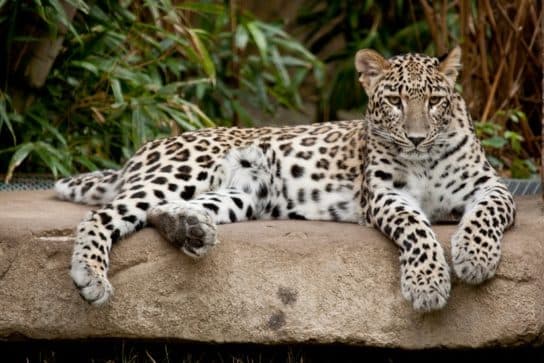

A solitary animal lives among bushes and in forests. It is mostly nocturnal, sometimes basking in the sun.
African lion
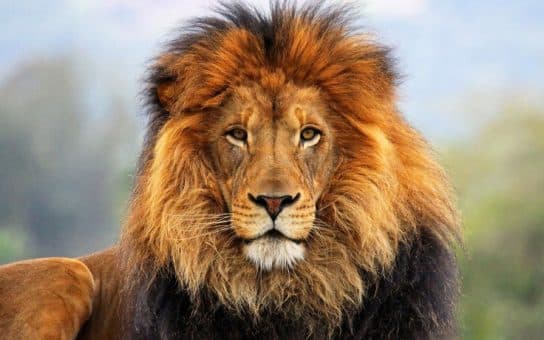

A muscular cat with a long body, large head and short legs. Size and appearance vary between genders.
Ussuri (Amur) tiger
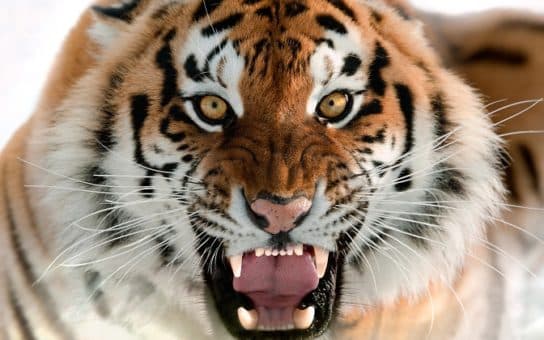
Well adapted to harsh, snowy winters and many different biotopes. Male territories extend up to 1,000 km2.
South china tiger
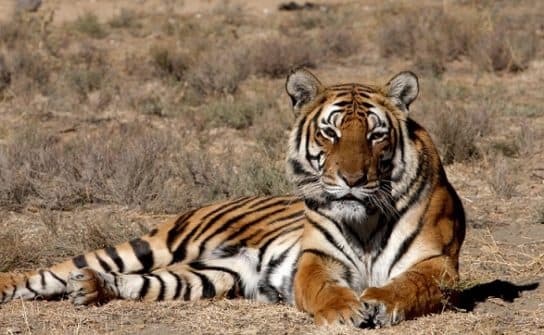

The stripes of this subspecies are especially wide and spaced further than those of other tigers. This gives the fur a bright, impressive look.
Bengal tiger


This is a mammal with thick paws, strong fangs and jaws, a coat with a characteristic pattern and color. Males are larger than females.
White tiger


Fur is a striking feature, the color is due to the absence of the phaeomelanin pigment that Bengal tigers possess.
Black Panther
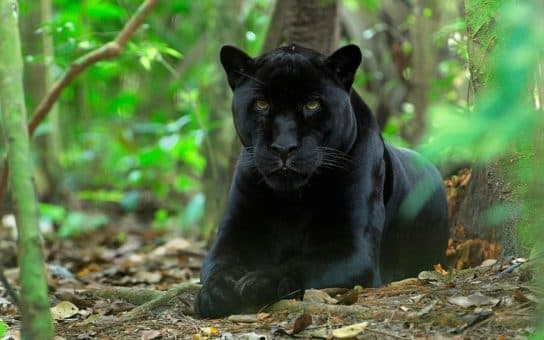
Incredibly intelligent and dexterous animals that humans rarely see in nature as they tend to be very secretive and wary.
Jaguar
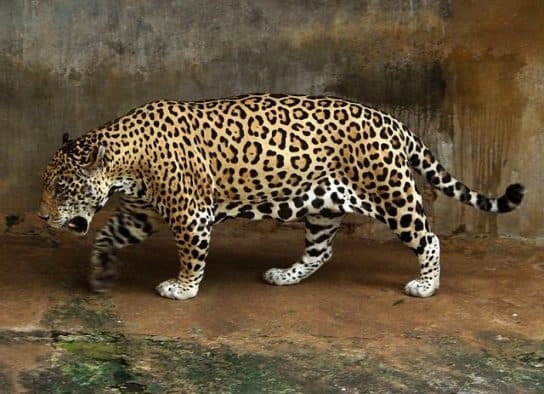

A lone predator hunts from ambush. The name comes from an Indian word meaning “one who kills in one jump.”
Snow Leopard

The coat consists of a dense undercoat and a thick, pale grayish outer layer with dark spots and a stripe along the spine.
Cheetah
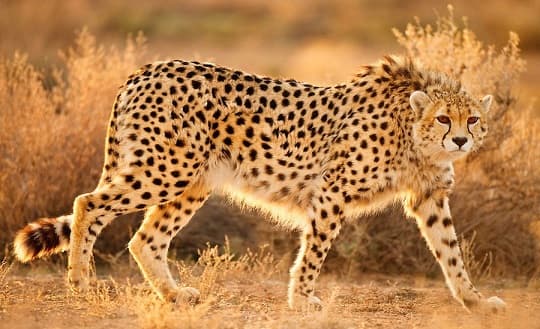

It is active during the day, hunts early in the morning and late in the evening. It consumes prey quickly, so as not to be recaptured by lions, leopards, jackals and hyenas.
Caracal
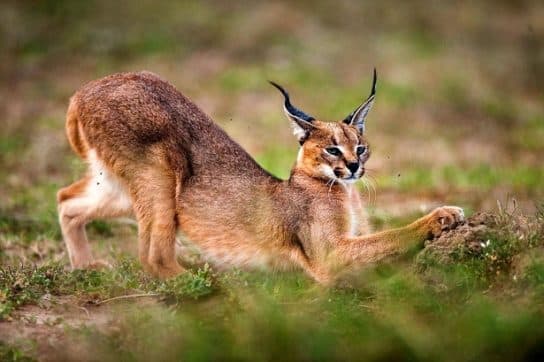

Short-haired cat with reddish brown smooth coat and long tufts of black fur at the tips of pointed ears.
African golden cat
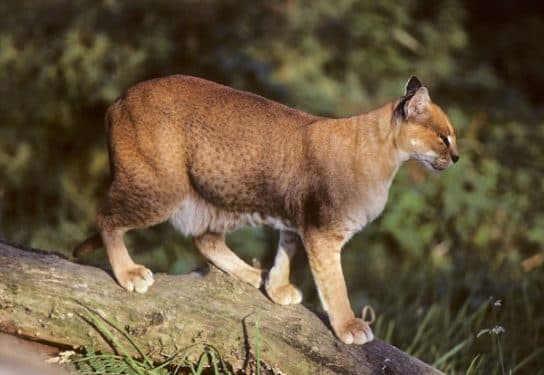

Rodents are generally the most common prey species, but they also eat small mammals, birds and primates.
Kalimantan cat
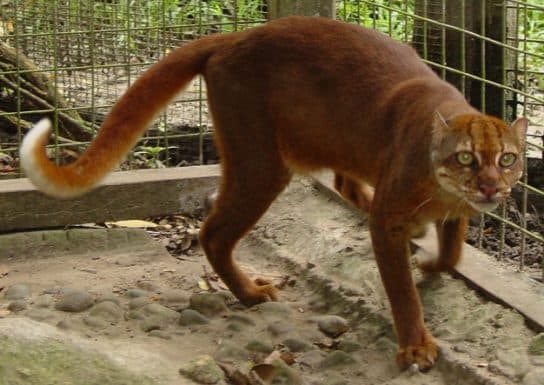

For more than a century, researchers have not been able to catch a live cat. She has bright red fur with white stripes on the muzzle and white under the tail.
Cat Temminck

Carnivorous, it feeds on small prey such as the Indo-Chinese ground squirrel, snakes and other reptiles, muntjacs, rodents, birds and young hares.
Chinese cat
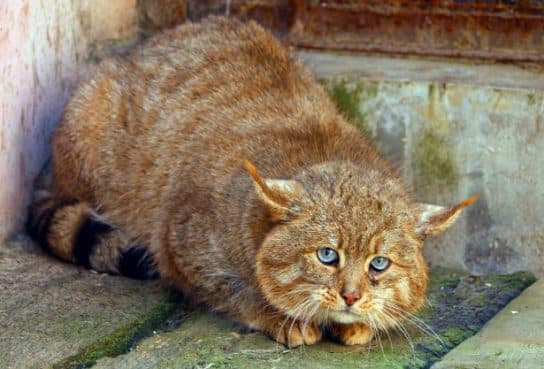

Except for color, the cat resembles a European wild cat. Sandy fur with dark hairs, whitish belly, legs and tail with black rings.
Black footed cat

The native of southwestern South Africa lives in extremely dry conditions. It is one of the most brutal predators – 60% of successful hunting.
Forest cat
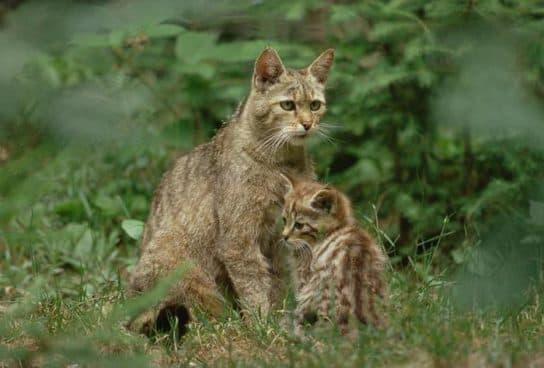

Similar to a domestic cat, but the legs are longer, the head is larger, flatter and a relatively short tail ending in a rounded tip.
Sand cat


The coat is light sandy to gray-brown, slightly darker on the back and pale on the belly, with sparse stripes on the feet.
Jungle cat

The most common in India, Bangladesh and Pakistan, Egypt, Southwest, Southeast and Central Asia, the range expands to the south of China.
Other felines
Steppe cat
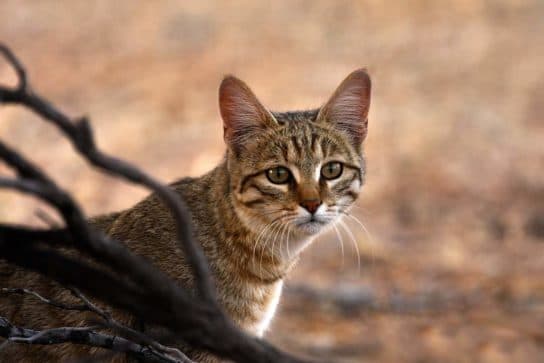
Slowly approaches and attacks, attacking the victim as soon as it is within reach (about a meter). Active at night and at dusk.
Grass cat
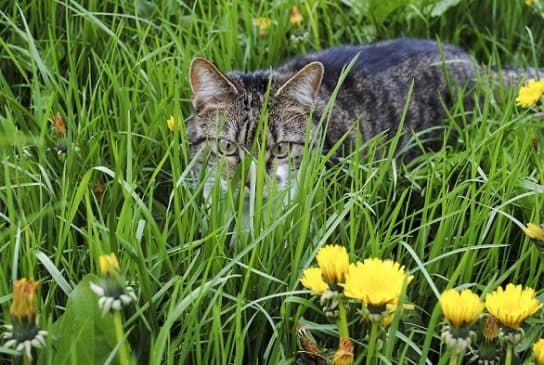

The color ranges from grayish yellow and yellowish white to brown, grayish brown, light gray and silvery gray.
Andean cat
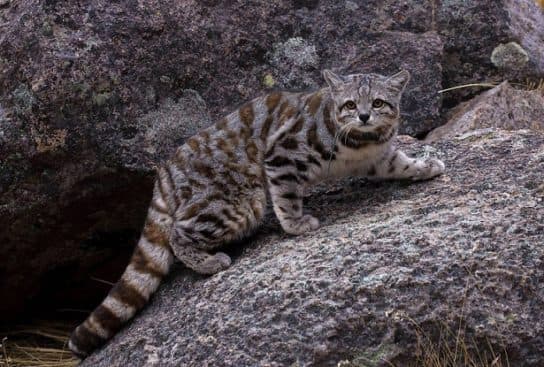

They don’t live in captivity. All Andean mountain cats in the zoos have died. It is estimated that fewer than 2,500 specimens exist in nature.
Geoffroy’s cat
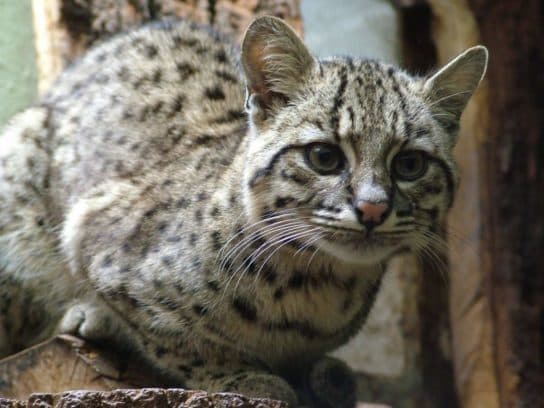

Gray or brown with black markings, 90 cm long, of which the tail is 40 cm. Breeds once a year, litters consist of 2-3 kittens.
Chilean cat


The main color of the coat is from gray and reddish to bright brown or dark brown, with small rounded black spots.
Long tailed cat

Lives in forests, is nocturnal, eats birds, frogs and insects. Claws and paws allow you to navigate trees and along branches.
Far Eastern forest cat
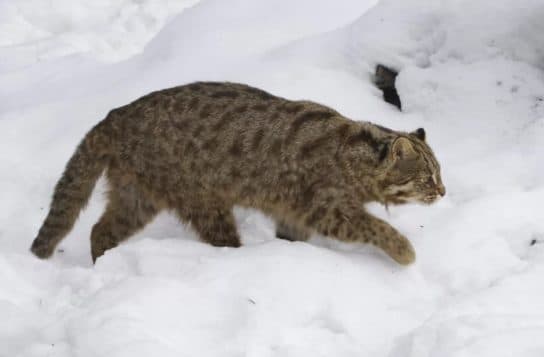
The coat is usually yellowish or reddish brown on top, white on the underside, and is heavily marked with dark spots and veins.
Oncilla

Lives in mountainous, subtropical forests and semi-arid regions. Because of its beautiful fur, the oncilla was hunted in the second half of the 20th century.
The octopus


The short, smooth fur is decorated with elongated spots with black edges, they are arranged in chains. The upper body is light or yellowish brown to gray.
Pampas cat (bell)
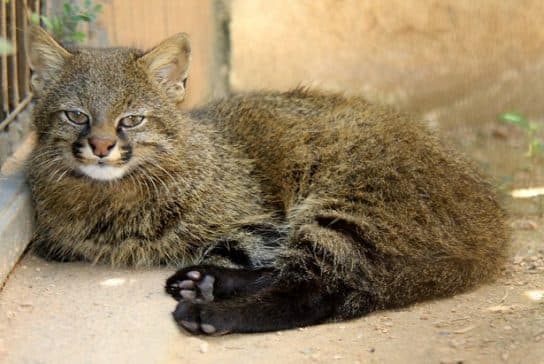
About 60 cm long, including a 30 cm tail. Long-haired fur is grayish with brown markings, which are indistinct in some cats.
Serval

A slender cat with a long neck, small head and large, slightly cupped ears. Adults are 80 to 100 cm long, with another 20–30 cm on the tail.
Canadian lynx
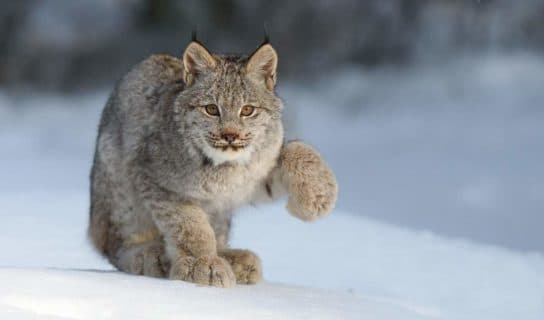

She has a short tail, long legs, wide toes, ear tufts raised high. The fur is light gray, the belly is brownish, the ears and tip of the tail are black.
Common lynx


Considered a secretive creature. The sounds it makes are quiet and inaudible, the lynx remains unnoticed by foresters for many years!
Pyrenean lynx

The basis of the diet is a rabbit. During the winter months, when the rabbit population is small, it preys on deer, fallow deer, mouflons and ducks.
Red Lynx

About 2 times the size of a domestic cat. The dense short coat perfectly camouflages among the trees under the glare of the sun.
Manul

A wide head with high-set eyes and low-set ears squeezes into rocky ledges where rodents and birds live.
Marble cat

The coat is long, soft, from pale brown to brownish gray, large spots with dark edges on the body and small dark spots on the legs and tail.
Bengal cat
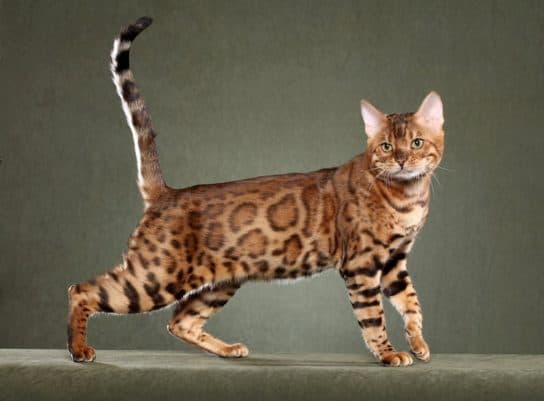

Nothing escapes her attention. The cat loves to play games and learns tricks. It hunts aquarium and pond fish if it lives in a house.
Iriomotean cat

It is found in subtropical forests on Iriomote Island, prefers areas near rivers, forest edges and places with low humidity.
Sumatran cat

Adapted for water hunting: long muzzle, flattened upper part of the skull and unusually small ears, large and close-set eyes.
Spotted ginger cat

One of the smallest cat species in the world, about half the size of a domestic cat. This animal is rarely seen in nature.
Fishing cat


The coat is pale gray to dark brown, with dark spots and veins. Lives near water in the jungle, reed beds and swamps.
Puma
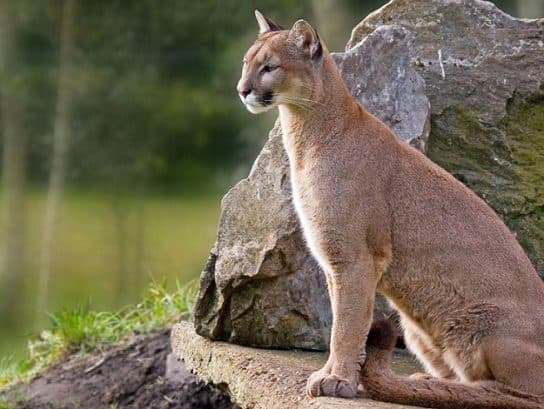

Lives among desert bushes, chaparral, swamps and forests, avoiding agricultural areas, plains and other places without shelter.
Jaguarundi
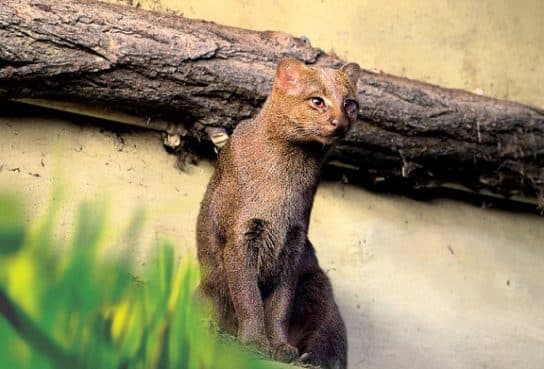
Smooth, long body with small ears, short legs and a long tail. Length from 90 to 130 cm, including tail from 30 to 60 cm.
Central Asian leopard
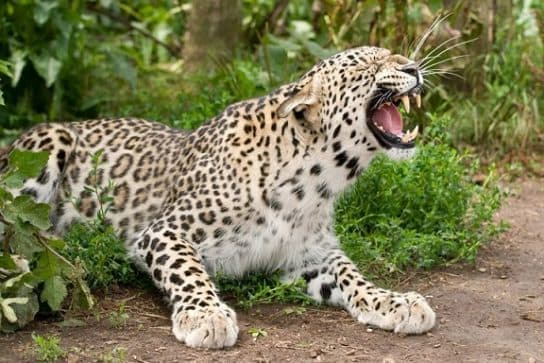
Due to differences in habitat, size and color are difficult to determine. Animals in northern Iran are some of the largest leopards in the world.
Far Eastern leopard
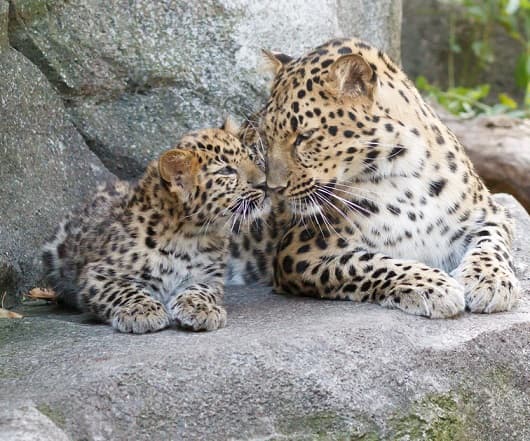

Adapted to cold weather, thick fur reaches 7.5 cm in length in winter. For camouflage in the snow, their coat is paler than that of other subspecies.
Asiatic cheetah
Each cheetah has its own bitmap on its body. Experts from photographs taken by trap cameras identify animals by unique spots.
Video about representatives of wild felines

Conclusion
Big cats are strong, cruel and extremely dangerous when hungry, and attack people. Tigers and leopards are famous cannibals, lions and jaguars also indulge in human flesh.
Some cats’ fur is valuable, especially with contrasting colors and patterns such as spots or stripes. The demand is such that some rare cats are hunted and trapped illegally and are in danger of extinction.
Cats are known for purring when they are pleased and for snarling, howling or hissing when they come into conflict. However, cats are usually silent. They leave claw marks on trees. This is an innate behavior. Man-raised kittens also scratch objects.

