


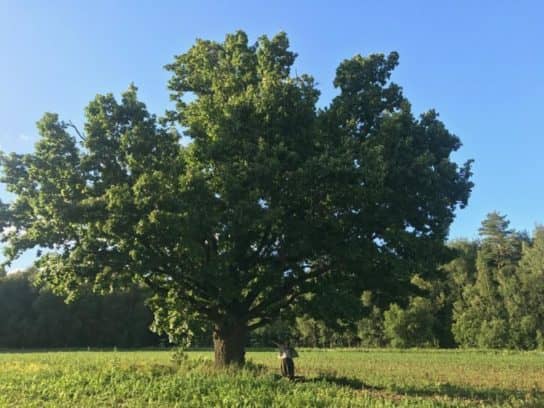
Summer oak, or, as it is commonly called, English, is a typical representative of the beech family: a large tree reaching 40 meters in height, capable of forming whole deciduous forests, called oak forests.
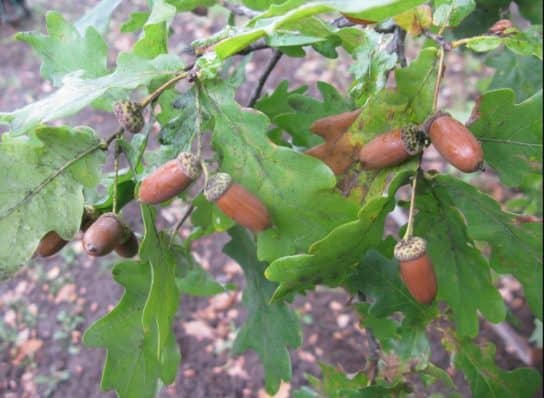
And this type of oak got its name “pedunculated” for rather long stalks, by which this tree can be easily distinguished from any other.
Description
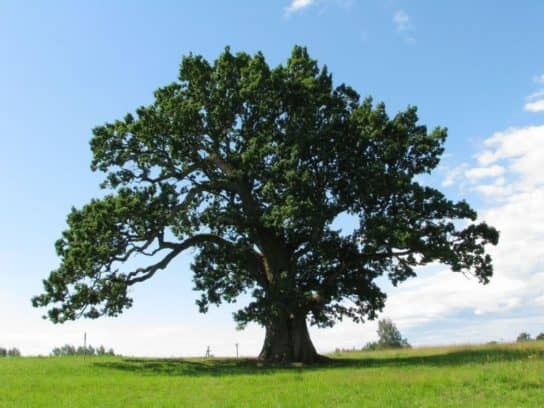
A highly branching plant of large forms, the English oak has a huge crown and a very powerful stem system. This is a long-liver among trees – the age of some known specimens reaches up to two thousand years, although the average life span of a tree is several hundred years.
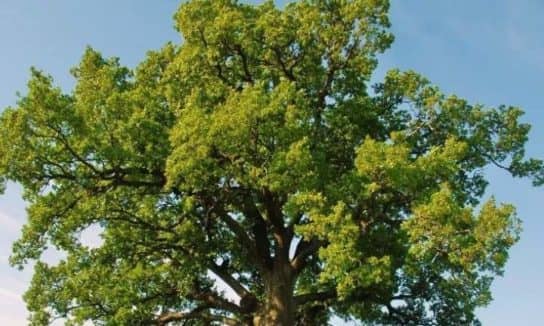

At about the age of about two hundred years, the tree stops growing in height (reaching a size of about 40 meters) and actively increases its growth in width. The oldest and most impressive (according to probable estimates) can be considered the oak, called Stelmuzhsky (growing in Lithuania), which is approximately 2 thousand years old, and the trunk circumference is 13 meters.
The stock of wood in this plant is quite large – it is almost 600 cubic meters in oak. per hectare.
Appearance and structure
The oak is striking in its size – it has a wide-pyramidal and very branched crown, but most of all attention in this tree is attracted by a thick and impressive trunk (usually about 1.5 m in diameter). After 30 years of life, the bark of the plant is covered with deep cracks – if the tree has grown free, then its bark is up to 10 cm thick.
To maintain such a large size, a powerful root system is required: in an oak it consists of a long taproot, and from the tenth year of life, powerful lateral roots begin to develop, which go deep enough into the soil.
This strong support allows the tree to make full use of its substantial soil volume and also gives the tree strength to deal with windblow.
Oak can be safely called one of the main forest-forming species of any broad-leaved forest in Europe and the European forest-steppe. Usually it easily coexists with hornbeam, linden, elm, ash, spruce, birch and many other tree species.

Experts know that this is a thermophilic tree species – therefore, it is almost impossible to find it in the far north or high in the mountains. Can easily suffer from late frosts.
Seeds and leaves
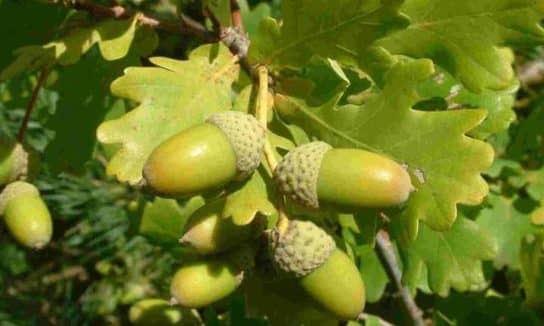
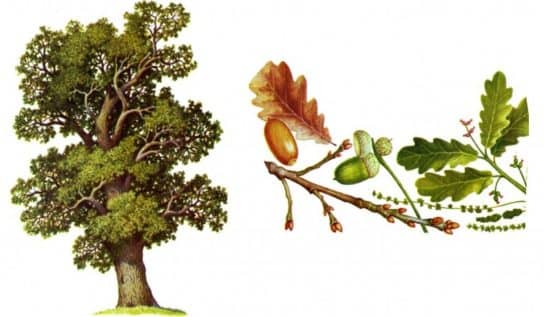
Oak leaves are oblong-obovate, rather massive (up to 15 cm in length) and differ in six pairs of blades (as a rule).
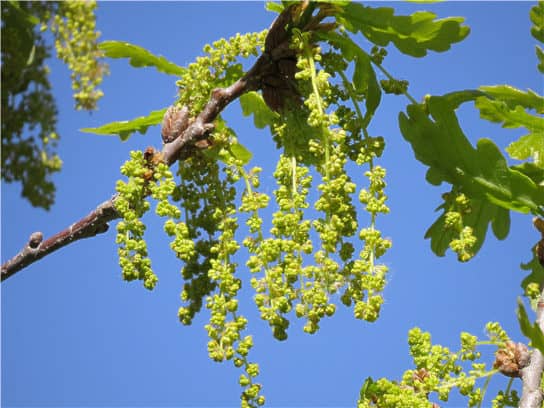
This tree begins to bloom late – at the age of about fifty years, usually in late spring, and has separately hollow flowers. Male flowers form dangling small earrings growing from the axils of the buds, while female flowers are collected in large inflorescences (up to 12 flowers). The fruit of an oak is a small acorn (up to three centimeters) that ripens in the first months of autumn.

Planting and leaving
There are several forms of English oak:
- Early – these plants are called summer oak – such an oak leaves leaves in spring and sheds for winter.
- Winter – such an oak was named winter – this form blooms almost a month later than the summer one, and, accordingly, loses its leaves much later. Moreover, in young oak trees, leaves can remain on the tree for the entire winter.
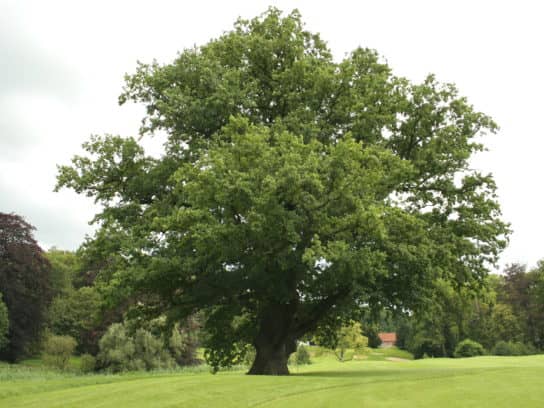

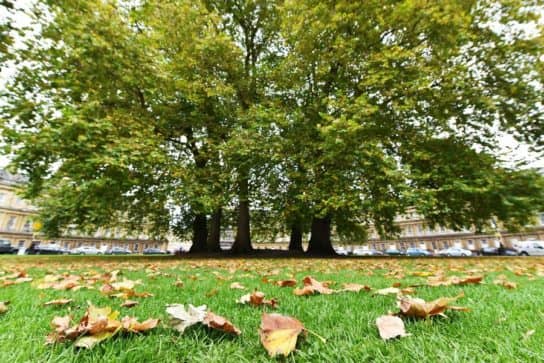
Oak thrives on fertile soil, which does not have a high level of acidity. The plant itself loves the sun – and for an oak, ideally, you need to choose sunny meadows and places. But you should not plant it in open spaces – this tree prefers to avoid low temperatures and wind.
When planting, it must be borne in mind that the oak does not grow very quickly in the early period – therefore, to protect it, it is better to surround it with other plants or shrubs. The tree needs regular watering and weeding at the beginning of its growth.
Pests and diseases
Oak, like any other plant, is susceptible to both pests and diseases:
- Pathogenic fungi – usually a marsupial fungus willingly parasitizes on it – the cause of spotting and crown death.
- Pathogenic bacteria – as a rule, these are several types of bacterial diseases:
- Bacterial dropsy – with this disease, the bark and crown begin to quickly (literally in a few seasons) get wet, becoming covered with brown spots.
- Transverse cancer – this disease forms elliptical growths that only increase over time.
Growing area
Oak has become widespread in Europe and our country – however, it can be found without problems in northern Africa, and even in Asian countries. The northern boundary of the habitat of this plant passes through Finland, and as it moves eastward, it shifts to the south. Moreover, in Siberia, at the moment, this type of oak cannot be found in its natural habitat. In the east, the boundaries of its habitat are the watershed of the Volga and the Urals. This plant has been introduced quite successfully in North America.
In the taiga, this tree is usually found in river valleys, but to the south it willingly forms oak forests and oak forests with an admixture of other tree species. In the steppe zone, it can be found in ravines and gullies.
Interesting Facts
As a rule, the lifespan of an oak tree is quite impressive – about four hundred years. But sometimes there are serious centenarians – this species is included in the Red Book and marked with the LC status, which means that it is currently under the least threat.

Among the representatives of this species, there are many plants that have received their own names and have their own history. These are the Kaiser’s Oak, and the Tsar-Oak, and the Chapel Oak, and Tamme-Lauri, and the Major Oak from the famous Sherwood Forest. Such trees have lived a long life – for example, the Grunwald oak in the Kaliningrad region has lived for more than 8 hundred years. But the famous landmark of Bulgaria – the Granite Oak – has been around for almost two thousand years.
This tree is distinguished by an extensive scope of use and application – it is actively used in field-protective breeding, and in anti-erosion and forest reclamation purposes, and in construction (including green), and in landscape design of parks and other forms.
Other properties of common oak are also widely known, among which the following can be distinguished:
- medicinal;
- feed;
- honey-bearing;
- dyeing and tanning;
- food;
- phytoncidal;
Many parts of this tree are used for medicinal purposes and homeopathy – the oak has been known since ancient times for its anti-inflammatory and astringent properties, sedative and hemostatic properties.
It is customary to use decoctions and various tinctures on parts of oak for a variety of diseases: colic, peptic ulcer, diarrhea, bleeding, varicose veins and many others. Oak bark is often used as a remedy for hemorrhoids, incontinence, eczema, frostbite or burns. It is impossible to do without such a tincture and with bleeding gums or the presence of an unpleasant odor from the oral cavity. And in order to strengthen the immune system, traditional medicine recommends using baths with the obligatory inclusion of oak extract.
Oak wood is recognized by many as an excellent source of the best tanning agents – for this it is customary in the industry to use the bark of very young trees – not older than 20 years. As a rule, in the tanning industry it is bark that is used as a tanning material (it gives an amazing effect), but tanning extracts are usually obtained from oak wood.
As a rule, it is customary to use woodworking waste for these purposes – their amount in normal cases is at least 20 percent.
And, since oak boasts more than a significant mass of wood, it is this tree that is the main (if not the main) source in the production of tannins.
It is the wood of ordinary oak that is usually used in construction as a decorative and phytoncidal agent, if necessary, to create a natural landscape, alleys, parks, suburban areas and other territories. For this purpose, a wide variety of decorative forms of oak were bred – including those with a pyramidal crown, the foliage of which can last almost a month longer than that of an ordinary plant.
Video about pedunculate oak


