


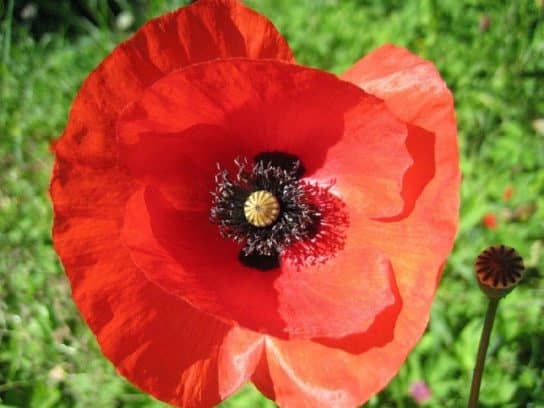


In our world, there are a huge variety of wild plants that can be useful to humans or cause harm, ranging from ordinary and minor damage to death, if not taken timely. Many of the plants that grow in the wild are used for medical applications, and not only in folk.
Poppy
Differences from cultivated species
Wild plants are unpretentious to the soil and do not need care. Where the seed falls, a sprout will appear there, and over time a full-fledged specimen will grow. With cultivated plants, everything is more difficult, because they need careful care, they are very picky about the soil, temperature around, lighting and other factors that have to be constantly monitored. Among other things, getting rid of wild-growing crops is much more difficult, because they grow in large quantities and try with all their might to dig their roots into the ground in order to avoid death.


Meadow daisy
Life forms classification
Any plant species has many life forms and classifications in which they are described. But in our time, the lists of Serebryakov and Raunkier are considered the best and most recognized. Both scientists agreed that there are five basic forms in the world, and all the rest are derivatives:
- Therophytes are plants without buds. They begin to wilt and die by the end of the flowering season. (Poppy, buckwheat, chamomile, etc.)
- Cryptophytes are shoots, the buds of which are located at a rather great depth. (Potatoes, water lilies, lilies of the valley, tulips, etc.)
- Hemicryptophytes – the depth of the location of the kidneys is small, usually on a par with the ground or slightly lower. (Strawberry, dandelion, periwinkle, etc.)
- Hamefites – the roots of these plants and their buds are located just above the ground, do not go into the depths. In winter, they are covered with a small layer of snow. (Cranberries, lingonberries, blueberries, etc.)
- Fanophytes – this form mainly includes trees, their buds are located high above the ground.


Prickly thistle
Edible plants
It is worth treating the collection of wild plants with care, because instead of something harmless, a specimen may come across that will poison a person. But there are quite a few edible species:
Run away. Shrubs, the leaves of which are edible and are somewhat similar in appearance to mint.

To dream
Burdock. Usually, young shoots are consumed, since the old ones lose their taste. The roots can be eaten in any form, whether raw or fried. You should be careful with burdock, because in large quantities it can poison the body.


Burdock
Ivan tea. Sprouts widespread in the CIS, which can be eaten boiled. The roots are sweet, so they are often added to herbal teas instead of sugar.


Ivan tea
Rogoz. It is rarely eaten, but still it belongs to edible plants. The rhizomes are good either boiled or toasted.


Rogoz
Dandelion. The most common flower that everyone has seen. The leaves are bitter, so it is best to pour boiling water over them in advance.


Dandelion medicinal
Cuff. A shrub with edible foliage.


Cuff
Sagebrush. It is not usually used as food, but it can often be found in seasoning, since the leaves of wormwood have a peculiar bitterness.

Sagebrush
Wheatgrass. During the war, it was a frequent snack for refugees. It can be eaten raw or cooked.

Wheatgrass
Troll flower. It has poisonous roots, which in no case should be consumed, but young buds have a rather bright taste.


Troll flower
Sweet naked. It has a sweetish and edible root.


Sweet naked
Goose foot. A plant every part of which can be eaten, be it root, shoot or leaves.


Goose foot
Shepherd’s bag. Has edible leaves.


Shepherd’s bag
Common plantain. One of the most common specimens of the world’s fauna, it can be found in almost every cluster of shrubs. It is used in food as a seasoning, usually it is served with sorrel.


Common plantain
Sorrel. A flower known to everyone, the leaves of which can provide aroma and memorable taste to any dish.

Sorrel
Edible clover. It is commonly used as a condiment and also added to tea. Very nutritious, which is why it is added to soups as well.


Edible clover
Poisonous plants
Due to the prevalence and attractive appearance, quite a lot of poisonous plants can be caught by an unknowing person on his way. Not everyone wants to understand what surrounds them, because of which they can not only get poisoned, but also die, because the poison of some wild plants is much worse than the poison of animals. The list is extensive, but you should familiarize yourself with each of its representatives:
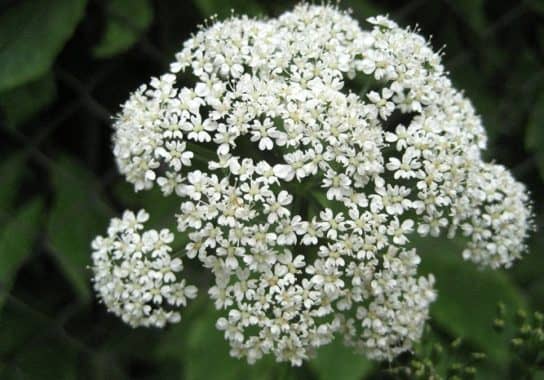
Meadow parsnip. It has a yellow color and grows in the shape of an umbrella. The danger lies in the juice and the finger, which contains substances that affect the skin. The psoralens found inside the stems and on the buds of parsnips increase sensitivity to sunlight, which can result in many burns and blisters. The most dangerous period is considered to be the peak of flowering, which occurs at the end of summer.


Meadow parsnip
Sosnovsky’s hogweed. In appearance, it is similar to dill, but has gigantic dimensions: its stems reach three or even four meters in height. Juice is no less dangerous than that of parsnips – it also deprives human skin of protection from the sun’s rays. Burns of varying degrees and blisters appear on the affected areas, and it is not necessary to be in the heat to receive injuries, it is enough just to go out into the sun. Smaller specimens are considered harmless, and those that are similar in size to small shrubs 20-30 centimeters high are eaten. It is from this plant that the name of the beloved by many dish – borscht – has gone.


Sosnovsky’s hogweed
Buttercup. You should not judge something based only on its name or appearance. Buttercups are beautiful, catch the eye from afar, but its juice has a detrimental effect on the skin – it causes quite severe itching. If the pollen of the flower enters the throat, then the person may have a cough.

Buttercup
Dream herb. People may call it a lumbago. Outwardly, it is similar to a buttercup, in its poisonous properties it is also not very different from it – it also causes irritation, coughing and various inflammations.

Dream herb
Poisonous oak. The foliage of such a plant is glossy, saturated with juice and attracts the eye of anyone who passes by. But the poisonous oak itself is quite dangerous, its leaves contain urushiol oil, which causes severe consequences for allergy sufferers, up to and including numbness.


Poisonous oak
Delphinium. Often referred to as larkspur, it usually occurs in rural areas. Another insidious plant belonging to the buttercup family. In external characteristics, it does not resemble its brother at all from the word; rather, on the contrary, it is the complete opposite of any buttercups: the buds are blue or purple, the stems are oblong and their height can exceed the growth of an average person. Contact with this flower has consequences similar to touching stinging nettles. Because of its beauty, it is also used as an ornamental plant, but work with it must necessarily take place with gloves and without the presence of children.


Delphinium
Ash or incombustible mound. Many inflorescences of a beautiful shape and bright colors form a slender bush. Ash trees are often used as decorations for gardens. A special feature from other shrubs is the release of essential oil in large quantities. This occurs primarily when the seed is ripe. The ash tree got its second name precisely because of this property – by holding a match to the sprouts that are just making their way through the ground, you can see the flashing of air in the area, although the individual itself is not scorched. Burning bush pollen can cause severe burns, which appear only after a while.


Ash or incombustible mound
Castor oil plant. One of the key sources of castor oil. But in order to extract oil and not suffer from numerous toxins, the plant undergoes a thorough steam treatment. Touching such shrubs will not carry consequences, but a long stay next to untreated specimens contributes to the development of severe problems with the pulmonary tract. In extreme cases, a person can be fatal.

Castor oil plant
Five-leaf grapes. A fairly common type of wild grape that is found near dachas or villages. It is also called girly. It is not suitable for use, since the taste immediately indicates a potential danger. You won’t be able to get poisoned with just a couple of berries, but eating a few handfuls can cause inflammation of the larynx.


Five leaf grapes
Buckthorn is fragile. It is most often found in the forest and is similar to bird cherry, therefore, special attention should be paid to forest wild plants, because completely harmless species have many poisonous twins.


Buckthorn fragile
Benefit for health
It would seem that in the current realities there are medicines for most diseases, artificial vitamins that replace natural ones, many ways to abstract and stop being dependent on the reserves of wild plants. In addition, breeders have bred many species that are both decorative and suitable for treatment, which means that it is no longer so necessary to turn to the wild? This is partly true, but without many wild ones it was impossible to reach the current level of medicine. The main and most common plants for treatment are:
- Plantain. It grows literally everywhere, from courtyards to roads. It breaks through asphalt, tiles, sprouts where it is not welcome at all. But plantain is considered the most readily available and easy-to-use remedy for cuts, bruises, and other minor wounds.
- Dandelion. Yes, it would seem, just a yellow flower, which everyone has bothered for a long time. But in folk medicine it is still considered almost the “elixir of life.” Dandelion roots are an essential ingredient in the production of blood-purifying medicines. He also copes very well with jaundice and insomnia.
- Nettle. A weed that is widespread and boring for every person, be it a resident of a city or a small village. Grows everywhere. People immediately pull out the nettle along with the root, but they do not even think that this particular weed is rich in carotonin and vitamin C. Just like dandelion, it promotes better blood purification, can help with anemia and liver diseases. Treating skin conditions also involves the use of nettles.


Nettle
Video about wild plants


