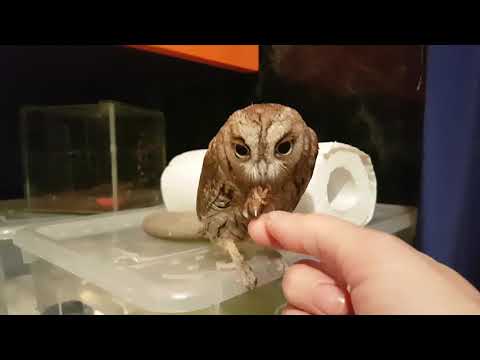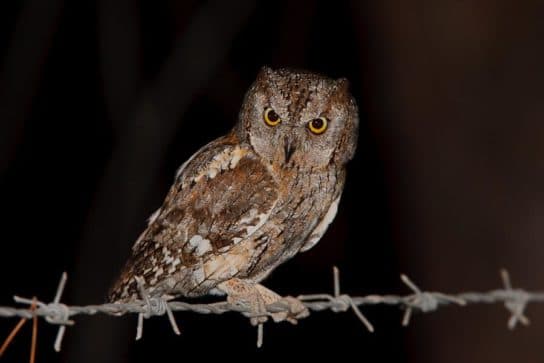


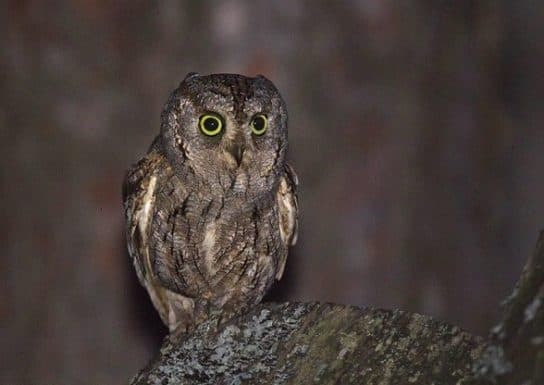
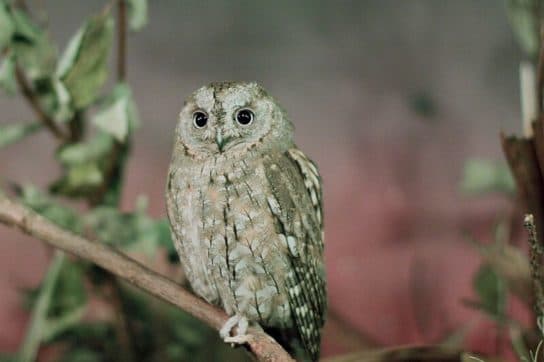
The scops owl is a representative of the family of ordinary dreams. Like its relatives, you will not see a scops owl in the daylight. The bird is active in the dark. The owl earned the nickname “scopsie” not due to the reputation of a dormouse, but for its characteristic cry, reminiscent of the word “sleep.” At night, the bird can be recognized precisely by this sound. The owl is very tiny, ranging in size from 15 to 20 centimeters, and weighing up to 120 grams. This species can be perfectly camouflaged in the wild, and all at the expense of plumage. The color of the owls is dark brown with a gray pattern, reminiscent of a tree trunk.
Owls’ eyes are very large and usually have a bright yellow iris. The scops owl’s beak is hidden in feathers. The main difference between a female and a male is in size, otherwise it is rather problematic to distinguish them. Females are always much larger than males. Feather ears are developed in both sexes. This owl is increasingly seen as an exotic pet.
Nutrition
The owl is an excellent predator. Despite its small size, the bird can hunt mice, lizards and frogs. But her main diet is butterflies, beetles and insects. Scops owls eat plant food in the spring. Their plant-based diet may include dandelions, flower petals, strawberries, and some fruits.
If you decide to have such a pet, then it should be borne in mind that the food should always be fresh. It will not work to do only with plant foods. A predatory animal needs to maintain a balance of vitamins and microelements.
Habitats in nature
The scops owl lives in open areas among deciduous forests. The presence of trees is necessary to create nests. Selects areas with warm climates. The location chosen by the scops owl should be rich in insects and small mammals. But often the bird can be found in gardens, plantations and vineyards. Scops owls can create their nests in parks located near the city.
Owls are not alien to the image of a nomad. With the onset of cold weather, many birds fly to Africa. Owls hibernate between the jungle and the Sahara, where the climate is most favorable.
In Russia, the scops owl appears in April, and goes for the winter in September.
The largest population of owls is found in Europe, Asia, southern Siberia and the Middle East.

Breeding period
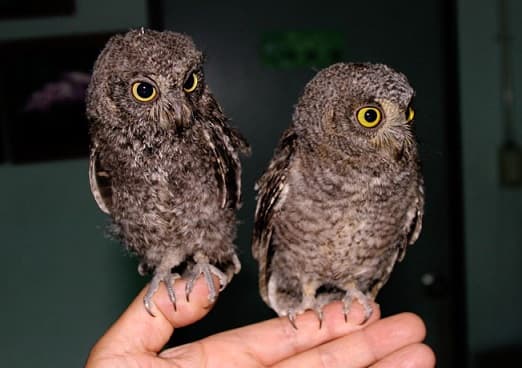
The end of April is marked by the search for a mating partner. The male begins to attract females with his melancholy howl. The female responds with a high cry. Then the male organizes a place for the future nest and calls the female there. If the female appreciates the chosen place, then she stays there throughout the day. A scops owl nest means a hollow of a tree, a crevice, or a pile of stones. There the female lays 3-6 eggs and incubates clutches for several days. At this time, the male gets food and feeds the expectant mother. Scoops are born very tiny and blind. First, the scops owl mother feeds the chicks with the prey taken by the male. Then the male tears apart large prey to feed the chicks. From the age of 10 days, small owls are already able to independently cope with large pieces of food. And already on the 21st day they leave the nest.

Features of keeping scops owls at home
If you decide to have a scops Owl at home, then adhere to these rules:
- Perches. Scops owls love to play with pieces of cloth or paper.
- The largest possible space. Your feathered friend needs an aviary of at least two cubic meters. A plus will be a small room where the bird can fly freely.
- Live food. Do not forget that the scops owl is a predator. Live insects, rats and frogs should be used as food. Food should always be fresh. Never serve store bought meat.
- Dangerous items. All sharp objects, curtains and chandeliers must be removed. The bird may collide with them and be injured.
This type of owl is easy to tame. Patience and care will help you make an excellent pet out of your scops owl.

Population protection
The scops owl is listed in the Red Book of the Russian Federation, except for the Smolensk and Vladimir regions. The population of the scops owl is extremely small, and as a result of harmful human activity in the forests where the bird lives, it has begun to decline more strongly.
Scops owl – video