


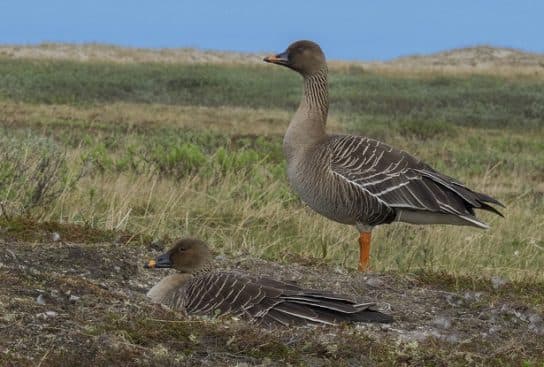


It is a waterfowl belonging to the family of ducks and the order of Anseriformes. There are 4 subspecies of bean bean: gray and forest, tundra and short-billed. All of them live in rather harsh climatic conditions and feed on plants.
These migratory birds begin to return home earlier than others. Because of their bright color and large size, hunters are often interested in them. But this is not all that geese can surprise people with. They are also circumspect and smart.
Description and features
The feathers of the bird are gray-brown in color, and the legs are yellow with an overflow of orange. The beak also stands out due to its black color and a yellow stripe on it. The goose weighs about 2.5 kilograms, but there are also large individuals weighing 5 kg. The female and male sex differ in size: females are slightly smaller than males.
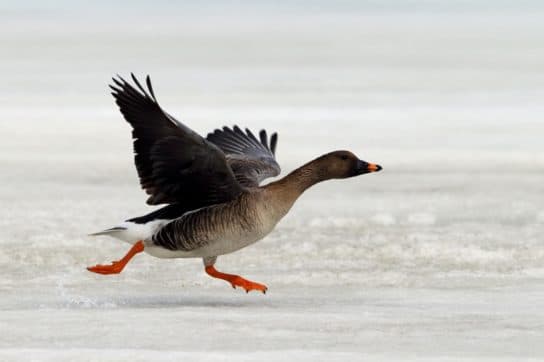

The voice of the geese is quite clear and harsh, since the flock will be heard from several kilometers away, but it resembles the cackle of other species similar to this. Not only relatives can respond to noise, and hunters take advantage of this.
Species and habitats
There are several types of bean goose, which live mainly in places with a cold climate:
Forest goose, which lives preferably in the forests of western Siberia. Usually this subspecies does not form colonies, but creates family groups. A feature of forest geese is an elongated beak and a nasal cackle.
Tundra goose… The subspecies lives on the Arctic islands, tundra and forest-tundra biotopes. The beak is swollen and not too long. The bird weighs about 3 kilograms, and the wingspan is no more than one and a half meters. Another difference from the others is the narrow yellow sling.
Short-billed gooseliving in eastern Greenland and northwest Russia, has a short pink-striped beak and weighs approximately 3 kg. The wings of the individuals are not very long and, when folded, do not overlap the tail feathers. Now this subspecies suffers the most, because the number of birds is falling.
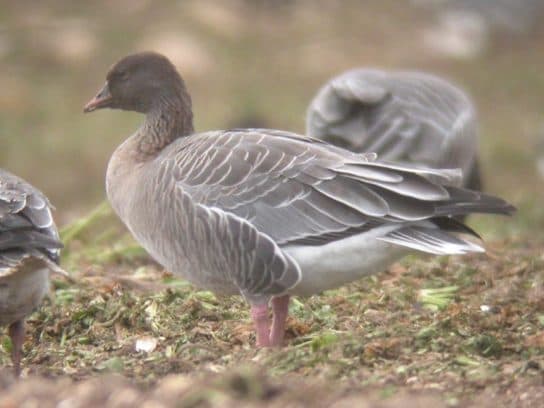

Gray goose bean lives in the taiga and is extremely cautious. Such geese weigh quite a lot – more than 4 kilograms. The legs and sling are orange, and the head and lower back are covered with dark feathers.
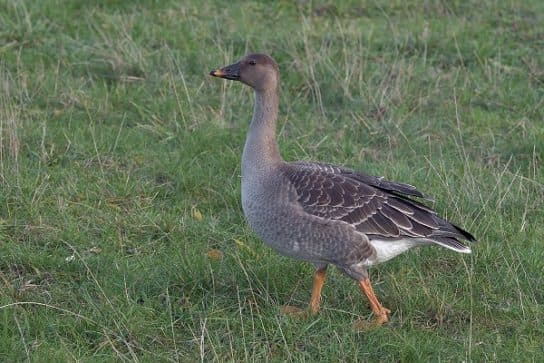

Bean goose diet
Bean bean usually feed on plants and animals with a diet of animal food are much less common. So, the roots and shoots of plants, cranberries and cone seeds are the favorite food of birds. Shoots of reeds and blueberries are equally popular among individuals. But, despite the fact that individuals love plants, young birds need to eat shellfish and caviar.
During the flight, they usually eat wheat and corn, but they can also eat vegetables in the fields, although they prefer grain crops. This is related to the name of the species, as “threshing floor” is the place where cereals are processed and stored.


Reproduction
The female and male build a nest together in a dry place near water. To make the home warm and cozy, the birds try to decorate it with moss or grass. There is fluff or feathers along the edges of the nest. It takes about 3 weeks to equip the “house”, but in some cases the geese find natural depressions and then the process goes faster, ̶ otherwise they compact the earth, creating a depression.
The clutch consists of 12 grams of eggs, of which there are usually 3-9 eggs. A little later they turn yellow for better fusion with the surface. 25 days pass, and chicks begin to appear. This takes place until the end of July. Goslings are born with gray or olive down on the back and yellow feathers on the body.

It is important that the male does not help to incubate the eggs, but protects the female even in the event of an attack by a fox or arctic fox. Although at first glance, it seems that geese cannot outwit such animals, for greater safety of the offspring, parents take the goslings to the meadow and continue to follow them where there is food and is safer. Fortunately, the chicks grow up for a month and a half and then they can protect themselves.
Lifestyle
These water birds can spend a long time on land and reunite with the aquatic environment only in the evening. In addition, even in case of danger, geese will rather start to run away, jumping through meadows, than float away on water, although swimming is an important part of their life.
Equally interesting is that birds are monogamous and never betray a partner. Already at the age of three they become sexually mature and create a couple, which nothing can separate.
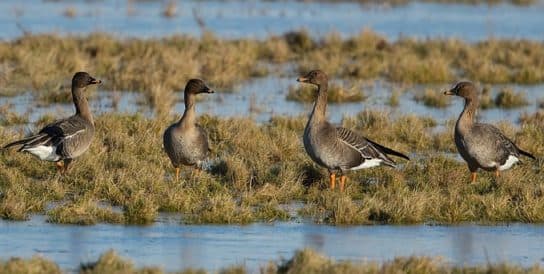

Bean animals moult once a year when chicks are reared. During this period, birds prefer to go to hard-to-reach places, such as a meadow. But it is known that they can create large groups at this time, so as not to be so vulnerable to predators due to the fact that they cannot fly.
Life expectancy and population
Today, the population of these birds is declining, and the entire species is under threat of extinction, and therefore a set of measures is being taken to increase the number. But this is not due to a short life expectancy, because birds are able to live 15 years, and even more in captivity. The population is influenced by ecology, human activities. So, people have long known about the properties of down and feathers of animals for the production of textiles, about the pleasant taste of their meat and eggs, although this is not a reason to kill bean goose, listed in the Red Book.
The voice of the bean

One day in the life of a bean – video


