


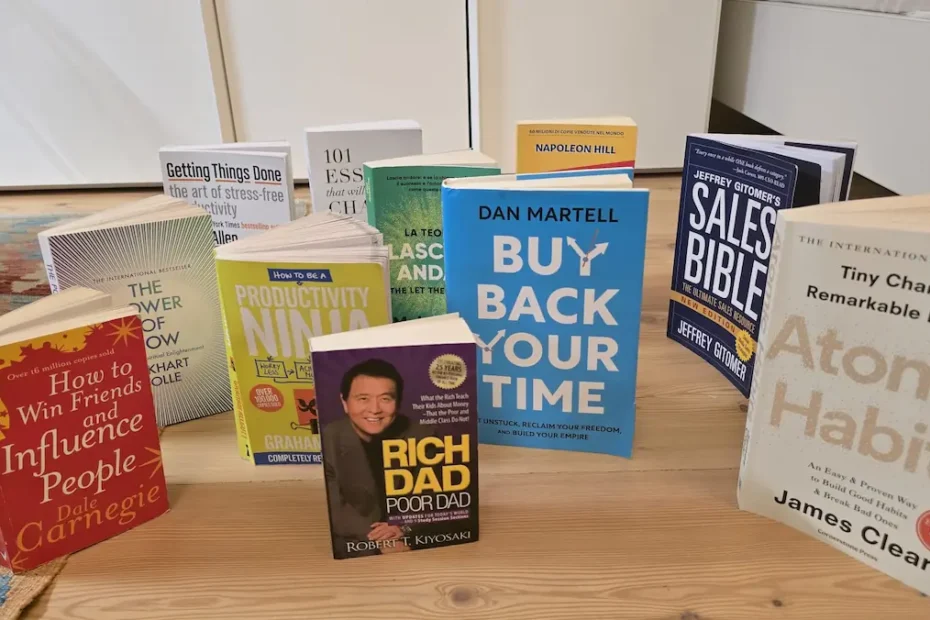
- 1 How to Choose the Right Personal Growth Book (Not Just the Popular One)
- 2 1. Atomic Habits — When You Know What to Do, But Don’t Do It
- 3 2. Deep Work — If You Can’t Focus Anymore
- 4 3. Mindset — Why Some People Grow and Others Don’t
- 5 4. The Psychology of Money — Personal Growth Isn’t Just About Motivation
- 6 5. The Power of Now — When You’re Constantly in Your Head
- 7 6. The Book of Boundaries — If You’re Always Overwhelmed
- 8 7. Psycho-Cybernetics — The Hidden Layer: Self-Image
- 9 Typical Mistakes When Reading Personal Growth Books
- 10 How to Actually Use These Books (Step-by-Step)
- 11 FAQ: Best Books for Personal Growth
- 12 Short Version: What to Do Right Now
- 13 Sources


Have you ever finished a “life-changing” book… and nothing actually changed?
You highlighted quotes, felt motivated for a few days — and then привычки вернулись. The problem isn’t you. It’s how most personal growth books are consumed — and sometimes, how they’re written.
In 2026, the conversation around self-development is shifting. Less hype. More practical frameworks. Less “be positive.” More “here’s how behavior actually works.”
This guide isn’t just a list. It’s a structured selection of books that solve specific problems in real life: lack of focus, emotional burnout, unclear goals, weak habits, or constant distraction.
How to Choose the Right Personal Growth Book (Not Just the Popular One)
Before diving into recommendations, one important point:
The best book is not the most famous one — it’s the one that matches your current problem.
Most people read randomly. That’s why they don’t see results.
| Your situation | What kind of book you need |
|---|---|
| “I can’t stay consistent” | Habit-building frameworks |
| “I overthink everything” | Mindset & emotional awareness |
| “I’m always distracted” | Focus & deep work strategies |
| “I feel stuck in life” | Identity & self-perception |
| “I don’t understand money decisions” | Behavioral finance |
Now — let’s break down the books that actually address these.
1. Atomic Habits — When You Know What to Do, But Don’t Do It
If your main problem is inconsistency, this is still the #1 recommendation.
Core idea: change doesn’t come from motivation — it comes from systems.
James Clear explains that tiny actions, repeated daily, reshape identity over time. That’s why this book remains one of the most recommended in 2026. :contentReference[oaicite:0]{index=0}
What you’ll actually use:
- How to design habits that don’t rely on willpower
- Why environment matters more than discipline
- How to break bad habits without “forcing yourself”
Real-life example:
You want to work out. Instead of “go to the gym 5 times a week,” you start with: put shoes near the door, do 2 minutes daily. It sounds small — but it sticks.
2. Deep Work — If You Can’t Focus Anymore
Notifications. Tabs. Messages. Endless scrolling.
Deep Work is one of the most relevant books right now because focus has become a rare skill. :contentReference[oaicite:1]{index=1}
Key insight:
- Shallow work feels productive but produces little value
- Deep focus is trainable — not a talent
What changes after reading:
- You start scheduling focused sessions instead of multitasking
- You realize boredom is necessary for concentration
“The ability to concentrate deeply is becoming increasingly valuable.”
3. Mindset — Why Some People Grow and Others Don’t
Carol Dweck’s concept is simple — but uncomfortable.
There are two mindsets:
- Fixed: “I’m either good or not”
- Growth: “I can improve with effort”
This book is powerful because it explains why people quit too early — not because they’re incapable, but because they interpret failure incorrectly. :contentReference[oaicite:2]{index=2}
Where it shows up in real life:
- You avoid challenges that might expose weakness
- You compare yourself constantly
- You give up after one failure
4. The Psychology of Money — Personal Growth Isn’t Just About Motivation
Most people think personal development = productivity + mindset.
But behavior around money reveals something deeper.
This book explains how emotions, experiences, and biases shape decisions — often more than logic. :contentReference[oaicite:3]{index=3}
What makes it different:
- No formulas or “get rich” advice
- Focus on how people actually behave
Example:
Two people earn the same. One saves, one spends. The difference is not knowledge — it’s behavior patterns.
5. The Power of Now — When You’re Constantly in Your Head
If your problem is anxiety, overthinking, or inability to “switch off” — this book hits differently.
It teaches awareness of thoughts rather than control of them.
Many 2026 lists still include it because mindfulness remains one of the core skills for mental stability. :contentReference[oaicite:4]{index=4}
What you notice after reading:
- You start observing thoughts instead of reacting instantly
- You become less attached to negative patterns
6. The Book of Boundaries — If You’re Always Overwhelmed
Burnout often comes not from too much work — but from lack of boundaries.
This book teaches how to say “no” without guilt and protect your energy. :contentReference[oaicite:5]{index=5}
Practical takeaways:
- Scripts for difficult conversations
- How to identify emotional overload early
Typical situation:
You agree to things you don’t want — and then feel exhausted and resentful.
7. Psycho-Cybernetics — The Hidden Layer: Self-Image
This is not a trendy book. It’s an old one — but still relevant.
Main idea: your actions align with how you see yourself.
If your self-image is “I’m not disciplined,” you will unconsciously confirm it. :contentReference[oaicite:6]{index=6}
Why it matters:
- Explains self-sabotage
- Connects identity and behavior
Typical Mistakes When Reading Personal Growth Books
1. Reading too many at once
Leads to confusion, not progress.
2. Consuming instead of applying
Knowledge without action creates illusion of growth.
3. Looking for motivation instead of systems
Motivation fades. Structure stays.
4. Expecting instant transformation
Real change is slow and often invisible at first.
How to Actually Use These Books (Step-by-Step)
- Pick one problem (not 10)
- Choose one book that addresses it
- Read slowly — not more than 10–15 pages at a time
- After each chapter, ask: “What can I apply today?”
- Track one behavior for 2–3 weeks
FAQ: Best Books for Personal Growth
What is the best personal growth book in 2026?
There is no universal “best.” However, books like Atomic Habits remain highly recommended due to their practical approach to behavior change. :contentReference[oaicite:7]{index=7}
How many personal development books should I read at once?
One. Reading multiple books reduces clarity and implementation.
Do self-help books actually work?
They can — but only when applied. Reading alone doesn’t change behavior.
Are classic books still relevant in 2026?
Yes. Many older books focus on human psychology, which doesn’t change quickly.
How long before I see results?
It depends on consistency. Small changes may appear within weeks, deeper changes take longer.
Should I reread personal growth books?
Often yes. You notice different insights depending on your stage of life.
Short Version: What to Do Right Now
- Identify your main problem (focus, habits, stress, etc.)
- Choose one book that targets it
- Apply one idea immediately — not later
- Track behavior for at least 2 weeks
- Only then move to the next book
Sources
- BookTrib — Must-Read Self-Help Books for 2026
- TrustPiple — Top Personal Growth Books 2026
- Knowledge Enthusiast — Personal Development Books
- Oprah Daily — Best Self-Help Books 2026
- Lifehack — Self Improvement Books Overview

