


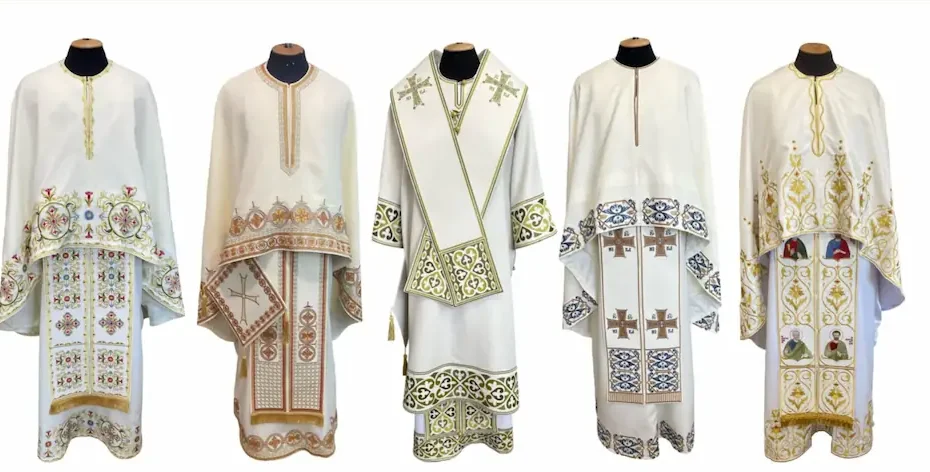


When a believer steps into a church, their eyes are drawn to the altar. The gold of the iconostasis, the flickering of lamps, and the vestments of the clergy create a unified image of the Kingdom of Heaven on earth. For the priest, however, vestments are not merely symbolic decoration. They are his daily reality, his “workwear” for the divine service. For the donor, gifting these items is a profound act of sacrifice.
But how do you navigate the thin line between canonical tradition and modern quality? The market is flooded with mass-produced fabrics that lose their shape after a few liturgies. Whether you are a clergyman seeking comfort for long services or a layperson looking for a worthy gift for your parish, understanding the nuances of ecclesiastical tailoring is essential.
Dressed for the Divine: The Priest’s Attire
The choice of Priest vestments is often a matter of personal devotion and regional tradition. The two dominant styles—Greek and Russian cuts—offer different advantages.
The Greek cut is defined by its architectural severity. The high collar supports the neck, and the shorter front of the Phelonion allows for unrestricted arm movement during censing. It is often the preferred choice for warmer climates or priests who favor the Athonite aesthetic. Conversely, the Russian cut offers a majestic, flowing silhouette. The stiff, high back of the Phelonion creates a “tent” effect, symbolizing the protection of God’s grace. When selecting a set, pay attention to the Church fabrics. Authentic brocade or silk blends breathe, whereas cheap polyester creates a “greenhouse effect” that can make a three-hour liturgy physically exhausting.
The Weight of Responsibility: Bishop’s Vestments Archiereus vestments are the pinnacle of church art. A Bishop’s set is complex, requiring perfect synchronization between the Sakkos, Omophorion, and the Epigonation (Palitsa). Here, the quality of the Embroidered Icon matters immensely. A machine-stitched face that looks flat and cartoonish detracts from the solemnity of the bishop’s presence. True craftsmanship offers depth, making the embroidery look like a painted icon.
The Silent Servants: Deacons and Altar Servers
While the eyes are on the priest, the flow of the service depends on the deacon and the servers. Deacon vestments must be robust. The Orarion is constantly raised in prayer; if it is made of flimsy material, it will twist and look unkempt. It requires a stiff interlining to maintain its dignity.
Similarly, Altar Server vestments (Sticharia) are the most frequently washed items in the sacristy. They face hot coals, wax drips, and constant movement. Investing in stain-resistant fabrics for these robes is not a luxury—it is a budget-saving strategy for the church in the long run.
Daily Ministry: Cassocks and Headwear
A priest does not stop being a priest when he leaves the altar. His Daily priest clothes—the Cassock (Podryasnik) and Ryassa—are his witness to the world. A well-tailored Podryasnik conceals the wearer’s form while allowing freedom of movement. For winter, Vests made of wool or dense blends are indispensable for serving in unheated chapels.
The Crown of the Priesthood The Mitre is a unique liturgical object. It is both a crown and a symbol of the Passion. A high-quality mitre is an engineering marvel: it must be light enough to prevent neck strain but rigid enough to support Mitre Icons and enamels. Cheap cardboard bases deform with humidity; a proper base lasts for decades.
The Sacred Environment: Utensils and Textiles
The beauty of the temple lies in the details. A worn Chalice Cover (Pokrivtsi) or a faded Aer (Vozduh) can break the visual harmony of the Eucharist. These textiles should be made of the same high-grade materials as the vestments.
Consider the Holy Shroud (Plashchanitsa). This is an heirloom item, used only once a year but kept for generations. It requires velvet that does not crush and gold thread that does not tarnish. Even smaller items, like Gospel Bookmarks or Orlets (eagle rugs), signal the care the parish takes in its worship.
Expert Guide: How to Choose a Gift for the Church
If you are a donor planning to buy ecclesiastical items, avoid the trap of buying “whatever looks shiny.” Use this checklist:
- Check the “Trebne Set”: Every priest needs a compact, travel-friendly Epitrachelion and Cuffs for home visits and baptisms. This is often the most practical and appreciated gift.
- Fabric Composition: Ask about natural fiber content. A mix of viscose and polyester is often better than 100% synthetic because it drapes better and generates less static electricity.
- Color Canon: Ensure the shade matches the liturgical season. A “Lenten purple” is different from a “Marian blue.” Precision shows respect.
Conclusion
The vestments of the clergy and the adornment of the temple are not about vanity; they are about glory. They are the visual sermon that preaches before the priest even speaks. Whether you need a simple sticharion or a magnificent mitre, quality is a form of reverence.
Do not compromise on the “armor of light.” For vestments that honor the ancient traditions while utilizing modern durability, visit https://ryza.com.ua/en/ and find the attire that befits the sanctity of the altar.

