


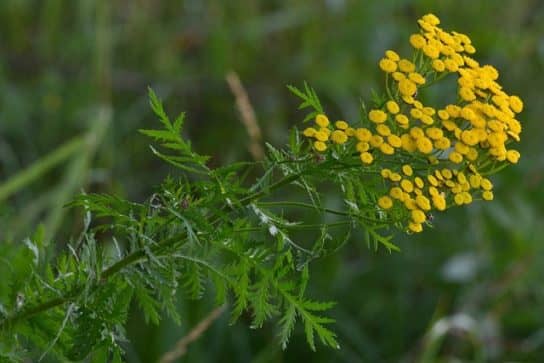


Since ancient times, people have used plants for medicinal purposes. Such flora is at the head of traditional medicine, but in traditional medicine, plant extracts are often used in the production of medicines (tablets, solutions, syrups, ointments and other dosage forms). There are many useful medicinal plants in the Aster family. One of its representatives is common tansy.
Description and appearance
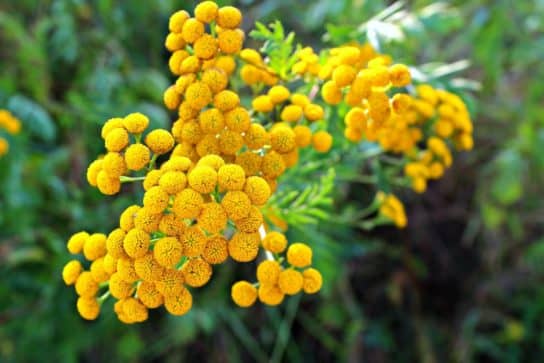
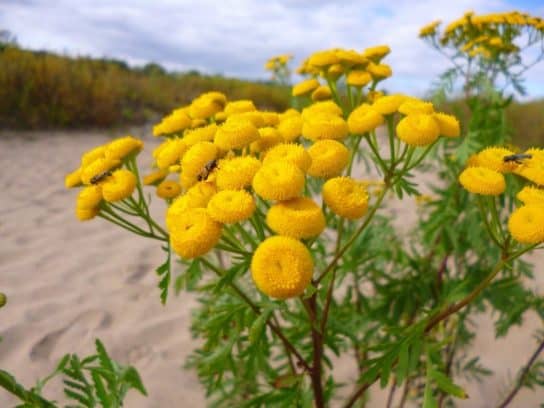
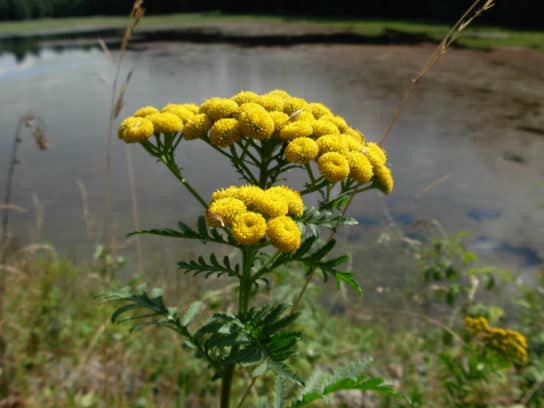
From the point of view of botany, tansy is a perennial plant with bright yellow flowers and a specific pungent odor. In height, it can reach 150 cm, but on average it keeps the range of 0.5-1.5 m.
Tansy has a highly developed tap root system. There is also a long rhizome that branches underground. The stems, usually presented in large numbers, have a faceted shape. They can be covered with a little fuzz, or they can be completely naked. Tansy shoots grow vertically upward and branch strongly at the very top. The leaves are arranged alternately, painted in a rich green color, on the reverse side they have glands in the form of dots.
Flowers
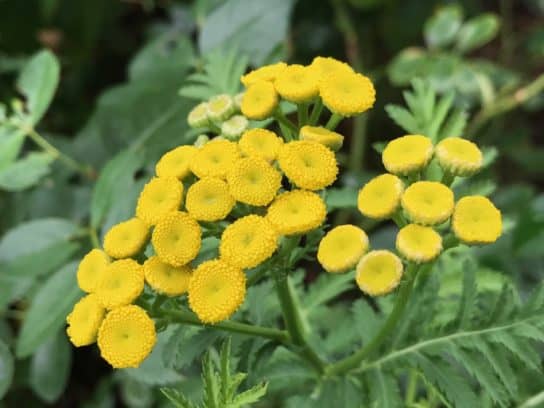

Flowering of tansy is long lasting. It starts in July and lasts until September. Tansy has very small tubular flowers collected in baskets. These baskets form corymbose inflorescences located at the tops of the plant’s shoots. Inflorescences in several rows are surrounded by small, closely spaced leaves, called a wrapper. The receptacle is naked, since it does not have a developed perianth.
The bright yellow color and strong camphor aroma of tansy flowers attract pollinating insects, which are squeaky mosquitoes. In August or September, achene fruits begin to form in place of flowers. They have an oblong shape and a short, finely serrated margin.
Spreading
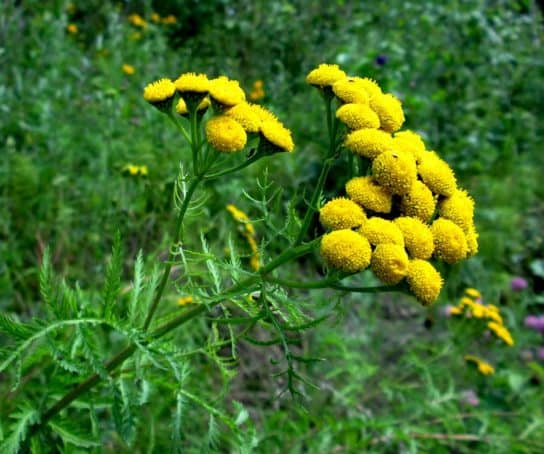

This type of tansy is very widespread in nature. It can be found on the territory of Russia and a number of European countries, in Kazakhstan, Mongolia, Kyrgyzstan, China and Japan. Tansy also grows in parts of North America.
Forest and forest-steppe zones are the most favorable for the growth of this plant. Tansy takes root well in fields, steppe meadows, birch forests, along roads and river floodplains. It is quite aggressive towards cultivated plants, infests perennial grasses and garden plantings.
Application
People have found use for tansy in many areas of their activity. In the distant times of the heyday of the Egyptian and Greek empires, it was used there for the embalming of the dead.
Tansy is used in cooking to add piquancy and aroma to dishes, alcoholic beverages, confectionery, and in some northern peoples it is used to preserve the freshness of raw meat.
As a fodder crop, tansy is suitable for ground squirrels, marmots, sika deer, sheep and some other species of animals. And for many insects, tansy is destructive, therefore it is used as a powerful insecticide. It is not used as a fodder base for livestock, since in large volumes it causes poisoning in animals. The addition of tansy to the diet of dairy cows and goats gives their milk a bitter taste.
Medicinal properties


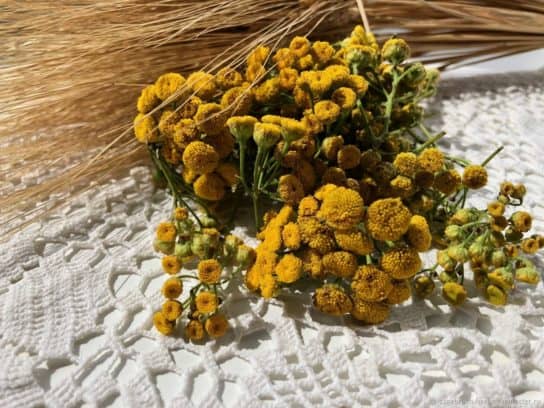
For medicinal purposes, mainly plant inflorescences are used, collected far from roads and people’s homes. From them, infusions and decoctions are made, which are consumed internally and used externally in the form of compresses. They contain a large amount of substances useful for the human body:
- acacetin, which stimulates the heart muscle;
- luteolin and quercetin, which increase immunity;
- tanacetin, which improves the production of gastrointestinal secretions and intestinal motility;
- borneol, which has a tonic effect;
- phenol carboxylic acids and so on.
In officially recognized medicine, common tansy is best known as an effective choleretic, antispasmodic, anti-inflammatory and anthelmintic agent against roundworms and pinworms.
Tansy is used to improve appetite and digestion, to treat constipation, flatulence and other intestinal diseases. With its help, they successfully fight rheumatism, bronchial asthma and liver diseases.


In herbal medicine, tansy is considered an effective remedy against cholecystitis, angiocholitis, enterocolitis, gastritis, gastric and intestinal ulcers. The extract of this plant is used to normalize the menstrual cycle, reduce edema, treat festering wounds, boils, seborrhea, as a diuretic for kidney diseases.
Alkaloids and essential oils are also present in the composition of tansy, which in high doses can cause convulsions in a person. In this regard, the use of drugs based on tansy inside should be agreed with the attending physician. Only he can prescribe the correct dosage of drugs and adequate treatment.
Contraindications for use
Medicines based on tansy are contraindicated in children and women during pregnancy and lactation. The substances contained in tansy can cause hypertonicity of the uterus, which in turn is fraught with miscarriage or premature birth, depending on the period. The ability of these substances to penetrate into breast milk has also been established.
A contraindication for the use of medicines from tansy is the presence of the following ailments in a person:
- cholelithiasis;
- hypertension;
- neurological diseases;
- allergies of a different nature.
Exceeding the recommended dosage of medicines based on tansy is also dangerous. This can lead to gastrointestinal disorders (nausea, vomiting, diarrhea), increased heart rate, dizziness, muscle cramps, and even loss of consciousness.
With a reasonable and competent use of tansy, you can cope with many disorders and diseases of the body. The main thing is to be careful.

