


Small-leaved forests are those forests in which small-leaved species predominate. The main ones are birch, aspen, gray alder. The lower tier consists of various representatives of sedge and flowering plants: chamomile, buttercup and others. They all have a small leaf blade and a loose bark. Small-leaved forests are found in the European and Asian parts of Russia. The most common are birch forests, which occupy about 25 percent of the European part and 12 percent of the Asian part. Osinniki have a slightly smaller area: 5.4 and 2.2 percent, respectively. The main distinguishing feature of small-leaved forests is that the overwhelming majority of them are derivative forests.
Small-leaved forest plants
Aspen


Hanging birch


Fluffy birch

Alder black


Common bird cherry

Wild strawberry

Fragrant Kupena


Common heather


Common honeysuckle


Round-leaved bell

Mountain ash


Lyubka bifoliate

Weinik ground

Warty euonymus

Wolf bast


Emergence
Small-leaved forests appear on clearings and burned-out areas of coniferous or deciduous forests. They can also occur at windblow sites and on unused agricultural land. Small-leaved species are renewed using two methods: vegetative and seed. For example, birch is propagated by suckers, aspen and gray alder by root suckers and suckers.
On the territory of treeless lands, small-leaved forests are formed by seed. Small-leaved species are the first to appear in clearings, which is why they received the name of the breed “pioneers”. The very rapid growth of vegetative shoots allows small-leaved species to spread at a high rate, inhibiting the recovery of indigenous conifers and broad-leaved species. Quite often, the spreading small-leaved forests are replaced by bedrock forests. The process of succession during felling is significantly accelerated.
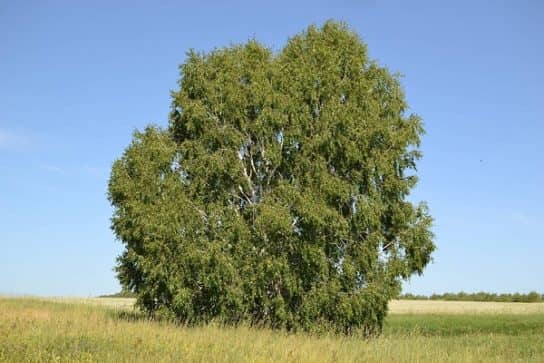
Under appropriate climatic and soil conditions, birch and aspen forests can become indigenous forest types. For example, indigenous plantations of fluffy birch grow on very wet and waterlogged soils. Crooked birch forests and light forests can form on flat and mountainous areas. In the forest-steppe zone of the European and Asian part of Russia, indigenous birch forests grow as separate islands, which are called “pegs”.


Peculiarities
The tree canopy of small-leaved forests does not create adequate darkening, which is why the floristic diversity of the herbaceous cover is formed. Mosses are usually absent. In addition to forest plants, in small-leaved forests there are many meadow and forest-edge species, and in contact with forest-steppe and steppe plant communities, steppe and forest-steppe varieties of vegetation are formed. Most small-leaved species have a high ability to spread to vacant areas, preparing them for subsequent settlement with other species. Thus, birch contributes to the development of dark coniferous species, which settle under the canopy, and then outgrow and replace birch trees. Nitrogen-fixing bacteria live on the roots of alder, which contribute to the accumulation of nitrogen in the soil. The leaves of these plants are highly zoned and decompose quickly, thereby increasing soil fertility.

Small-leaved forests of Russia
Small-leaved forests of Russia
You can meet a zone of small-leaved forests from the East European Plain to the Far East. The forests form a thin strip. Sometimes small-leaved forests are replaced by broad-leaved ones. An amazing feature of small-leaved forests is their ability to store moisture. Thickets of alder and birch often block the path of fire, preventing it from spreading to noble species.
The forest is widespread in the forest-steppes of Western Siberia and Central Siberia. There, a strip of forest islands was formed from the lands of the Urals to the Yenisei territories. The zone of bush forests is found on the plains of Russia in places of fires and felling. In Western Siberia, small-leaved forests have replaced broad-leaved forests.
The fauna of small-leaved forests is formed under the influence of indigenous trees. It is distinguished by a large number of birds. The main mammals are hares, lynxes, squirrels and moose. Raccoon dogs are quite common. Secondary forests contribute to the restoration of green spaces, but full renewal takes about 180 years. Small-leaved forests act as a fire buffer.

