


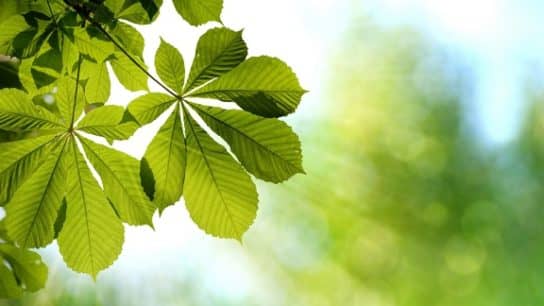


Leaves are the most important parts of most plants. Thanks to them, water moves through the plant mass, the conversion of sunlight into growth energy and the purification of the surrounding air. There are many biological classifications of leaves based on different traits. In the framework of this article, we will consider the main ones.
What is a leaf?
The leaf is the outside of the plant and is responsible for photosynthesis, water evaporation, and gas exchange between the plant and the environment. The vast majority of plants have them, from barely noticeable grass to huge trees. At the word “leaf,” the imagination immediately draws a classic leaf, like a birch one. However, there are a huge number of variations in shapes and designs, all of which serve the same purposes.
The main types of leaves
The simplest classification of plant leaves is based on their shape. According to her, there are leaf-like processes (for example, in ferns), leaves of flowering plants (the classic form with a petiole and a leaf blade), needles and wrapping leaves (common in herbs).
Species identified by location on the stem
An alternate or sequential arrangement means that the leaves begin to grow on the stem, one for each node. The term “knot” refers to the place on the stem that is used to form a new leaf.
Opposite arrangement means that two leaves grow at each node of a branch or stem. Moreover, in many cases, each subsequent node is rotated 90 degrees relative to the previous one.
Rosette placement of leaves implies their location at the same height and orientation in a circle. Roughly speaking, all the leaves of such a plant grow from one point (root) and form a beautiful spreading bush.
There is also a whorled arrangement. It looks like the opposite, but has three leaves per node. In this case, the nodes are called whorls and can also be sequentially rotated 90 degrees.
Classification by type of leaf blades
This classification is based on the number and division of leaves growing on one cuttings, or from one node of the stem (trunk). Accordingly, the simplest type is a simple sheet. It is characterized by the presence of only one leaf blade and one petiole. The plate itself is the surface of the sheet, that is, its “canvas” with veins. In a simple leaf, it can have any shape, but the cutouts never reach the petiole. Leaves of a simple type always fall off with the petiole, leaving no part of it on the tree.
The next type is a compound sheet. Here, several leaves are attached to one petiole at once. Moreover, each of them can have its own additional petiole.
Types of leaves according to their shape
The classification by leaf shape is very extensive. After all, there is a huge number of plants with the most diverse foliage. This list includes over 30 names, each describing a specific shape. We will not list all of them, we will only say about the most common ones.
Perhaps the most familiar type in this classification is the thyroid. Leaves of this shape are, for example, birch. They look like a small shield and yet have a classic leaf shape. There are also unusual ones, like the “reverse heart”. This type has the shape of an elongated heart, with a lower, sharp end adjacent to the petiole.
Whorled leaves are also interesting. This type is usually found in a variety of field grasses and many flowers. The type “pinnately dissected” is familiar to everyone from childhood – a dandelion has leaves of this shape.
Non-standard evolution of leaves
In the course of evolution, the foliage of trees and plants has undergone various changes. In most representatives of the flora, they did not lead to serious changes, however, the leaves of certain plants began to perform specific functions.
Trapping leaves


Perhaps the most “highly specialized” are trapping leaves. They are present on predatory plants that feed on insects. A striking example is the sundew or the Venus flytrap. The main task of such a leaf is to catch the insect, ensure its retention, and digest it with the help of special enzymes. The method of capturing is different: in some cases, the leaf produces sticky juice (sundew), in others it closes abruptly (Venus flytrap), in the third, special bubbles with valves (pemphigus) come into play.
Succulent leaves


This type of leaf is designed to create water reserves. The most familiar plant that possesses them is aloe. Thick and fleshy, they contain a lot of moisture inside, as these flowers grow in arid regions with little rainfall.
Baggy leaves
This type also stores water, but it does this not due to a thick layer of pulp, but with the help of a funnel. The funnel is formed by the leaf itself, which twists in a special way and retains the accumulated rainwater.
Thorns


For protection, the leaves of some plants have evolved into thorns. They can be a modified leaf blade, hardened and pointed, or they can form from shoots.
Mustache


Mustache leaves are found on creeping plants that need support. They are an extension of the upper parts of ordinary leaves in the form of long, curly processes. They cling to surrounding objects, so that the plant wraps around them. This type of leaf is found in common garden peas, cucumbers, and pumpkins.
Phillodia


Phillodia are a special case of the evolution of the petiole. Such a petiole is similar in shape to a leaf and is capable of photosynthesis. At the same time, a real sheet located further away has a simplified structure and degrades.
Bracts
This type of leaves is characterized by their semicircular or circular shape, often with the formation of a small funnel. In the formed depression, as a rule, there are leaves of a different type or inflorescences.

