


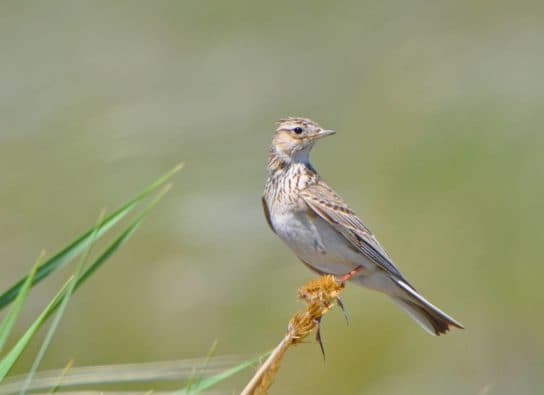


Larks are famous for their beautiful and joyful singing. Farmland and other open areas such as barrens and grasslands provide suitable nesting and feeding sites for skylarks throughout the year. This is one of the many species of birds living on agricultural land, the number of which has decreased due to the use of chemicals in the agriculture of European countries.
Description of the appearance of a lark
The lark is a small brown bird with a crest, it feeds and nests on the ground most of its life. It is larger than a sparrow, but smaller than a thrush.
Adult birds are 18 to 19 cm long and weigh 33 to 45 grams. The wingspan is 30 to 36 cm.
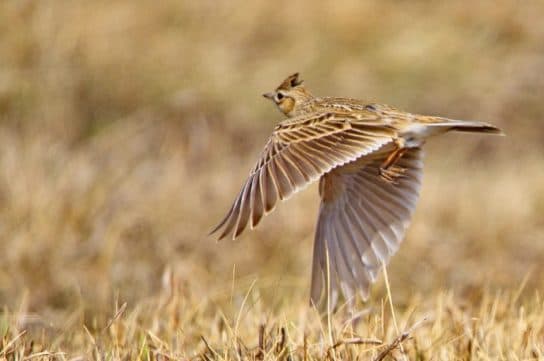
Males are outwardly similar to females. The upper body is dull striped brown with black and white markings on the outer tail feathers that are visible during flight.
The lower part of the body is red and white, the chest is covered with brown feathers. The beak is short and designed for finding seeds.
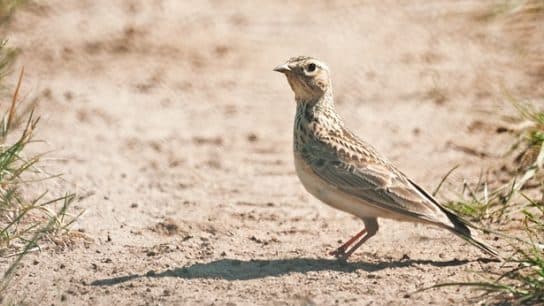

The brown-striped feathers of the crown are raised by the lark, forming a small crest. The ridge in adult birds rises when the lark is agitated or alarmed. In immature individuals, spots instead of stripes on feathers and the crest does not rise.
How long do larks live?
Larks are ready to breed when they turn one year old. The average life expectancy is 2 years. The oldest recorded lark was 9 years old.

Habitat
They live all year round in a wide variety of open areas with low-lying vegetation. Suitable habitats include:
- ruins;
- heather meadows;
- fields;
- swamps;
- peat bogs;
- sand dunes;
- farmland.
Agricultural land is the traditional habitat of skylarks, birds are seen in arable fields throughout the year. Larks are one of the few bird species that nest and feed exclusively in open fields, quite far from trees, hedges and other tall plants.
Large open agricultural fields provide suitable nesting and feeding grounds. The dull plumage of the skylark provides excellent camouflage in the underbrush and makes it difficult to spot birds on the ground.
What do larks eat?
The lark’s main diet in summer is insects and other invertebrates such as earthworms, spiders and snails.
Seeds from weeds and cereals (wheat and barley), as well as leaves of agricultural crops (cabbage), are eaten by birds in winter. Larks feed on the leaves of weeds and crops when the arable land lacks seeds and other suitable food.
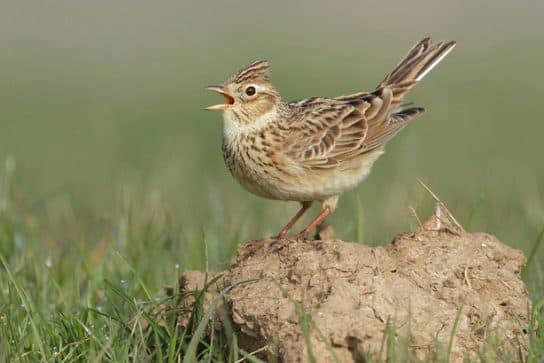

In winter, larks feed on bare ground in fields with little low-lying vegetation, arable fields, marshes, meadows and stubble. Larks walk and run rather than jump, and are often seen looking for food.
Where do larks live in the world
These birds live in Europe and northwest Africa, North Asia and China. Northern species of the population migrate south during the cold season in the Mediterranean, the Middle East and Central Asia. Birds from southern Europe fly short distances when the region’s seasonal food supplies are depleted.
Natural enemies
The main predators:
- affection;
- foxes;
- hawks.
When it senses danger, the lark:
- runs to the shelter;
- freezes in place;
- falls to the ground.
If the threat persists, the lark takes off and flies to safety.
How birds remove dirt and pests from plumage
The field lark never swims in streams or bodies of water. The bird cares for plumage during heavy rains or rolls in dust and loose sand to remove parasites.

