




Appearance
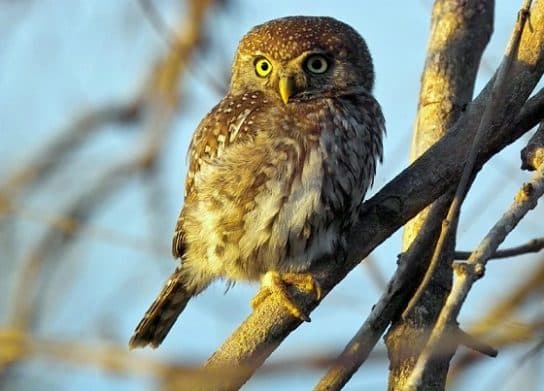
One of the smallest representatives of owls. In size, this species does not exceed 20 centimeters in length, and weighs only 80 grams. The height of the bird is no more than a sparrow, which is why it got the name “passerine”. The pride of a passerine owl is its wings, the size of which does not exceed 25 centimeters in span. The bird’s head is round without the usual feather ears of the owl family. Feathers on the facial disc are gray with small brown spots. The eye shell is bright yellow. The eyes are framed by white eyebrows and brown circular circles. A yellow beak stands out among the feathers. Thick feathers on their paws.
In general, the color of the plumage of a passerine owl is gray-brown, mostly gray. There are representatives with dark brown feathers. A dark speck with small white dots is observed at the base of the neck of a passerine owl. Passerine owls have a very keen hearing.

Sparrow Owl subspecies and their habitats
The sparrow owl has several subspecies. The subspecies of this bird differ in appearance and habitat. Let’s consider the main ones:
- Gnome california passerine owl… This subspecies is popular in British Columbia and California. The population of California owls is also found in southern Alaska and northern Mexico. In appearance, it does not differ from the usual passerine owl.
- Cape passerine owl… This representative is the largest of the passerine owls. The length of the body is 20 centimeters. This subspecies is widespread in Africa: Angola, Namibia, Zimbabwe, Zambia, Malawi and Congo.
- Borespine syl… The difference between this subspecies lies in its name. A small owl up to 19 centimeters in size has a bright brown color of the wings. Popular in the rainforests of Sri Lanka.
- Sparrow Owl Dwarf… The species is common in mountainous Mexico. In size, it can reach a maximum of 17 centimeters in length. The color is dark brown with spots.
- Tiny passerine owl… By right, the smallest representative of the species. Body size in length ranges from 12 to 14 centimeters. The color is reddish-brown with small white blotches. This subspecies inhabited the territory of Mexico, Brazil and Argentina.
Nutrition
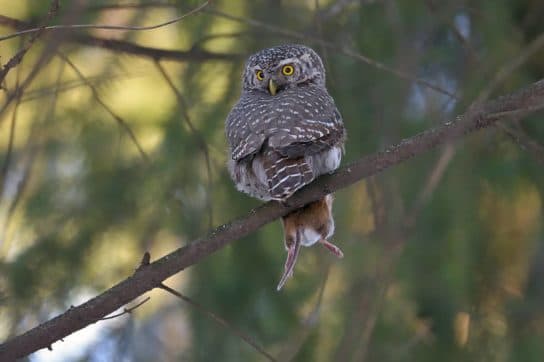
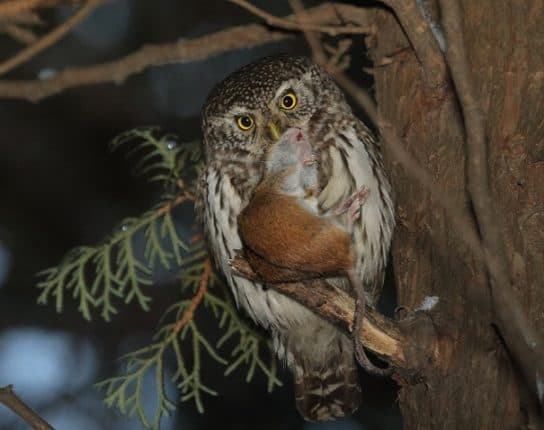
Due to its modest size, this species of owls cannot hunt big game. As food, these small representatives prey on hamsters, rats, voles and lemmings. The most delicious part for passerine owls is the victim’s brain and eyes.
During the cold season, passerine owls feed on the food reserves that they have prepared in the summer season. In the absence of small mammals, passerine owls do not disdain insects.

Due to their high popularity, passerine owls are far from uncommon as decorative pets. In captivity, these birds happily eat various fruits and vegetables.
Reproduction
Sparrow owls are monogamous representatives. They create pairs for a very long period. The mating season dates from the arrival of spring. During this period, bachelors are looking for a suitable pair for creating offspring. In order to attract females, males begin to make sounds similar to singing. The mating season lasts until May. During this period, males are in search of suitable nests. As a rule, they use old nests of other birds. This species is strongly attached to the chosen territory and does not leave it for several years. If the female approved the proposal, then she and the male together begin to equip nests for incubating offspring.

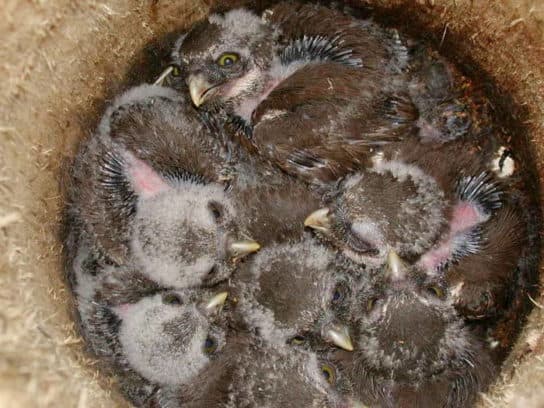
Owl chicks
Usually the female lays no more than 7 eggs. During incubation, the male hunts and feeds the female every few hours. The brooding period lasts about 29 days, after which tiny chicks are born. They spend the first 10 days of their lives under the protection of their mother. The male is still engaged in food extraction, but now not only for the female, but for all offspring. Chicks are ready to leave nests at the age of one month.
The voice of a sparrow owl
In addition to its small size, the passerine owl has a unique voice. This voice is very reminiscent of a sparrow sibilant chirp. The song of the Sparrow Owl is very clear and loud.

Sparrow Owl – video


