


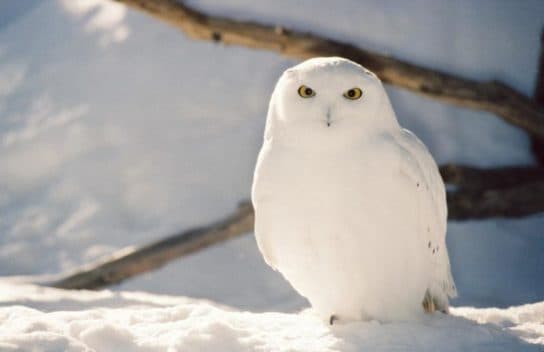


The polar predator is one of the largest representatives of the tundra. The snowy owl belongs to the owl family. Due to the white color of the plumage, the bird received another name – White Owl.
Appearance
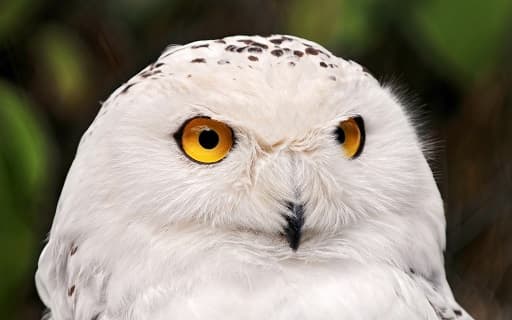
The body length of the snowy owl can reach up to 65 centimeters, and the bird weighs no more than three kilograms. Males are smaller than females. The plumage of the bird is soft and fluffy, thanks to him it can live in the local climate of the northern latitudes. The round head of an owl with bright yellow eyes is noteworthy. On the white plumage of the bird, brown longitudinal stripes may be located. As a rule, females show off these stripes. In males, they may be completely absent. The owl’s beak and ears are hidden under the feathers. Snowy owls are endowed with distinctive hearing and keen eyesight, which helps these individuals to hunt even in the pitch darkness of the polar night.

The voice of the polar owl

Nutrition
Lemmings are traditionally the main food for snowy owls. This rodent species is widespread in the range of polar owls. To satisfy hunger, the snowy owl needs to eat more than four lemmings per day. Apart from these rodents, birds love to hunt larger mammals. Their best prey are hares, fox cubs or ermines. Do not mind eating other birds, fish and even carrion.
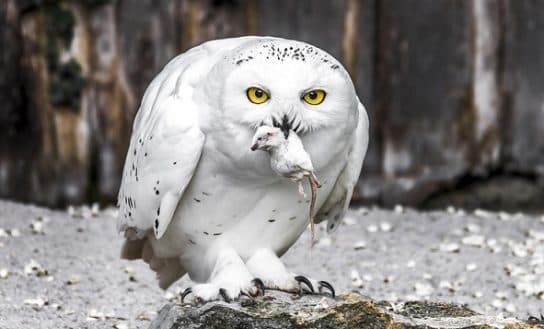

The snowy owl does not hunt near its habitat, so as not to attract predators to it. Thanks to this, seagulls build their nests next to the bird, as they can feel safe there.
Reproduction
The breeding season for snowy owls begins with the arrival of spring. It is in the spring that the birds return from their wintering grounds, looking for a suitable place and announce their choice with loud cries. If the female responded, then the male begins to arrange a whole show in front of her: he brings prey, shows his wings, makes demonstration take-offs and accompanies his chosen one all day.
The resulting couples stay together for an extended period. They participate in the upbringing process together.
The female begins to lay eggs in early May. As a rule, she is able to lay no more than eight eggs per day. The hatching process lasts up to one month, after which the eggs begin to hatch. Not all owlets are born at the same time. Quite often, late toddlers do not survive. After all the cubs are born, the female, together with the male, flies out in search of food. At this time, little snowy owls huddle alone in their nests.
Owlets become capable after a month and a half of life.

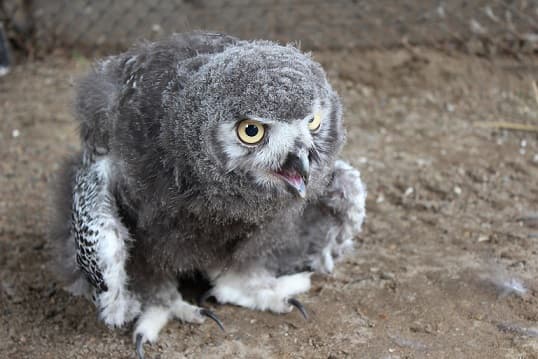
Snowy owl chick
Lifestyle
Snowy owls are active during the day, but they go out to search for prey either early in the morning or late in the evening. Due to its abilities, the bird is an excellent hunter at any time of the day. With insufficient food, snowy owls fly closer to settlements.
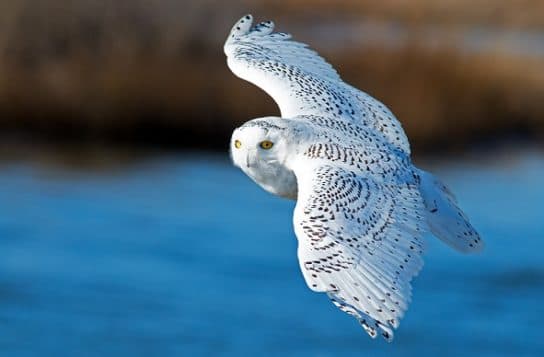

They roam, as a rule, from September, and return from the beginning of October. Many birds remain in the field, provided there is sufficient food.
Some individuals can lead a lonely lifestyle without mating.
Enemies in the wild
Arctic foxes are the main enemies of polar owls in the tundra. In search of easy prey, Arctic foxes often steal little owls from their nests. In addition to polar foxes, white owls should be wary of foxes, which also do not mind eating their immature chicks.
When a person approaches their territory, snowy owls emit loud frightening cries. Sometimes, when danger comes, they hover over their potential enemy in order to assess further actions. When directly attacking the nest, the males engage in a fight with the destroyer, making loud sounds similar to the croaking of a crow.
Habitat
The snowy owl can be found in the northern latitudes of both hemispheres. Snowy owls are widespread in the Arctic Ocean. In particular, they live on Wrangel Island, New Zealand, Greenland and Svalbard.
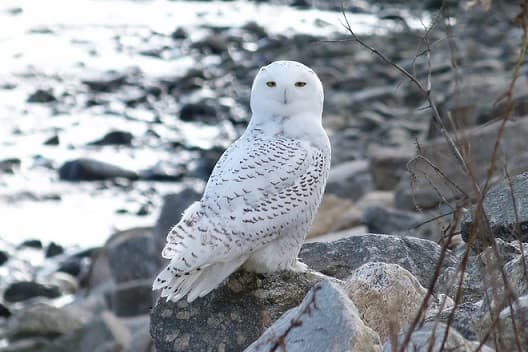

Snowy owls prefer to inhabit large open areas and small mountain hills. As a rule, they avoid wooded areas, sticking to the tundra and forest-tundra. This is due to the fact that in deep forests it is much more difficult for owls to find their prey.
Snowy owl video


