


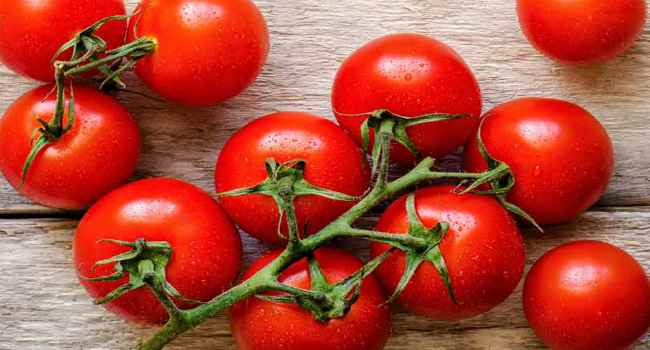


Varied, delicious and colorful – red, pink, golden, yellow and black cherry tomatoes can be grown in the field, in the greenhouse or in your own garden. This kind of tomato could not yet be found until the end of the sixties of the last century. But already in the late eighties, early nineties, it was impossible to imagine without them that they would not be grown by amateur gardeners, and over the past few years they have gained worldwide popularity. Cherries are loved for their versatile qualities: they can be salted and pickled, added to salads, pizza decorating, and more. Cherry can be a decoration for any table and dish.
The main feature of this variety of mini tomatoes is that they can be freely purchased at any time of the year. Tomatoes are sold together with the twigs on which they grew. But such tomatoes will not only decorate the holiday, pleasantly surprise guests, delight loved ones, but will also be of great benefit to the body.
Where they came from, who is behind their sudden rise to fame and what are their benefits, find out everything from this article.
History of cherry tomatoes
This garden variety of tomatoes appeared in 1973 thanks to Israeli breeder scientists. The fact is that they were faced with the task of reducing the ripening time of ordinary tomatoes in hot, dry climates.
As a result of such experiments, not only the necessary genetic combination was found, but also a new variety of tomatoes of the “mini” category was developed.
Cherry-sized tomatoes are not an invention of Israeli breeders. they only improved the grade. Tomatoes of this size are believed to have been grown by the Aztecs in what is now Mexico, Chile, and Peru at least as far back as the 15th century. The first tomatoes to be grown in Europe were yellow cherry tomatoes. These were later bred large varieties.
Despite the tallness of vegetable plants, they can be safely planted in flower pots, getting excellent yields. Indeed, only on one branch, almost a meter long, at least 20-25 fruits ripen.
To date, two special groups of mini-tomatoes have been bred – for open ground (varieties – “Businki”, “Honey Drop”, “White Currant” and “Black Cherry”, “Vishnevidny”), as well as for indoor cultivation (varieties “Balkonnoe miracle “,” Minibel “,” Lisa “,” Mio “,” Likopa “,” Kira “,” Citizen “,” Garden Pearl “).
At home, such tomato plants, despite the fact that they are considered tall (although their total height should not exceed 40 cm), the most aesthetic appearance will be the use of hanging pots (long brushes with openwork foliage will give the emerging small fruits the appearance of cherry trees growing in the house ).
In addition, they still have to be monitored, maintaining the necessary humidity and collecting fruits in a timely manner (when overripe, they simply fall off).
Depending on the varietal accessory, the fruits are round, pear-shaped, plum-shaped and elongated.
the average weight of one fruit varies from 10 to 30 grams.
Cherry tomatoes are also different in skin color – green, yellow, orange, pink, red and burgundy.
Cherry tomatoes composition and calorie content
The toy appearance and pleasant fruity taste are not the only positive characteristics of cherry tomatoes.
In terms of chemical composition, the vegetable is also not inferior to some of its counterparts in value.
Research shows that cherry tomatoes contain:
- water (93%);
- dietary fiber (fiber);
- the most powerful carotenoid antioxidant lycopene (most of all it is in red varieties, and it does not disappear during heat treatment);
- protein fractions of plant origin;
- fats;
- complex carbohydrates;
- organic acids;
- retinol (vitamin A);
- alpha-tocopherol (vitamin E);
- fat-soluble blood-clotting vitamin K;
- ascorbic acid (vitamin C);
- B vitamins (thiamine, riboflavin, niacin, pyridoxine, folic acid);
- macronutrients in the form of phosphorus, chlorine, sulfur, calcium, potassium, magnesium, sodium;
- minerals represented by copper, iodine, zinc, iron, fluorine, chromium, manganese, boron, molybdenum, cobalt.
The calorie content of 100 grams of the product is low – from 15 to 24 kilocalories.
Cherry tomato health benefits
Miniature cherry tomatoes are a smaller version of regular tomatoes. 100 grams of these tomatoes contain 1.3 grams of protein and 1.8 grams of fiber. A serving of cherry can provide 20 milligrams of vitamin C.
The presence of vitamin B6 in them is also valuable. It contains 0.11 mg per serving. Vitamin B6 is involved in protein metabolism, supports cognitive functions in the brain, and helps support the immune system. For people under the age of 50, its daily rate is 1.3 mg and after this age increases to 1.5-1.7 mg.
Vitamin A supports normal vision. With insufficient intake of this vitamin, age-related macular degeneration can develop. Plus, it’s important for heart, lung, and kidney health. The daily intake of vitamin A for men is 900 mcg, and for women – 700 mcg. Cherry contains 63 mcg per 100 grams.
Cherry tomatoes contain lycopene, an antioxidant that reduces the risk of certain diseases caused by cellular damage, including cardiovascular disease and cancer.
The compounds contained in cherry can serve as the prevention of osteoporosis, disorders of the brain, and maintain normal skin condition.
Cherry tomato benefits
It is not uncommon when the vegetables, which were unusual in our latitudes, were only considered outlandish and were not considered as useful food.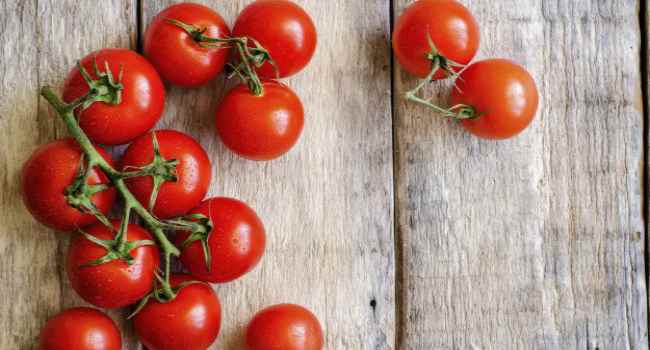
So it was with miniature tomatoes, although they have a lot of properties useful for the human body, which include:
- replenishment of lost minerals;
- fast saturation;
- prolonged absence of hunger;
- removal of excess fluid;
- preventing the development of anemia;
- adaptation to cold;
- strengthening of bone tissue;
- improvement of metabolic processes;
- prevention of cancer (lungs, esophagus, stomach, intestines);
- reducing the risks of developing pathology of the cardiovascular system.
How to choose cherry tomatoes
When there is no way to grow cherry on your own, but you really want to try them, you will have to learn how to choose a small tomato so as not to spoil the impression about it:
- outwardly, tomatoes should be smooth and shiny;
- the aroma of fresh and ripe tomatoes should be juicy and pleasant;
- the lack of smell indicates the immaturity of the fruits (that is, they were picked green);
- a damaged peduncle and an unnatural fruit color also indicates ripening in a plucked version, and not ripe;
- the fruits should not have any damage;
- when cutting a tomato, it must be full of seeds (only then is it considered ripe).
Cherry tomato culinary use
Despite the fact that small “cherry” tomatoes are considered direct relatives of ordinary tomatoes, their taste is extraordinary and it is very difficult to compare cherry taste with just one. According to seasoned culinary experts, cherry tomato combines the sweetness of raspberry and blueberry with some hints of melon aroma.
This type of tomato is widely used in Mediterranean cuisine. Also, this product is popular in Spanish, Italian, southern French cuisines.
Most often they are used whole or cut in half as a salad ingredient. They are also suitable for sauces and gravy (in this case, you can take cracked fruits).
Dried and dried tomatoes (or rather, their pulp) are added to soups and pizza.
To preserve vitamins and nutrients, it is recommended to freeze the product. In this form, in the freezer, it can be stored for up to two months.
At the moment, most growers prefer to simply canning small tomatoes, of which more can fit in a jar. True, there is not much benefit in such conservation.
In any case, due to the presence of fat-soluble substances, cherries are well absorbed when combined with vegetable oil, cream or sour cream.
Contraindications and harm
As with any product, even small cherry tomatoes are harmful in some cases. Therefore, people should refuse to eat such tomatoes:
- allergy sufferers who cannot tolerate yellow and red foods;
- having serious metabolic disorders;
- with a peptic ulcer (to avoid irritation of the mucous membranes);
- suffering from cholelithiasis (can cause exacerbation, acting as a strong choleretic agent).
In general, cherry tomatoes are healthy and available in stores all year round. Despite the fact that in winter it is still a greenhouse product, it is much tastier than its large counterparts.

