

The health benefits of yacon include its ability to regulate blood sugar, lower bad cholesterol, aid in weight loss, and many more. This vegetable in our country is still considered exotic and little known. What is yacon, what is useful in it, how to cook it, read this article.
Yacon is native to the Peruvian Andes. It has been growing throughout Latin America for thousands of years. The plant belongs to the Aster family. Scientific name Smallanthus sonchifolius.
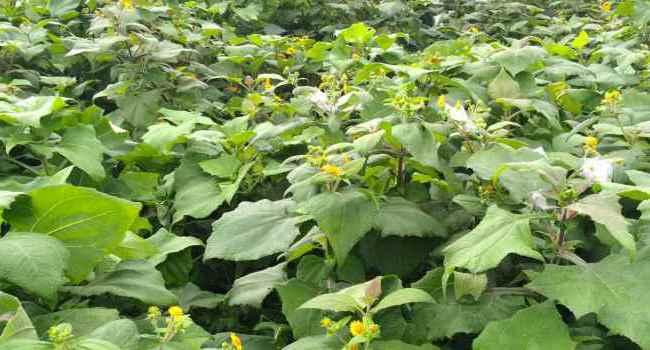
It is a tall perennial plant that can grow up to 2 meters in height. It is easily recognizable by its large green leaves and yellow flowers, similar to those of sunflower or Jerusalem artichoke. Yacon is grown for the sake of tubers, which are consumed both raw and cooked. They make syrup from them, which can replace sugar as a sweetener in many dishes.
In their texture and smell, they resemble something between an apple and a watermelon, slightly sweet, resinous and floral.
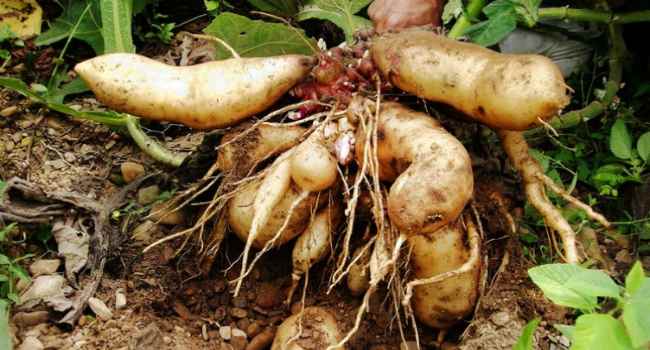
Yacon has two types of underground tubers. The first red grows just below the soil surface. They are usually used to plant new plantations. Tubers that are located deeper are used for food. They are brown in color. One such tuber can weigh from several hundred grams to a kilogram.
For a long time, this vegetable culture did not go beyond its traditional growing region. Today it is grown in Australia and New Zealand, Japan, China and many other countries.
Yacon is usually not affected by pests, drought tolerant. Therefore, it is easy to grow it all year round as long as there is no frost. It is suitable for and for our climate. In dry cold seasons, the surface tubers die off, but with the arrival of heat, the plant recovers.
The tubers can be dug out after the aerial part has died. Simple care that does not require a lot of experience contributes to its distribution throughout the world, where there are suitable conditions for it. After all, many vegetable plants were brought to Europe precisely after the discovery of the New World by the first navigators from the native places of the yacon.
Why is yacon composition useful?
The plant tubers contain fructo-oligosaccharide, which is an indigestible polysaccharide and consists mainly of fructose. It is they who give the tubers a sweet taste. In addition, they have prebiotic properties, i.e. serve as food for beneficial bacteria in the intestinal tract. And, therefore, they have a beneficial effect on the digestive system.
Organic acids were found in yacon leaves: protocatechuic, chlorogenic, caffeic, ferulic. There are not many vitamins in it, but it has a sufficient content of potassium, calcium and phosphorus.
Despite the fact that there are not very many useful substances in the tubers themselves, they contribute to the assimilation and absorption of substances coming from other food.
It contains antioxidants (in the leaves). Local peoples brew tea from them.
The advantage of yacon is that, although it is sweet, its calorie content is not high.
Yacon beneficial properties
The main useful properties of yacon include its ability:
Regulate blood sugar;
Control blood cholesterol levels;
Weight loss aid while losing weight.
In addition, he:
Improves immunity;
Serves as the prevention of liver obesity;
Has a prebiotic effect;
Improves intestinal motility;
Prevents constipation;
Has a beneficial effect on the cardiovascular system;
It has antioxidant properties.
The leaves of the plant have anti-fungal properties.
Yacon tubers are rich in insoluble fiber, which allows it to be included in many weight loss diets and helps to prolong the feeling of fullness.
Yacon contains inulin, which is a type of fructose. This property will be beneficial for type 2 diabetics. There is still no exact scientific data on its action in this disease, but work in this direction is underway.
It can be used as a natural sweetener. This fact should be of interest to those who want to reduce their consumption of regular sugar.
Yacon is able to regulate body fat and prevent excessive accumulation of cholesterol, thereby protecting the liver and improving metabolic processes.
The ability to lower “bad” cholesterol serves to prevent the development of strokes and heart attacks.
Yacon contains potassium, which is able to dilate blood vessels. This means that it relaxes the blood vessels and reduces the stress on the cardiovascular system. Potassium participates in the regulation of cellular fluid, which is beneficial for hypertensive patients.
Research has shown antioxidant activity that prevents inflammatory and chronic diseases associated with the oxidative effects of free radicals on the body.
This ability of tubers is also interesting for the prevention of the development of oncological diseases. There are suggestions that it may be effective against skin, colon and blood cancers.
In folk medicine of the countries of South America, it is used for diseases of the kidneys and bladder, as well as for cystitis, nephritis, myalgia.
What Science Says About Yacon
A 2013 U.S. study found that eating yacon:
Improves the growth of bifidobacteria in the intestines and improves microflora;
The absorption of minerals is improved;
Normalizes metabolism;
Influences the regulation of serum cholesterol.
Prebiotics strengthen the defenses, improve the body’s ability to resist infections and allergic reactions.
Another study in rats confirmed the benefits of yacon for diabetes. It can perfectly replace sugar for people with diabetes. In addition, these studies have shown that it lowers blood glucose levels.
Studies in 2009 showed that the daily inclusion of yacon syrup in premenopausal obese women leads to significant weight loss, waist and body mass index reduction. The feeling of satiety also increased.
Side effects
Still, yacon can have some side effects. This:
Allergic reaction. Several cases have been reported.
Abdominal pain and intestinal upset from excessive consumption of tubers or syrup.
True, all of these side effects are more related to syrup.
Yacon in cooking
Yacon is famous for its crisp, juicy, fruity and sweet taste. The most preferred way to consume it is raw.
Before you cook it:
First you need to wash the tubers;
Peel off like a potato;
Chop the pulp.
It can be served simply as an appetizer, added to a salad.
When cooking, take into account that the pulp quickly oxidizes and turns brown. To avoid this, sprinkle with lemon juice.
It goes well with mango and pineapple, despite the fact that it belongs to vegetables.
It can also be boiled, baked, added as a filling in pies, jam or preserves.
Given its low calorie content, yacon is a great product for a low calorie diet.
How to grow a yacon
This vegetable crop is traditionally grown in the highlands of the Andes, where the weather changes very often. Therefore, it is perfectly suited for cultivation in many other regions. Yacon tolerates drought and short-term cold snaps well. If the outside of the plant dies off, it will quickly recover. Not particularly picky about the soil.
To grow it in your area, first prepare the soil. Loosen and fertilize. Still, the best tubers can be obtained from nutrient-rich and well-drained soil.
After preparing the site for it, plant a large tuber with several shoots in the ground to a depth of 3 centimeters. Mulch well to retain moisture. Don’t worry if there is a bump on top. Young shoots will sprout soon.
Unlike potatoes, it does not require frequent weeding and hilling. Its large leaves and the ability of the plant itself to quickly give “babies” will prevent the appearance of any weeds.
Considering this property, plant other plants at a distance of at least half a meter from it. It is not for nothing that local farmers plant yacons along the border of the site.
The crop can be harvested in 6-7 months. You need to choose tubers after the aerial part wilts. The soil under the plant will begin to lift slightly. Rake away the soil to speed up their ripening.
As the aerial part dies off, the tubers become sweeter. In places where winters are mild, they can germinate again.
Dig them out in the same way as other root vegetables, carefully with a shovel so as not to damage the root vegetables.
Separate the small reds. They will land again. Leave the brown ones in the sun for a while. So they will get some more sugar.
For planting, the red tubers must be washed from the soil before storage and put in a box, lightly sprinkling them with wet sand or sawdust. Store in a dry, dark place. Where winter frosts are strong, you can make foam boxes for storage. It is better to germinate them before planting.
Store edible tubers in a cool, dark place.
Here is such an interesting vegetable plant and still exotic for many regions of our country. But potatoes with tomatoes were once only a decoration of the garden. Perhaps the yacon will take root with us, and we can freely buy it in the store at any time of the year.
How the yacon blooms