


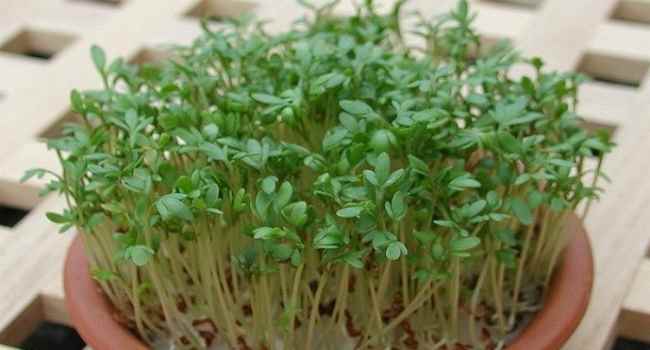


Watercress is a green, leafy vegetable that many grow in their homes or gardens. Its health benefits lie in providing the body with many nutrients, vitamins and minerals, which help to increase immunity and prevent many diseases.
Currently, more and more people are trying to take care of their health, avoiding industrial products and preferring natural ones provided by nature itself. Many contemporaries try in the summer season to replenish their body with the maximum amount of vitamins and minerals through the use of a variety of plant products. Indeed, this is a good way to strengthen yourself for the winter.
Among the numerous herbaceous plants, there are those that are completely unpretentious, delight the consumer not only with the originality of taste, but also with extensive useful properties almost all year round. These plants include watercress, which is called microgreen due to its small leaf size and is widely grown in Asia and Europe.
Watercress what is this description
Widespread since ancient times and known back in the Roman Empire, watercress belongs to an annual vegetable plant – a herb of the cruciferous family of the bug family. With rather thin stems, such a salad can grow up to 50 centimeters in height. Although, he does not “live up to” such growth, but breaks down at a young, sprouting age.
The plant blooms exclusively with white or pale purple small flowers. The color of the leaves also ranges from pronounced green to slightly yellowish.
The homeland of the plant is considered to be India and the Middle East, the territory of modern Iran. True, due to its unpretentiousness to the soil, it grows quietly all over the world, not only in open ground, but also next to indoor flowers, sharing one pot with them.
Today, there are several varieties of plants:
- whole-leaved “Dukat” (early and late ripening variations); it is more widespread, has whole, not carved, not small leaves, ripens in three weeks;
- curly (differs in green rugged leaves and is characterized by early maturity);
- sowing “Dansky” and “Zabava” (refer to early ripening varieties and have an average appearance between the two previous ones).
In Africa, a special variety was also bred, which differs from others in its high content of essential oils (that is, oilseed).
Why watercress is useful chemical composition and calorie content
Despite its small size, watercress is a unique plant in terms of chemical composition. And this fact was established for a reason. Indeed, in the leaves and stems of the plant there are:
- Water (up to 90%);
- Protein fractions of plant origin;
- Fats;
- Saturated fatty acids;
- Carbohydrates (mono- and disaccharides);
- Fiber (dietary fiber);
- ash product;
- Flavonoids;
- Glycosides;
- Alkaloids;
- Essential oils;
- Retinol (vitamin A);
- Provitamin A (beta-carotene);
- Tocopherol (vitamin E);
- Ascorbic acid (vitamin C);
- B vitamins (thiamine, riboflavin, pyridoxine, niacin, choline, folic and pantothenic acids);
- Vitamin K;
- Vitamin D;
- Salts of minerals (magnesium, iodine, iron, potassium, calcium, phosphorus, sodium, copper, zinc, manganese and selenium).
It owes its specific taste and smell to the glycoside propsolin and a bitter substance called lepidine.
Watercress, along with beets and other leafy greens, contain very high levels of dietary nitrate. Studies show that nitrates can help lower high blood pressure, reduce the oxygen needed during exercise, and improve the performance of athletes.
One 100 gram serving contains:
2.35 grams of protein
0.15 grams of fat
1.32 grams of carbohydrates
Eating 100 grams of watercress per day can satisfy the daily requirement for more than:
In vitamin K – by 300 percent;
In vitamin C – 70 percent;
Vitamin A contains 65 percent;
In calcium – by 11 percent;
In manganese – by 11 percent;
In potassium it is 8.5 percent.
In addition, 100 grams of lettuce can provide the body with almost 6 percent of the daily value of vitamin E, thiamine, riboflavin, vitamin B6, magnesium and phosphorus.
The calorie content of 100 grams of the product is only a little over 10 kilocalories. The energy ratio of proteins, fats and carbohydrates is 33/20/55%.
Watercress health benefits
This small vegetable salad contains a number of nutrients that may lower your risk of cancer. The bitterness that is present in it stimulates the body’s natural defenses and protects the cells of the body.
In addition to them, it contains compounds with high antioxidant capacity. These are lutein, beta-arotene, vitamin C and other substances. They reduce oxidative stress that free radicals can cause. The inclusion of this green vegetable can prevent and reduce the risk of breast, colon cancer.
People who consume foods low in calcium, magnesium, and potassium are more likely to be at risk of high blood pressure, studies show. These minerals are thought to help lower blood pressure by releasing sodium from the body and dilating the arteries.
It is important to note that using these beneficial minerals in supplement form will not provide the same health benefits as when consumed with food. Watercress contains all three of these beneficial minerals.
Low vitamin K content has been linked to a higher risk of bone fractures. Adequate intake improves bone health, acts as a modifier of bone matrix proteins, improves calcium absorption, and reduces urinary calcium excretion.
The alpha lipoic acid contained in it is capable of lowering blood glucose levels and increasing insulin sensitivity.
Like many herbal products, it helps to lower the level of bad cholesterol in the blood, which in turn reduces the risk of developing cardiovascular diseases such as atherosclerosis and others.
Folate or folic acid is extremely important for the development of a healthy fetus and is critical for normal cell division. For pregnant women, the intake of folic acid should be at least 400 mcg per day to prevent the development of birth defects in the fetus and reduce the risk of congenital diseases.
Older people also need folate to help prevent age-related changes. Including foods high in folate can prevent cognitive decline.
Most of the vitamins present in watercress are water-soluble. This means that they need to be replenished daily. These vitamins include vitamin C. It is especially important during the period of respiratory diseases. There is more of it in a salad than in oranges.
Watercress benefits for the body
Despite the relative nondescriptness of watercress and its external dissimilarity with the usual salad leafy vegetables, many scientists attribute the sprouts and leaves of the plant to the source of vital energy so necessary for a person in the autumn, winter and even the initial spring cold. Speaking of the benefits of watercress, it is capable of:
- Prevent the development of scurvy;
- Increase hemoglobin;
- Relieve gum inflammation;
- Remove the initial toothache;
- Perfectly strengthen the immune system;
- Reduce the risks of developing oncological diseases (such a property was determined quite recently with an additional study of the constituents of the plant; simply lettuce prevents damage to the DNA chain of white blood cells);
- Strengthen the heart muscle;
- Support the work of the vascular system;
- Reduce and normalize blood pressure levels;
- Increase the level of essential hormones for thyroid problems;
- To improve the work of endocrine organs in general;
- clear the airways if they are blocked;
- Remove phlegm from the lungs and bronchi (often this salad is recommended for asthma);
- Reduce the negative impact on the lungs with the fact of smoking (it helps especially well when a person wants to quit smoking);
- Stimulate and normalize appetite;
- Improve and accelerate metabolic processes;
- Improve the work of the digestive system;
- Improve liver function;
- Remove excess fluid from the body by normalizing the functioning of the kidneys and bladder;
- Remove toxins and toxins from the body;
- Promote weight loss;
- Strengthen the nervous system;
- Get rid of insomnia;
- Increase resistance to stress;
- Cope with depressive conditions;
- Improve mood;
- Protect eyes from cataracts;
- To intensify mental activity;
- Control the work of the reproductive system;
- Increase potency in men.
As an antioxidant agent, watercress is recommended for women not only for ingestion (it is believed that it improves the condition of the skin and rejuvenates them), but externally as a juice that can be washed (the skin is moisturized and nourished, it becomes more elastic and elastic) or use as a lotion.
In favor of watercress, it can be noted that it was once a staple in the diet of Roman soldiers. But they had to overcome many kilometers of crossings in different parts of the world.
Watercress use in cooking
Many culinary experts do not bypass watercress with its spicy, and even tangy taste, reminiscent of horseradish or mustard, when preparing a number of dishes in different directions.
According to the chefs, the greens of such a fresh salad cut with a sharp knife go well with egg dishes (scrambled eggs or scrambled eggs), meat and fish (used as a seasoning), vegetable salads, potatoes (both boiled and baked), butter-based sandwiches …
Vegetarians classify these greens as plant-based protein foods.
For example, in Italy, watercress is popular with seafood. However, it is highly discouraged to consume dried cress leaves because of the “disappearance” of all useful properties, as well as the acquisition of an unpleasant smell and taste by the product. Only those plants whose stems differ and are white are suitable for food.
Try making watercress soup or adding it for herbs at the very end of cooking.
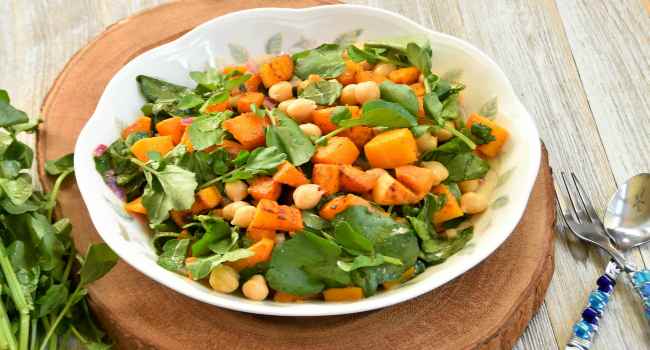
It is most commonly used in salads, but can be included in pastas, sauces, like any other herb.
Choose a watercress with a deep green color and crispy leaves with no signs of wilting. Store it in the refrigerator and use it within a few days of purchase.
Possible harm and contraindications
This kind of salad cannot be considered completely harmless even for completely healthy people. So:
- Do not exceed the daily allowance of 85 grams;
- It is worth finding out if there is an individual intolerance, often showing skin irritations;
- Do not give salad to small children;
- For pregnant and breastfeeding women, this product is also prohibited (to a greater extent with insufficient data on its effect on the health of women and children during this period. In addition, bitterness can spoil the taste of breast milk);
- It is worth abandoning it during an exacerbation of peptic ulcer or gastritis (especially with high acidity, since bitterness stimulates the production of gastric juice);
- It is contraindicated for hypotensive patients (it will further lower the pressure);
- Care should be taken with those who suffer from frequent urination.
It is worth refraining from it for people taking medications to thin the blood, as it contains quite a lot of vitamin K.
If stored improperly, it can accumulate bacteria and convert nitrates to nitrites, which are potentially hazardous to health.
Of course, watercress is a product that is useful for maintaining and preserving our health. But everything should be in moderation. Sometimes food can become poisonous and do more harm than good. Food should be varied and all foods should be present.

