


Anise ordinary
One of the most common and widely used annual plants is the common anise. This is a representative of the celery family, which has been growing in Lebanon for a long time. In our time,… Read More »Anise ordinary
One of the most common and widely used annual plants is the common anise. This is a representative of the celery family, which has been growing in Lebanon for a long time. In our time,… Read More »Anise ordinary

Ammania bonsai is an aquarium plant with small green leaves. It is ideal for creating your own ecosystem in a nano aquarium. This plant is widely used as a decoration. It is compact and slow… Read More »Ammania bonsai

Very often Japanese quince (chaenomelis) is used for decorative purposes, in gardening. Only at the beginning of the last century did scientists nevertheless recognize that the fruits of the shrub bring benefits to human health.… Read More »Japonica
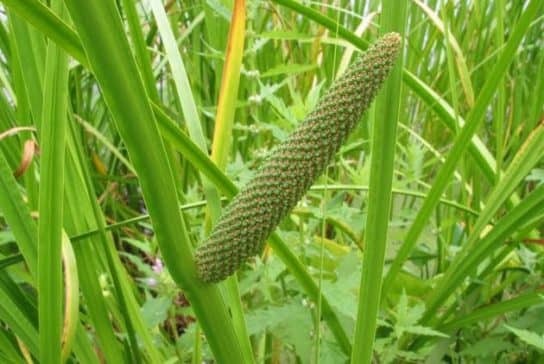
Most of herbaceous plants have unique healing properties and are actively used in medicine, cooking and other fields. Calamus is no exception, which is a representative of the Airnye family. It is believed that the… Read More »Air swamp

Formic, or, in scientific terms, methanoic acid is a saturated monovalent carboxylic acid belonging to the monovalent group of carboxylic acids. Under normal conditions, without temperature exposure, the acid in question is a colorless liquid with an unpleasant odor, characterized by excellent solubility in glycerin, methylbenzene, vinegar and benzene. In addition, it can react with diethyl ether, ethanol and ordinary water.Read More »Formic acid: properties, harm and benefit, application.

Autumn is a period when we have a great chance to strengthen our immunity with the help of such a storehouse of vitamins and microelements like berries. Read More »Autumn berries – strengthen the immune system before winter.

Sea buckthorn is an unsightly shrub that grows almost anywhere. He came to us from the countries of Central and East Asia. In rural areas, sea buckthorn is often used as a natural hedge, because this bush is quite tall, dense and sweeping. However, the main benefit of sea buckthorn for humans lies not in this, but in small yellow berries, which seem to stick to the bush (hence the name) and are its fruits. We will talk about them below.Read More »Sea buckthorn: benefits, composition, contraindications and features of the berry

All living organisms interact with each other, with their environment and energy. At the same time, all environmental factors on our planet are quite changeable, therefore, it becomes necessary for all living organisms to sometimes adapt to certain changes, that is, to adapt to new living conditions.Read More »Adaptation of organisms

Chicory is a biennial, sometimes perennial herb of the Asteraceae or Asteraceae family. The homeland of the plant is the Mediterranean. Chicory is common in areas with a temperate climate, does not like high humidity. Found in New Zealand, America, North Africa, Eurasia, Australia. In the wild, it grows on forest edges, along country roads, in meadows, wastelands.Read More »Chicory


