


Ruminants are usually classified as mammals, which are included in the suborder of artiodactyls. This suborder includes several families, all animals of which are distinguished by a very peculiar and complex digestive system. And their stomach is divided into four parts:
- scar;
- net;
- book;
- rat.
In its main department – the rumen – there are symbiotic bacteria, whose task is to ferment cellulose with the help of intracellular protozoa. And ruminants freely digest some of these bacteria in order to be able to obtain animal protein.
In this regard, ruminants have an unusual structure of teeth – they have no upper incisors, and instead of them a dense ridge of the corpus callosum is formed, and the teeth themselves are adapted for grinding ruminant feed.
Species of ruminants
Pronghorn antelope
Antelope canna
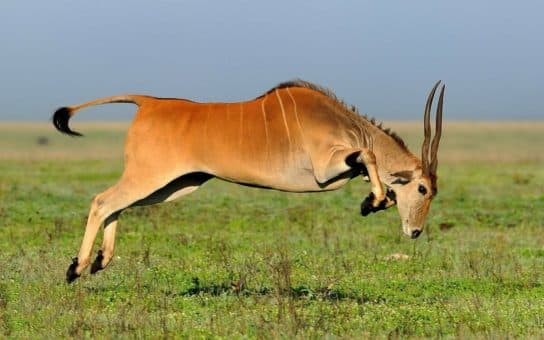

Giraffe


Okapi
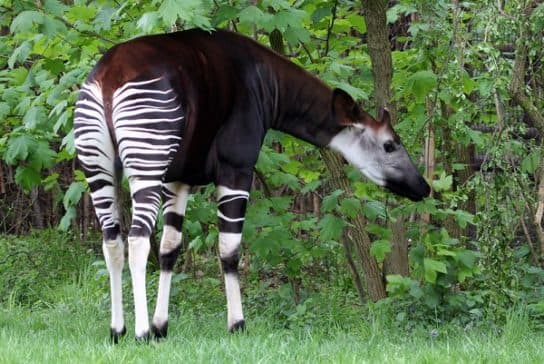

To the news
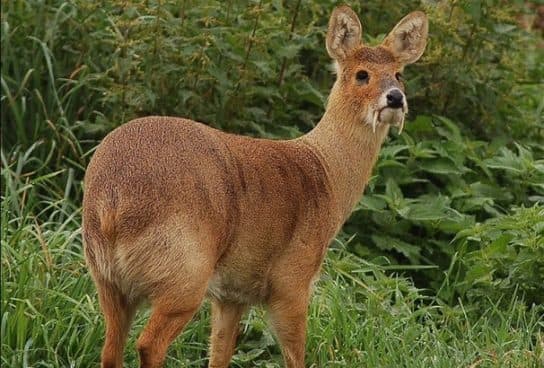

Oribi

Takin

Bison
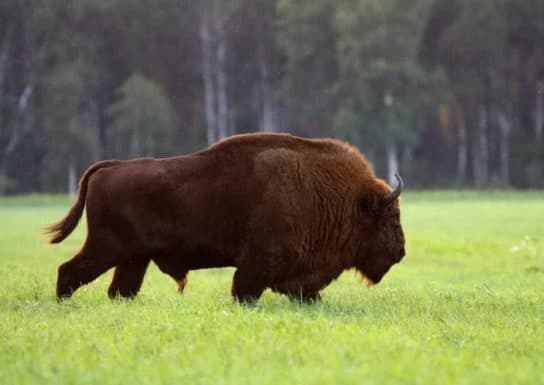

Bison
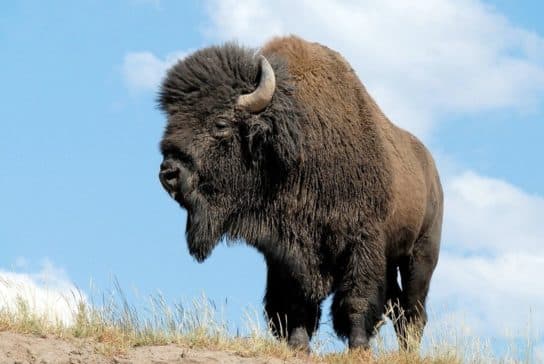
Buffalo


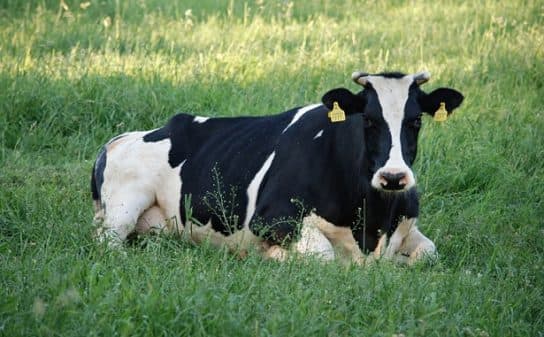
Cow

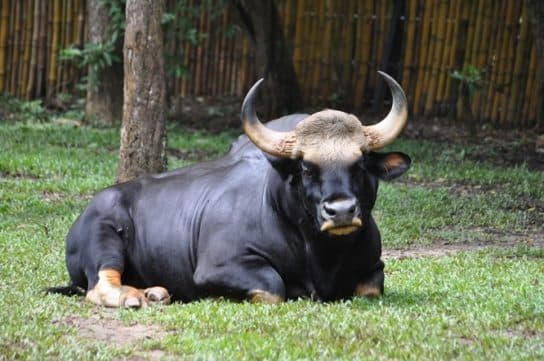
Kuprey

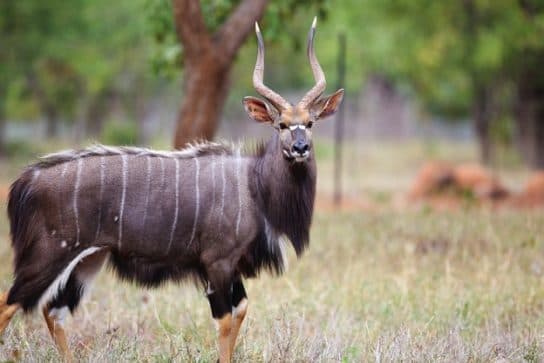
Nyala
Saola
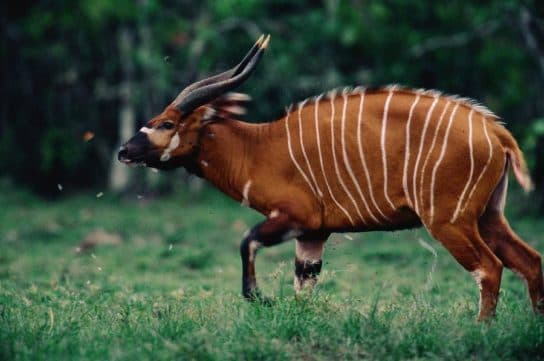
Water buffalo

Wild as
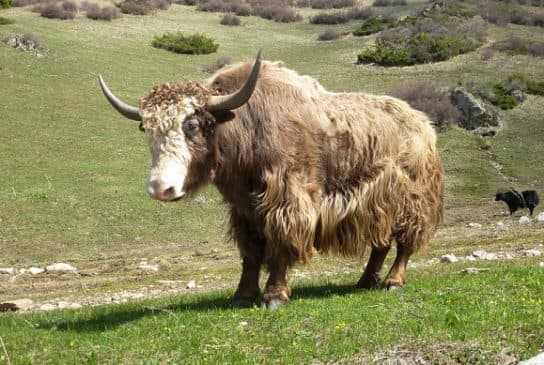

Zebu

Features of ruminants
The main and main feature of ruminants is their digestive system and four-chambered stomachs (however, for example, the camel and fawn can boast a three-chambered stomach). In this regard, animals of this family eat grass in huge quantities and quickly accumulate what they have eaten in the first section, where the food softens. Later, this material – gum – is erupted and chewed, crushed by animals, because cellulose is difficult to digest. Then the gum is sent to other departments, where it is further processed by microorganisms.
Ruminant mammals include six families of artiodactyls:
- pronghorn;
- giraffe;
- news;
- deer;
- deer;
- bovids.
It is customary to include more than 160 species of ungulates of various sizes and sizes in the suborder:
- livestock (both large and small);
- wild forms of animals (bison, bison, yaks, antelopes, giraffes).
The constitution of animals of this suborder is different – from small to large, basically they are all slender with long limbs, equipped with two or four fingers. Moreover, the terminal phalanges of the fingers are formed into hooves. But the lateral fingers in their bulk are underdeveloped and do not participate when walking, without touching the soil.
These animals usually have a pronounced sexual demorphism – the males are equipped with horns. And most of the ruminant species are equipped with special skin glands located on the head, groin, and legs.
Ruminant stomach and structure
The morphological and functional gastric system of ruminants consists of four sections (scar – 57%, mesh – 7%, book – 20%, abomasum – 11%). The first three are not equipped with glands and perform the functions of the so-called proventriculus, in which food is processed – both mechanically and bacterially.
The walls of such a proventriculus are formed by three kinds of membranes:
- serous
- muscular
- mucous membrane (and, interestingly, the share of this membrane is about 75% of the total mass of the entire stomach).
The digestion process is also very interesting in ruminants – it is quite peculiar in that it works with chewing gum, including the following points:
- The initially chewed herb ends up in the rumen, where saliva and microorganisms begin the fermentation process.
- From the scar, the mass is sent to the mesh, which differs from the cellular structure of its walls. There the feed is regurgitated back into the mouth, where teeth and mica are taken over, completing the crushing process.
- Then the semi-liquid and well-prepared chewing gum is swallowed again by the animals, getting into another part of the stomach – the book. It got its name because of the parallel folds that are formed by a book in the likeness of real pages – leaflets.
- Here the food goes through the process of dehydration and goes further into the abomasum. And here it is finally affected by rennet juice.
Almost all ruminants are characterized by a special structure of the upper jaw – the incisors are absent, and instead of them, a solid roll of the transverse format is formed, and the molars are equipped with special enamel folds that form holes.
Due to the special digestive system, ruminants have a very long intestine, and the mammary glands are formed into an udder with several nipples, located in the groin area.
Most species of ruminants are characterized by the presence of horns of various shapes and structures – they are usually located on the frontal bones of males (and not only).
Usually, the metacarpal bones of the fingers in these animals are fused into a single array, due to which, together with some reproduction of the bones of the forearm and lower leg, the limb is distinguished by a rod-like structure. It is this structure that has developed as an excellent adaptation for running.
The work of the ruminant stomach – video
Ruminant nutrition
Usually, ruminants don’t bother chewing the food they eat thoroughly – usually this process is superficial. After all, it undergoes the main processing in one of the sections of the stomach – the rumen – and there the feed is brought into a state of ideal fine consistency. It is for this purpose that animals constantly chew gum, regurgitating food into the mouth.
Such nutrition and the structure of the stomach is primarily due to the originality of the digestion of feed (usually physicochemical), as well as the amount of nutrients and minerals necessary for the animal.
Such a device is ideal for the assimilation of organic substances – namely, for converting them into simpler soluble compounds of low molecular weight. And to provide all this, the livestock breeder must perfectly know the process of digestion.
Cattle simply need roughage with highly digestible and digestible protein – but low rumen solubility. After all, the greater part of the feed is converted into bacterial protein, the higher the value of such feed for the animal.
And the main ingredients of feed for animals from the ruminant group are considered to be grain, bran as a source of energy, as well as corn flour, alfalfa, oil cake, cellulose and even grain casings.
The importance of ruminants
Any ruminant animal is not a predator, and is not able to defend itself from opponents who have chosen them as a link in their food chain. And, in order to survive, the ruminants learned to get and assimilate food on the run. And only then digest it.
In fact, it is ruminants that are characterized by the presence of substantial and wide sources of food, in contrast to the same predators. And this group of animals has a symbiotic digestion (and the maximum among all vertebrates) – to aid in the highly efficient use of food. And it is this kind of digestion, when the endosymbionts (bacteria, fungi), which are in the retinal stomach, are involved in the breakdown of food, as well as in the process of hydrolysis of feed.
And a huge number of animals of this group save mankind – after all, among them there are not only sources of food for people, but also draft, cargo forces. In fact, the importance of ruminants for humanity can hardly be underestimated – after all, we all always encounter them in our daily life.
Conclusion
On the geological scene, ruminants began to appear in time immemorial, even in the Eocene, as small forms, which at that time occupied a rather insignificant place in the fauna. And now this species of animals represents the most numerous group of ungulates, which is still far from full bloom.

