


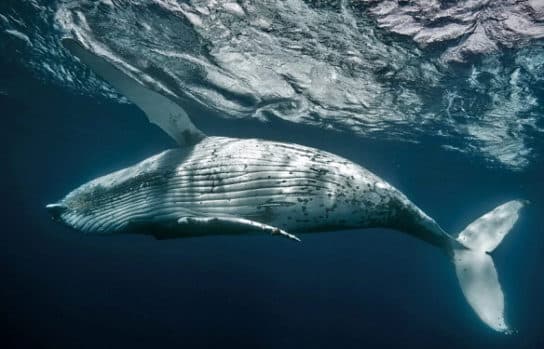


Seiwal (Willow whale) (lat. Balaenoptera borealis, или Rorqualus borealis) Is a large representative of the suborder of baleen whales. The animal ranks third in size and is second only to the blue whale and fin whale in size.
Description
The willow whale is a mammal, a warm-blooded animal that has the following characteristic features:
- Use the lungs when breathing;
- Have a reduced hairline;
- The newborn offspring are fed with milk produced by the mammary glands.
The largest representative of sei whales reaches a length of 20 m. On average, whales grow up to 12-15 m. At the same time, females are much larger than males. They grow 15-17 m in length and have a body weight of about 20-30 tons. The maximum weight of a female seival is 45 tons.
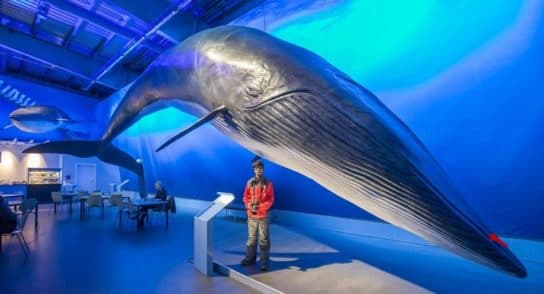

Usually a sei whale develops a speed of up to 25 km / h. But sometimes it can accelerate to 50 km / h. Most often, the mammal swims on the surface of the water, but sometimes it sinks to 300 m under water. The life span of the willow whale is 25-50 years.
Appearance
Seiwal has an elongated fish-like body with a compressed tail, sharply connected to the body. The body of the whale is dark gray on the back and light gray or white on the belly. On the upper part of the body there are numerous light spots that appear at the site of wounds inflicted on the animal by other inhabitants of the sea.
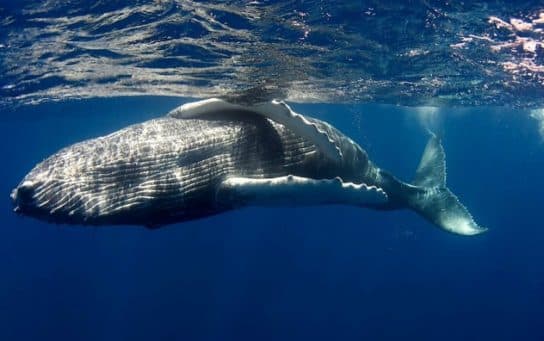

The whale’s muzzle is pointed. There are lobed fins. The pectoral fins are narrow, pointed and slightly curved in front. At the end of the thick and powerful tail, there is a fin in the form of two horizontal lobes, which provides an easy forward movement of the whale.
The last third of the body has a crescent-shaped dorsal fin that rises 0.6 m above the base of the body.
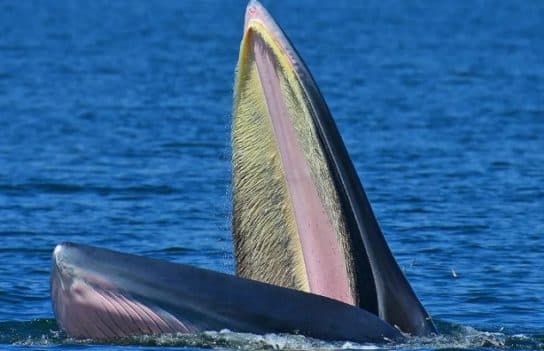
On each side of the upper mouth there are 300-400 ash-black whalebone plates. Small whitish bristles can be seen inside the plates, and at the edges there are hard, coarse and very strong bristles. The length of each plate reaches 48 cm. The left side of the lower jaw is darker than the right.

Red Book
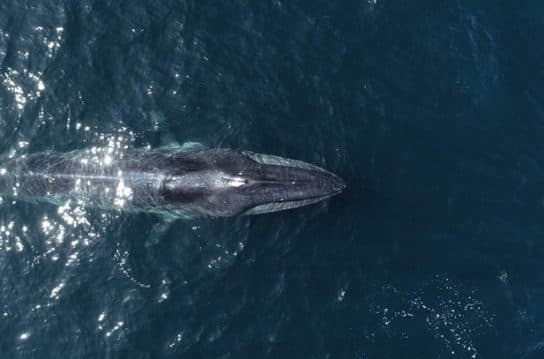
Seiwal belongs to the category of a rare subspecies, the number of which continues to decline and may soon become endangered. It is listed at the species level in the IUCN-96 Red List, as well as a category of protected resources by the International Whaling Convention.
Sei whale fishing is prohibited in all seas and oceans. They are protected in accordance with Russian legislation.
Where dwells
Seiwals live in most of the oceans and adjacent seas of the Northern and Southern Hemisphere. They especially prefer deep sea waters, coastal areas. Not found only in polar, tropical regions. Not found in spacious bays.
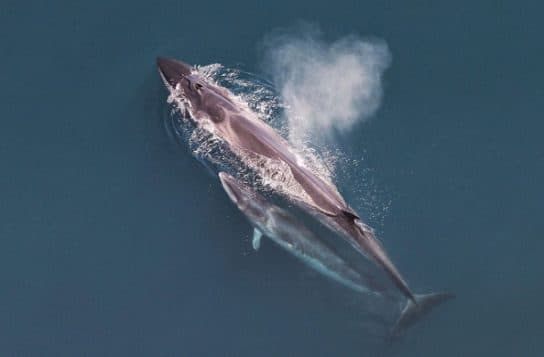

The animal migrates every year along the same route. In summer, willow whales live in temperate, circumpolar regions, and in winter – in subtropical waters. The optimum water temperature for mammals is + 8 … + 25 degrees. Representatives of the species living in the Southern and Northern Hemispheres never intersect due to the large time difference.
Character, lifestyle
Sei whales live in small groups of 3-6 individuals. In rare cases, in places with a large abundance of food, large groups of whales with numbers of up to 1000 or more are encountered. Such an accumulation of seivals is also observed during migration. Mammals are predominantly diurnal. Despite their huge size and lightning-fast reaction, sei wals are peace-loving animals.

Nutrition
Seywal feeds on zooplankton and small fish on the ocean surface. The whale lays down on the surface of the water sideways and slowly swims through the accumulations of predators, eating almost a ton of marine life per day.
Reproduction
Mating periods of willow whales are extended, they occur mainly in the winter season. Mammals in the Southern Hemisphere usually mate between May and July, and in the Northern Hemisphere between November and February. Sexual maturity occurs when the male reaches 12 m in length, and the female – 13 m.This happens about 5-7 years of age.
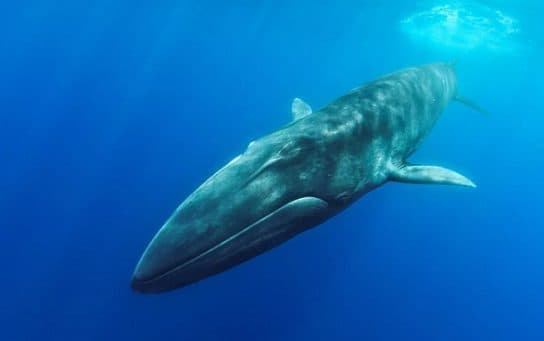
Females carry a calf from 10.5 to 12 months. In most cases, only 1 calf is born at a time, about 4.5 m long. Previously, female seivals gave birth every year, and now – once every 2-3 years. After the baby is born, the female whale feeds him with breast milk for 7-9 months.
Interesting Facts
- The skin of the willow whale is reliably protected from the negative effects of ultraviolet radiation.
- The mammal has a thick, uniform layer of fat under the skin that protects the internal organs from severe hypothermia.
- To replenish the air supply, the willow whale rises to the surface of the waters every 20 minutes.
- Seiwal swims faster and faster than all whales. His first throw when frightened or injured is lightning fast.
- Unlike other minke whales, sei whales avoid floating ice.
Video about seyvala


