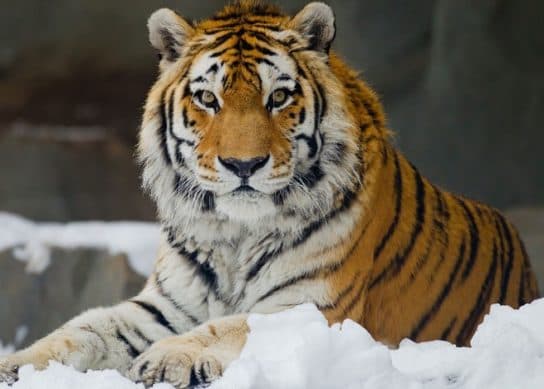


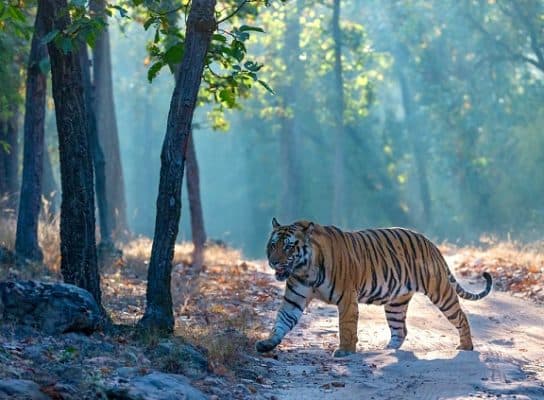
The fur of tigers ranges from dark rusty-orange to light yellow-orange. Dark vertical stripes run along the body, which are unique to each individual. The underparts and parts of the muzzle are creamy white. The color of each subspecies differs depending on the habitat, the Siberian tiger is lighter with less pronounced stripes (why are the tigers striped?), The Bengal tiger is bright orange in color with a dark pattern.
The length of the coat also depends on the region. The Amur tiger has long and dense fur, it warms in cold weather. The density depends on the season, in the winter months the wool is denser. Tigers that live in the tropics, such as Sumatran, usually have shorter and less dense fur.
Types of tigers
Amur
Amur (Ussuriysk, Siberian) tigers are muscular, with large heads and powerful forelimbs. The color of the coat is from orange to brown, the bodies are covered with white spots and black stripes. They have long whiskers (longer in males), eyes with yellow irises. The ears are small and rounded with black markings, surrounded by white areas.
Each tiger has a different pattern. The markings are as unique as human fingerprints, and researchers use them to identify a particular tiger. Animals use stripes for camouflage, tigers silently follow and pounce on prey, invisible for prey.
Bengali


The tigers are almost extinct. The area in Asia has decreased. The surviving subspecies Pathera tigris trigris, known as the Bengal tiger, is found in:
- Bangladesh;
- Butane;
- India;
- Nepal.
Bengal tigers live:
- on alluvial pastures;
- in tropical forests;
- in mangroves;
- deciduous and shrub forests.
The coat of tigers is of the “standard” color – orange with black stripes running down the sides. Common colors:
- white with brown or black stripes on the sides;
- a whitish yellow gold tabby with amber stripes on the sides.
Bengal tigers have the longest canines of any feline, about 100 mm in size in large individuals and longer than a lion of the same size. Bengal tigers have large retractable claws that allow them to climb trees and kill prey.
Indochinese
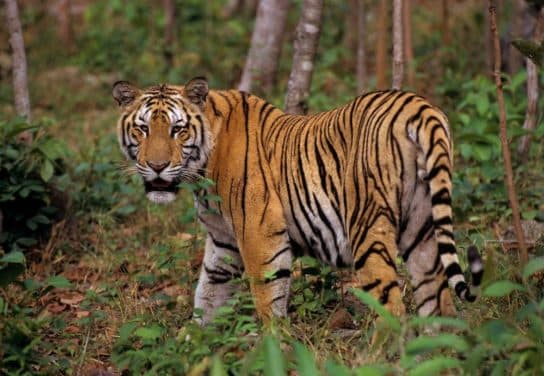

At first glance, these rare animals are similar to other tigers, but close observation on the coat shows a darker orange color, almost golden, as well as narrower dark stripes. Indo-Chinese tigers are also smaller in size than Bengal tigers. Indochinese tigers live in forests in hilly or mountainous areas.
Malay
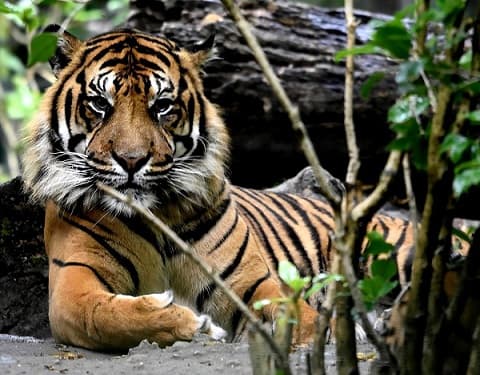

They live only in the south of the Malay Peninsula. The Malay tiger was recognized as a subspecies in 2004. It is the smallest subspecies on the mainland and the second smallest subspecies of tigers. The orange body is covered with black stripes. White fur can be seen:
- around eyes;
- on the cheeks;
- stomach.
The Malayan tiger:
- rough language;
- powerful jaws;
- large canines;
- powerful front legs with sharp retractable claws;
- muscular body;
- a long tail.
The black stripes are thinner than other tigers and provide perfect camouflage in the jungle.
Sumatran
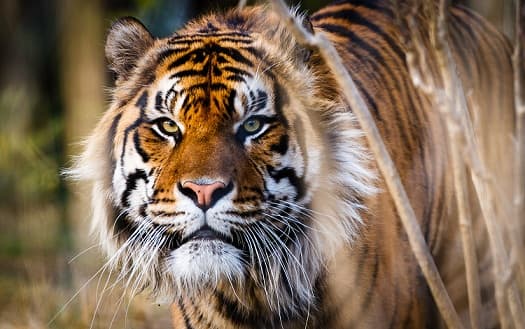

They live only on Sumatra, an Indonesian island. These are the smallest of all living subspecies of the tiger, because they have adapted to the dense forests of Sumatra. The smaller size allows you to quickly navigate the forest. The prey available on the island is small and will not provide growth, development of the body. The stripes on the fur are also thinner than other tigers, helping camouflage in the shade. Unlike other cats, these tigers love to swim. Sumatran tigers have a partial web between their toes, making them quick swimmers. Sumatran tigers also have a white beard.
South China
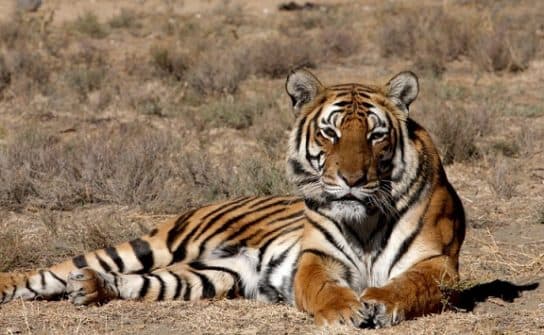

Tigers belong to the group of small subspecies of the tiger. It is difficult to see them in wildlife due to the extinction of the species. The Chinese tiger is known to have yellowish fur with narrower and longer stripes than its Bengal counterparts. Animals have sexual dimorphism, males are larger than females. In addition, the tiger’s skull is larger than that of the tigress.
Extinct subspecies
Balinese
When it still existed, it was the smallest subspecies of the tiger. Unfortunately, people will no longer appreciate the beauty and size of the Balinese tiger. The animals became extinct due to hunting.
Caspian
The subspecies was found in rare forests south and west of the Caspian Sea. The closest living subspecies to the Caspian tiger is the Amur tiger.
Javanese
The tigers were larger than their Balinese counterparts.
Hybrids of tigers with other carnivorous cats
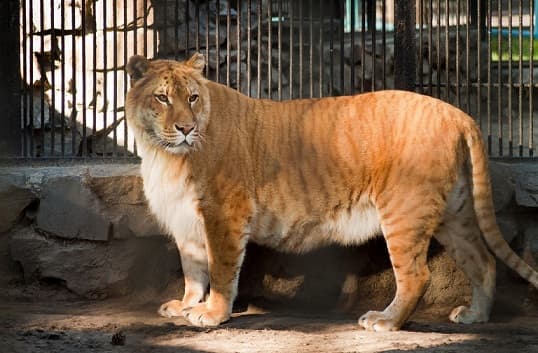
Lions are known to mate with tigers, especially from the Bengal and Amur subspecies. The liger is a hybrid resulting from the mating of a male lion and a tigress. The male lion provides the growth-promoting gene; the tigress does not contribute the growth-inhibiting gene. Because of this, the ligers are much larger than the parents. They represent the appearance and behavior of both kinds. Ligers have sandy-colored spots and stripes on their fur. Male ligers have a 50% chance of growing a mane, but it is only about ½ the length of a pure lion’s mane.
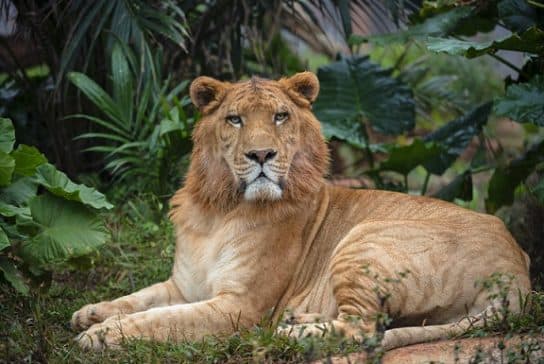

The liger is a beautiful and interesting animal, but it has fertility problems. Ligers males are sterile, females are fertile.

Where do tigers live
Tigers live in surprisingly diverse places:
- rain forests;
- meadows;
- savannah;
- mangrove swamps.
Unfortunately, 93% of the tiger species’ land has disappeared due to the expansion of farmland and human activity. Saving tigers means saving nature, wild places vital to the health of the planet.
Social organization of tigers
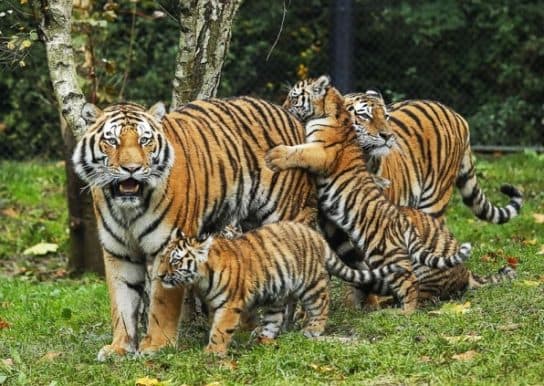
Tigers are solitary animals, with the exception of lionesses with cubs. Singly, tigers roam vast areas, also known as home ranges, whose size determines food availability. Tigers do not patrol the area, but they mark the area with urine and feces so that other tigers know that the place is taken.

How long do tigers live
Tigers are known to live up to 26 years in nature. On average, tigresses give birth to two to four cubs, and they breed every two years. It is difficult for tiger cubs to survive, about 1/2 of the cubs do not live more than 2 years.

Types of tigers – video