


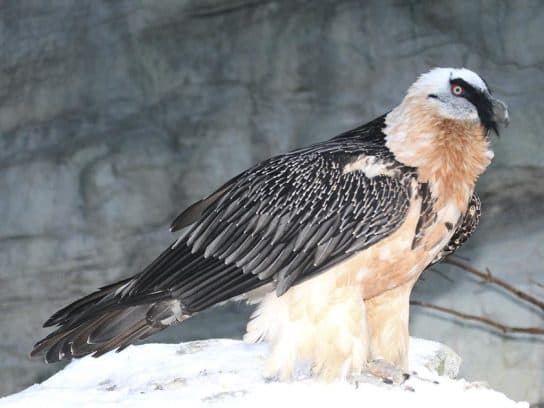


The bearded vulture (bearded vulture / lamb) is the only vulture that digests the bones of dead animals. A special diet has adapted the gastrointestinal tract, so the bearded man is different from other types of vultures.
The name “bearded man” refers to the dark, bristly beard that is characteristic of the bird and adorns the heads of females and males. The purpose of the beard is not clear.
Predators of the open and mountainous landscape
When searching for food, bearded vultures fly long distances. The birds are hardy thanks to a wingspan of 6.2 to 9.2 m. They weigh between 5 and 7 kg and are the largest nesting birds. Lambers prefer open, mountainous landscapes for hunting. They use updrafts along mountain slopes looking for dead animals. Bearded men fly at low altitudes, and people meet tete-a-tete with them.
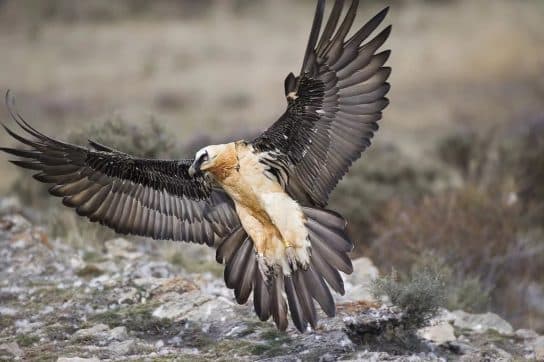

Several descendants and long life
Bearded vultures reach sexual maturity at 5-7 years of age. They begin to give offspring at the age of 8 to 9 years, every 2-3 years.
The breeding pair feeds one chick. For a population of lambs to grow and survive, they must live long and reproduce many times. Accordingly, bearded men in zoos live from 40 to 50 years, individuals over 30 years old are not uncommon in nature. Human hazards rapidly increase mortality and therefore have consequences for lambs. Birds are only found in areas protected by environmental laws.

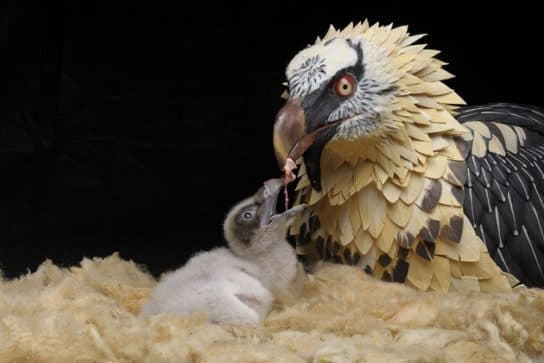
Bearded chick
Emergency egg
Although bearded vultures raise one chick per year, they lay two eggs about one week apart, resulting in chicks hatching at different times and sizes. The young are aggressive, and because of the competition in the nest, a strong chick harasses the weaker one in the first days of life, does not allow him to eat, and brings him to death.
The reason is that from the hunt, parents bring enough food for only one chick. The second egg is a biological reserve if the first egg:
- not fertilized;
- the embryo dies;
- the chick does not survive the first few days.
Breeding season in mid winter
Bearded beards give a brood from the end of December to the end of February. This somewhat special time has to do with the diet of the chickens. They do not digest bones, they need fresh meat in the first weeks of life. Incubation lasts approximately 55 days. Chicks hatch at the end of winter, when carcasses of animals that have not survived the harsh season appear, and, thus, parents provide young animals with non-rotted meat.
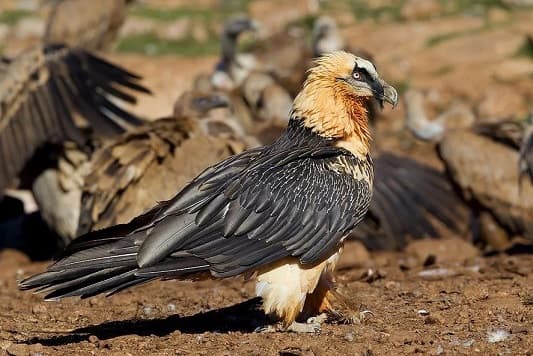

Glowing eyes, ruddy chest
Bearded men have an amazing color. The eyes are bright red when something arouses their curiosity or when they are excited. In adolescents, feathers are predominantly dark brown. From the age of four, the head, chest and abdominal feathers turn white. Both sexes are looking for bodies of water that contain iron oxide in the sediment. Bathing dyes the feathers on the chest a bright orange-red. Whether it is a decoration or iron oxides protect eggs from infections during the breeding season is unknown. Perhaps both explanations are correct, or there are other, obscure reasons.


Where does the lamb live
Bearded vultures are distributed over a large area. Initially, they were native to almost all the mountains of Eurasia. And today bearded men live in the Himalayas and Central Asia. There is even a separate subspecies in the mountains of eastern and southern Africa. Worldwide, bird numbers are declining dramatically in many regions, and bearded vultures are no exception. Especially in the Mediterranean, bearded vultures are at great risk. Therefore, the project to recreate the bearded population in the Alps is very important for the survival of the species.

