


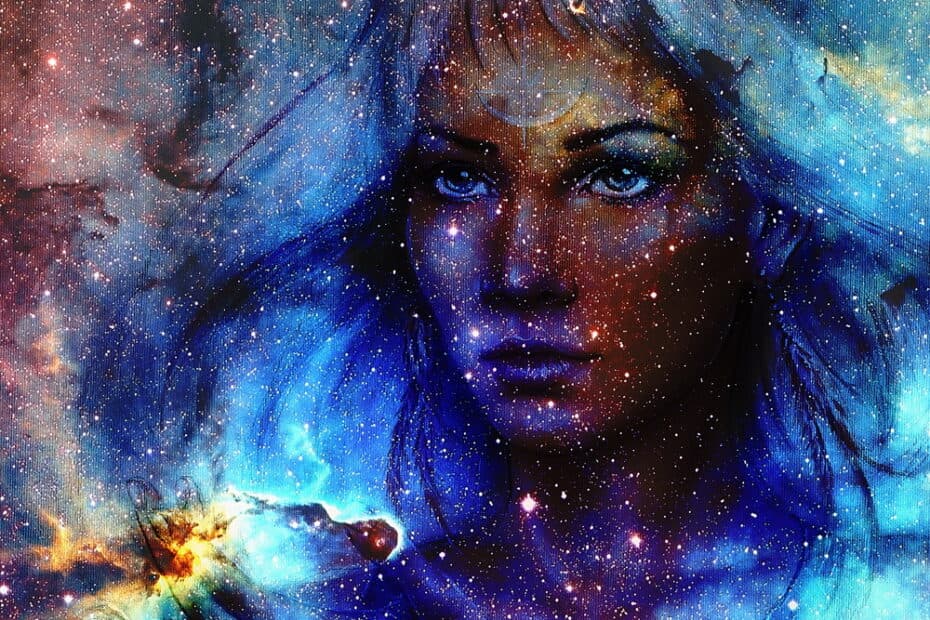
Purple is the hardest color in the rainbow. It is not for nothing that they call it the color of mystics and sorcerers, it is full of contradictions and secrets, and its effect on a person can be completely unpredictable.
Violet physics and physiological reactions
The inconsistency of this color is due to the fact that it combines the opposite properties and energies of red and blue.
For the first time the idea of the arrangement of colors in the form of a spectrum – a rainbow strip of light with alternating shades – was proposed by I. Newton. In the spectrum, visible colors are located depending on the wavelength: from the longest wavelength – red, to the shortwave – violet. However, it is wrong to assume that since red and violet are located at “different poles”, then they must have opposite characteristics. Contemporary artists and colorists prefer to talk about the color wheel. And in it, purple on one side borders on blue, and on the other – on red.
This is more correct in terms of visual perception and human reactions. After all, purple can be:
- cold, blue-violet, lilac, similar in characteristics to blue;
- warm, passionate red-violet – purple, carrying the energy of another “neighbor” – red.
Violet has a predominantly inhibitory effect on processes in the human body, especially its cold shades. It lowers the heart rate, calms the nervous system and has beneficial effects on people with mental illness and nervous disorders.
However, the overwhelming, inhibitory effect of violet has nothing to do with thought processes. This color is considered one of the best stimulants for creative thinking. It generates the need for a deep philosophical understanding of reality and awakens creativity. But the darker the shade of violet, the darker the thoughts become, and the person, as it were, closes himself off from the outside world, going into the “astral”. It is not for nothing that purple is called the color of meditation.
Psychological features of purple
Most researchers of the psychology of color perception note the inconsistency and mystery of the purple color, which often awakens in us opposite feelings, desires and thoughts. It can be excitement and impulse, but poorly realized and unfocused, as if a person is striving for something, but he himself does not understand what. This situation gives rise to anxiety, a sense of mystery and mysticism of the otherworldly space.
- Light purple, airy lilac shades evoke positive emotions and a feeling of light, thoughtless euphoria.
- Darker tones are associated with darker sensations. The secret of violet does not give rise to a thirst for knowledge, but a fear of the unknown. This feature of the purple color makes it a favorite among fans of esoteric teachings, mystics and sorcerers.
The main thing in purple is an internal contradiction, a tense conflict, therefore this color is often preferred by people who are faced with a difficult choice during the transition period of their lives.
Research M. Luscher showed that the preference for purple is largely associated with hormonal imbalance, so it is liked by adolescents during puberty, pregnant women and homosexuals.
Violet symbolism
The design of the symbolic meanings of this color, to a greater extent than that of other shades, is associated with psychophysiological and emotional reactions. Perhaps because there are few objects in nature that would be associated with purple. Perhaps some flowers and precious stones are amethysts.
It is not only complex and controversial, but also largely artificial. In addition, violet began to be distinguished by a person from other colors relatively late, and children begin to distinguish it last (about the development of color perception, see the article “Features of color perception in preschool children. The need to develop children’s color perception”).
- Purple is the color of mysticism and magic. This is its main symbolic meaning.
- This color is associated with human wisdom and creative energy.
- Red-violet – purple – has long been considered a symbol of power, both political and spiritual. Even in ancient Rome, the clothes of the emperors were painted with fabulously expensive purple paint, which was extracted from the shells of a mollusk.
- Purple is a symbol of spirituality and heavenly, transcendental light, the so-called seventh ray. Both the highest Jewish priests and the highest Catholic clergy — cardinals and bishops — wore purple robes.
- At the beginning of the 20th century, purple became a symbol of decadence, and later psychedelics – altered consciousness and narcotic trance.
This amazing color either comes into fashion or hides behind more unambiguous, simple and understandable colors, but does not lose its mystical power.
