


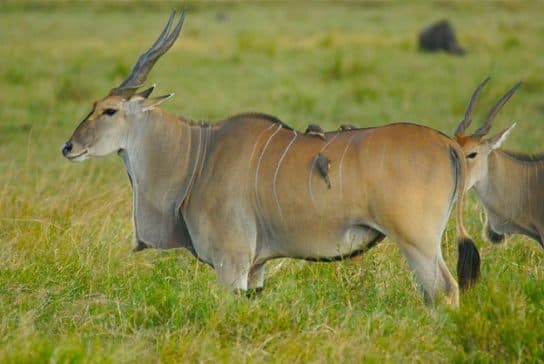


Antenape Kanna (lat. Taurotragus oryx) – the largest African herbivorous antelope in the world, belong to the genus of artiodactyls and belong to the bovid family. Quite close in their characteristics with kudu, bongo and nyalo – horned antelopes.
Cannes antelope species
In any classification, only two types of cannes are distinguished:
Western and common antelopes, which are practically indistinguishable in their appearance, body structure and size. The western one surpasses the common one only in the length of its horns.

What does it look like
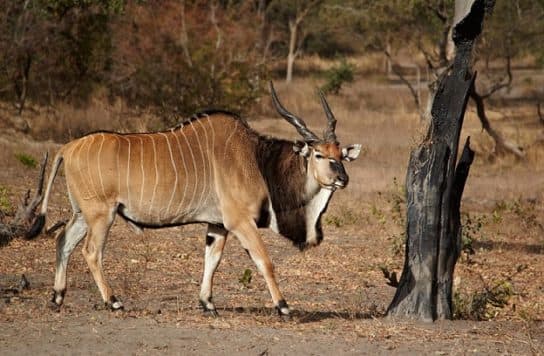
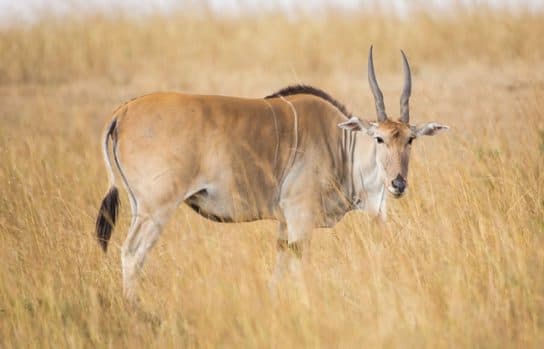
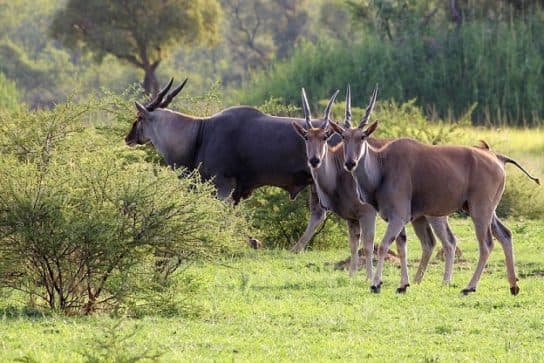
Very often the species is compared with deer, bulls or small elk, which is why these animals are considered the largest antelopes in the world. Males, on average, reach one and a half to two meters in height at the withers, females are slightly smaller, about 1.4-1.6 meters. The weight of males can reach up to one ton, while females are lighter and rarely exceed 600 kilograms.
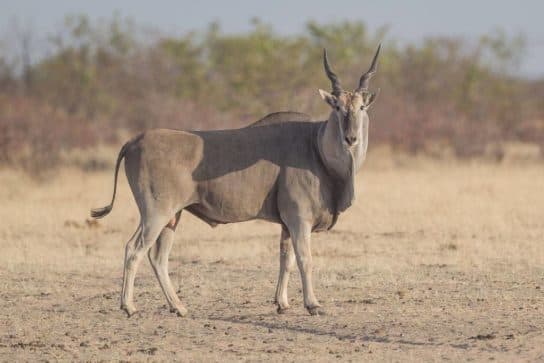

They are clumsy like cows, have a heavy head, thick skin, a tasselled tail and a larger body, like bulls, but at the same time retain their gracefulness, which consists in long horns, slender legs and a long neck. Translated from Latin, this species is called “bull-like goats.”
The length of the horns in an ordinary species on average reaches 50-60 centimeters, while in western Cannes they are much larger and vary from 80 centimeters to a meter. The main feature of the species is also considered the shape of the horns themselves: at the base they are twisted, similar to a screw, but starting from the middle they become straight. This structure allows males to inflict more severe injuries on each other during skirmishes over the female. The coat is short, on the crest and withers there is a small mane, about 10-12 centimeters. The color is mostly brownish-white, but can have different shades depending on the habitat of the animal.
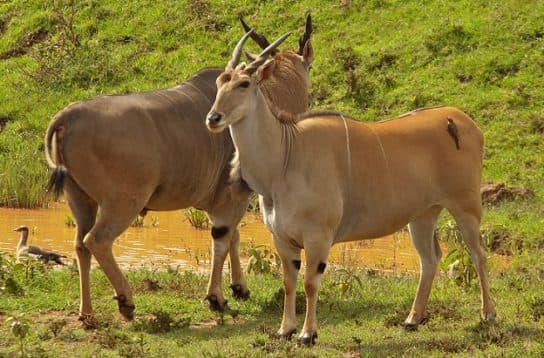

The shape of the head is the most standard and does not differ from other antelopes, the color of the eyes is brown. The ears are small, overgrown with thick wool inside and out. The length of the tail is 45-50 centimeters, at the end there is a brush, consisting of hard hairs.
Where dwells
This species lives throughout Africa, from the south to the Sahara. The best landscape is considered to be steppes, deserts and semi-deserts, as well as plains and savannas. Several thousand animals can be found in the Serengeti Desert. Whenever possible, individuals of both sexes try to avoid wet forests because of the unpleasant climate for them and the presence of predators.

What eats
Antelopes give their preference to the foliage of trees and shrubs, which contain many useful vitamins and water, so as not to go to the watering hole once again. When there is a shortage of food, they begin with their hooves, the strength of which is actually prohibitive, to dig out wild melons and other plant fruits. They can also eat grass, if the body requires it. They choose night and twilight as the time for pasture, and rest the rest of the day, because they do not like heat and are afraid of predators that hunt during the day. Drought is tolerated thanks to the amazing ability of the kidneys – the secretion of concentrated urine, which promotes increased sweating. The water balance is replenished largely due to small streams, which are often found in the area where these animals live.
Natural enemies
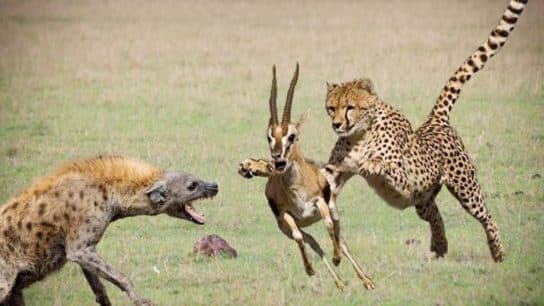
Lions, hyenas and cheetahs are considered to be the key natural enemies that give the Cannes a lot of inconvenience. These predators are afraid to attack adult animals, because they know how to deal with them, as a result of which they pose a danger exclusively to young individuals. The antelope population also began to decline due to the arrival of the colonialists who hunted the cannes. Yes, aboriginal tribes sometimes killed animals to make clothes or eat them, but it was the Europeans who came with firearms and began to seize the territories who undermined the antelope population.

At the moment, the situation of this species is regarded as satisfactory, but it still suffers from a lack of pastures, as well as poachers.
Features and lifestyle
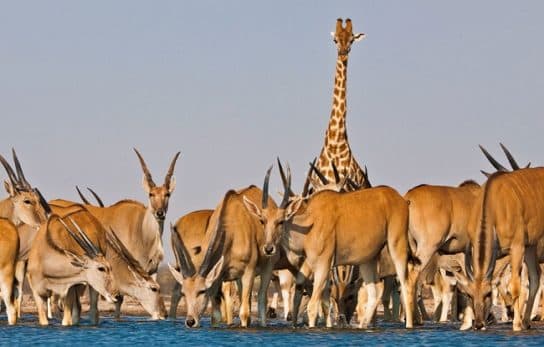
Basically, they live in groups of ten to twenty individuals, herds of females and males are built separately. During the watering place and on huge pastures, they are united in herds with a large number, sometimes the number of animals in them can reach up to a thousand individuals.
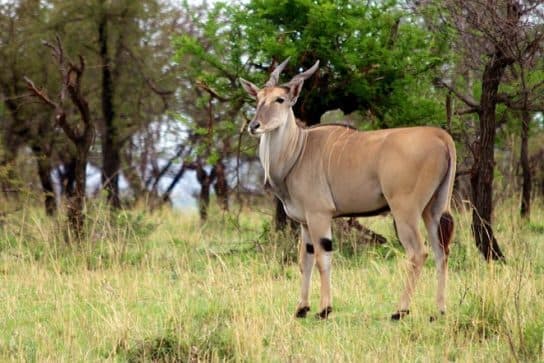
Every year, Cannes arrange a migration: at the beginning of the season of heavy rains, they go to the foothills, where just during this period a lot of young grass grows, and during a drought they descend to river beds in the valleys and steppes. They can change their place of residence and locality, trying to find the best pasture. In comparison with other species of antelope, as well as zebras, they have not particularly massive migrations.
The nature of these animals is very fearful, despite their large size. They try to keep predators away from them at a distance of more than five hundred meters, but if they notice an enemy, they try to run away and start emitting a characteristic barking. The unhurried step, which Cannes usually moves, is replaced by a trot, and then a heavy gallop, if the situation is very serious and the predator is already quite close. During a short-distance race, they can reach 70-80 kilometers per hour in speed, but if you have to run for a long time, the speed drops to fifty.

The jump height of adults can reach up to three meters, and the young are able to jump even higher. Sometimes they can stop and bounce up in place, scientists have not yet been able to figure out why they are doing this.
At the head of the herd is mainly an experienced and old leader who already knows the surrounding area, has survived more than one attack from predators and won more than one battle. Also, due to his age and wisdom, the leader is very sensitive to females who have recently given birth to babies, as well as young animals who have not yet gained experience and may suffer from their own stupidity. Sometimes, when the time of migration comes, the males arrange duels with each other to find out their strength, but the leader often stops this, because unnecessary skirmishes in the group are not needed.
Thanks to their hooves, they often dig out the juicy fruits and roots of plants to feast on delicious food.
The body of antelope in the course of evolution has fully adapted to any weather conditions, from rains to a long drought, in connection with which a protective reaction is activated in their body, which increases the temperature of the animal by 6-8 degrees. This reduces the likelihood of a large loss of fluid in the body.
Reproduction
Reproduction takes place once a year, depending on the group, the season can change, be it autumn, spring, winter or summer. Males mark the places they want to make their own with small patches of hair on their foreheads. They lower it into the ground, after wetting it, and then they begin to spread their smell through the trees and shrubs, which they smear with the resulting mixture.
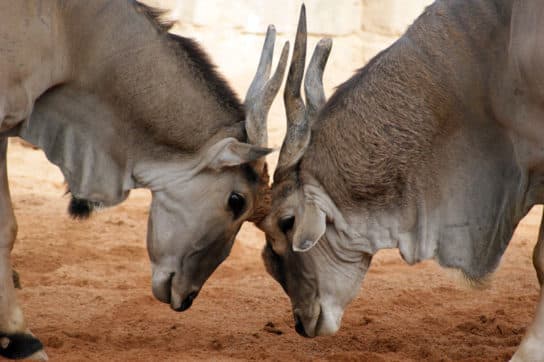
Each time strong males try to show which of them is dominant, so they arrange ritual battles. First of all, rivalry manifests itself in threats, antelopes become half-turned opposite each other and stare intently, burning with a glance. After that, they touch their horns and wait until their pressure force becomes approximately equal – this means that both rivals are ready for the competition. If, during pushing, none of the males is inferior to the other, they begin to butt with their horns and try to knock the enemy to the ground, while not inflicting fatal blows on the sides.

The gestation period of females varies from eight to ten months, most often they give birth during heavy rains. At the last moment before giving birth, the female leaves the herd. A baby who is born can follow his mother after a couple of hours. He is guarded by all members of the group, especially the leader, who is sensitive to the young. Cannes milk contains quite a lot of protein and fat, in comparison with cows there are two times more of them, due to which the cubs gain weight and grow very quickly.
At two or three years old, babies are already considered full-fledged animals that do not need to be protected, so they can leave the herd and join another. Females mature by the age of three, while males develop a little longer, about 4-5 years.
Cannes in captivity reaches 25-30 years old, and in the wild they rarely live up to twenty.
Video of the Cannes Antelope


