


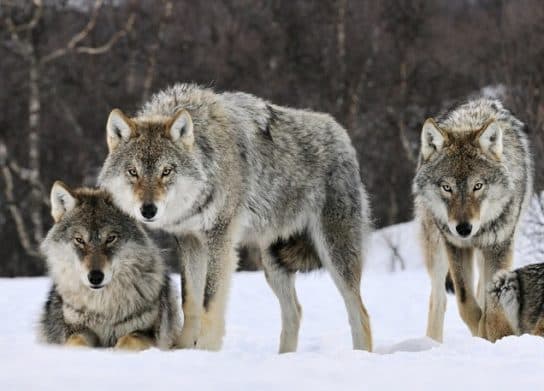


Wolves are a collection of canine species of carnivorous animals. In simple terms, these are predators that look like dogs and are known throughout the world.
Wolves inhabit almost all continents of the globe, except Antarctica. They are hunted and feared, they are enchanted and made up of fairy tales. In Russian folk tales, the image of the wolf plays a special role. Who does not know the Gray wolf, which is found in almost every folk work for children! By the way, “gray” is not only an apt nickname from folk authors, but the official name of one of the wolf species.
Types of wolves
Gray (common) wolf
This species is most common in our country. In the world, its maximum distribution has historically developed in Eurasia and North America. The wolf is regularly exterminated. And often not only for the purpose of selfish prey, but for protection. Wolves are predatory animals, except for this gregarious. Their attacks on herds of domestic animals and even on people sleeping in the forest are not uncommon. The gregarious instinct allows wolves to surround prey, effectively pursue it, and use the effect of surprise.
In turn, the extermination of the gray wolf led to a decrease in its number. The number of individuals in some regions of the Earth has decreased so much that the species has become on the brink of extinction within these territories. The gray wolf has several subspecies: forest, tundra, desert and others. Outwardly, they differ in color, which often repeats the colors of the area where a particular wolf lives.
polar Wolf
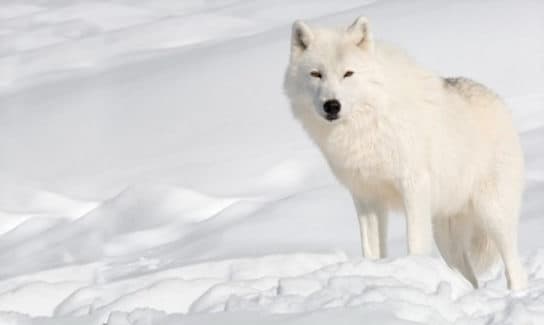
Wolves of this species live in the Arctic and are the rarest. These are beautiful animals with thick snow-white fur and outwardly very similar to dogs. The coat of the polar wolf is distinguished by its high density and low thermal conductivity.
The food supply for polar wolves is very scarce, since in the area of their historical habitat there are not so many animals suitable for food. To facilitate hunting, wolves of this species have a very keen sense of smell and excellent eyesight. Unlike representatives of other species, polar wolves eat their prey whole, leaving neither bones nor skin. The diet is based on small rodents, hares and reindeer.

Red Wolf
This type of wolf is under the threat of complete extinction. On the territory of Russia, it is included in the Red Book. The red wolf is very different from its gray counterparts, representing a kind of mixture of wolf, fox and jackal. The name comes from the red color of the coat. Red wolves feed not only on animals, but also on plant foods, for example, wild rhubarb.


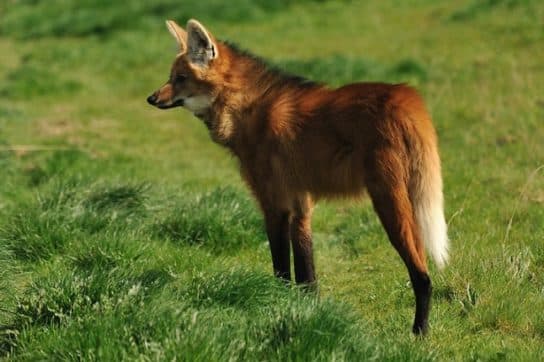
Maned wolf
The animal is very similar to a fox and lives in the savannas of South America. It differs from classic wolves in a solitary way of hunting. His diet includes both animal and plant foods, up to fruits. This species is rare, but not endowed with a special saving mode.

Melville Island Wolf


Bold wolf


Ethiopian wolf


Mackensen wolf


Wolves in Russia
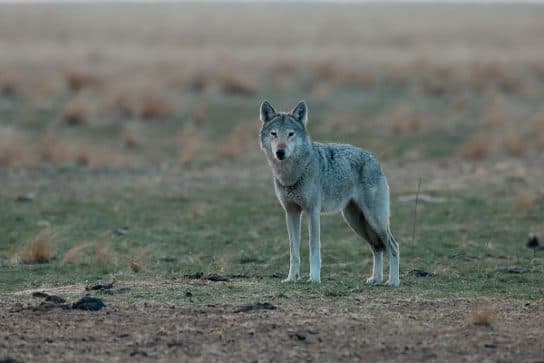
In total, according to various classifications, there are about 24 species of wolves in the world. Six of them permanently inhabit the territory of the Russian Federation. These are wolves: Central Russian forest, Siberian forest, tundra, steppe, Caucasian and Mongolian.
Central Russian forest wolf


Tundra wolf

Steppe wolf
Caucasian wolf


Mongolian wolf

On the Eurasian continent, the largest wolf is the Central Russian forest. According to observations, its length can reach one and a half meters, and its height is 1.2 meters. The largest wolf weight in Russia is 80 kg. But this is a record marked by scientists in the central part of Russia. The overwhelming majority of these predators are of more modest size, which, however, does not diminish their danger to humans and livestock.
Interesting facts about wolves – video


