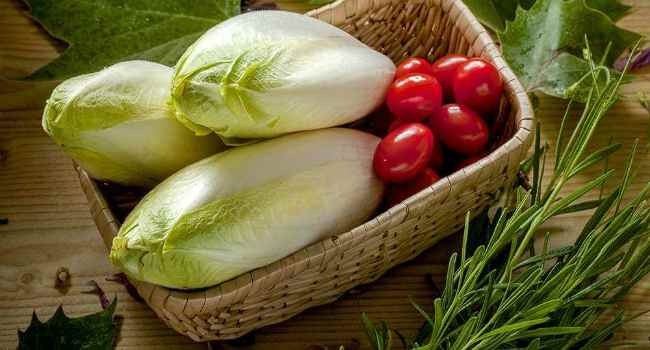


Endive, also known as escarole or salad chicory, is a green leafy vegetable with a slight bitter taste. Unfortunately, it is not very popular in our country and is not familiar to everyone. However, this isn’t just a leafy green salad that can be kicked out even during the colder months at home. It contains many beneficial nutrients, and most importantly, a lot of vitamin C and vitamin A.
Botanically, this perennial herbaceous leafy plant belongs to the Asteraceae family and belongs to the group of cyclic salads, as well as witloof salad or Belgian endive, raddikio. The Latin name for this salad plant is Cichorium endivia.
What does endive look like and where does it grow?
Chicory, the genus of which these lettuce belongs, is known worldwide. Only now there is also its salad variety, which is best known to European chefs and representatives of traditional medicine.
Not everyone is given to know about such a vegetable culture as chicory salad or endive. This plant is a very close relative of the dandelion, despite the fact that it belongs to the Aster family, which includes many of its favorite flower plants.
It is a vegetable with a light green or creamy head of cabbage with green patches, which grows up to 12 cm in length and has aerial green leaves. The very first impression of him is the appearance of an ordinary curly salad.
There are two main types of lettuce: curly (with curly narrow leaves) and broadleaf.
Today, in addition to endive, cultivars such as witloof (has wide cut leaves, reminiscent of a “Romaine” salad), escariol (leaves are wide, whole, there are fleshy veins on the surface) are grown.
Of course, endive was also known in ancient times. But for the first time they started talking about him in 1830 thanks to an Indian farmer.
Indonesia and North India are considered the birthplace of salad chicory. Later, the plant appeared in Egypt and spread throughout the world.
Endive is especially popular in Holland (where it has been purposefully cultivated since the 17th century), France and Great Britain.
Agricultural specialists in other countries refuse to grow this leaf crop because of the labor intensity.
Salad chicory is called a winter vegetable. There are well-grounded reasons for this.
- The heads of cabbage themselves, planted in April-June, reach maturity only at the end of November;
- The vegetable can be grown in the winter by planting it in boxes with soil from sawdust and constantly receiving a fresh fortified product.
This is what curly endive looks like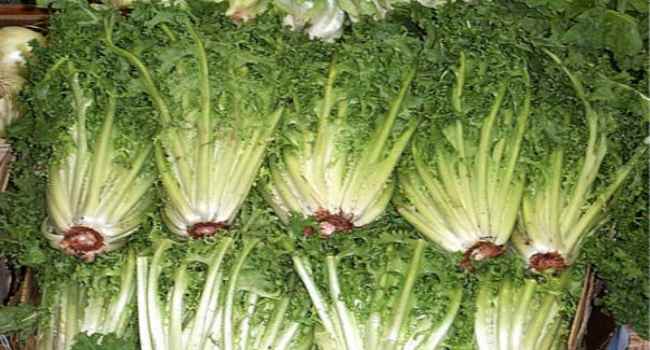
Endive chicory lettuce broad-leaved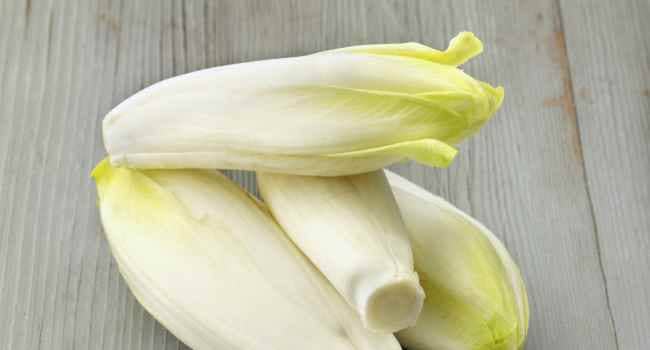
Cutaway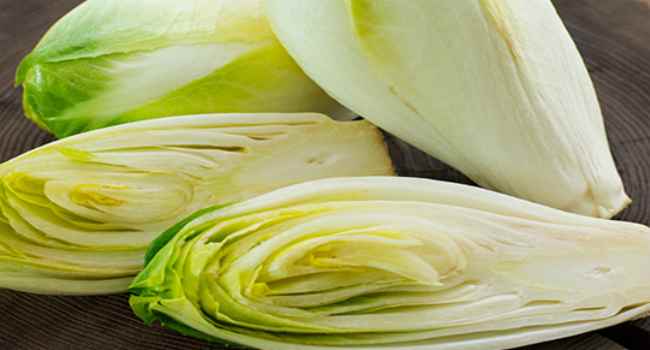
Why is chicory salad chemical composition useful?
As you know, the maximum benefit to the human body is brought not so much by the food product itself as by the balanced combination of useful components in it.
Salad chicory is considered to be the owner of:
- water (94%);
- vegetable protein fractions;
- fats (in particular saturated fatty acids);
- carbohydrates (mono- and disaccharides);
- ash products;
- fiber (or dietary fiber);
- retinol (vitamin A);
- provitamin A (beta-carotene);
- alpha-tocopherol (vitamin E);
- a number of B vitamins (choline, niacin, pyridoxine, folic and pantothenic acids, thiamine, riboflavin);
- phylloquinone (vitamin K);
- ascorbic acid (antioxidant vitamin C);
- minerals in the form of manganese, copper, selenium, iron, zinc, potassium, calcium, magnesium, sodium, phosphorus.
The bitter taste of its leaves is due to the glycoside intibin present in them.
Endive is one of the most low-calorie and especially dietary. Therefore, 100 grams of lettuce contains only 17 kilocalories.
In turn, due to the content of proteins, fats and carbohydrates in the endive, their energy ratio in the vegetable looks like 29/11/6%.
Useful properties of endive
As mentioned above, endive is a very low calorie food, but rich in dietary fiber. 100 grams of lettuce can provide as much as 8 percent of an adult’s daily value. Dietary fiber has been linked to many functions and benefits for the body. They improve the functioning of the intestines, contribute to its timely cleansing, which in turn can prevent the development of colon cancer.
Cycorny salad contains intibin glycoside, the bitterness of which improves appetite and digestion, hematopoietic activity.
Inulin, which is inherent in all the cyclic genus, plus fiber, helps to reduce the level of glucose and bad cholesterol, the so-called low density lipoproteins. This is useful not only for people with diabetes, but in general for everyone, without exception.
Beta-carotene and vitamin A are compounds with antioxidant properties. Carotene is converted into vitamin A in the human body. In addition, vitamin A is essential for maintaining healthy mucous membranes and skin, it is also an important vitamin for good vision.
Consuming natural vegetables / greens rich in vitamin A helps protect against lung and oral cavity cancers.
A whole complex of B vitamins take part as cofactors in carbohydrate, protein, and fat metabolism.
Endive benefits for the body
Despite its uncommonness, chicory salad can provide numerous benefits to humans. Therefore, traditional medicine advises its consumption for:
- excretion of bile, which has become thick and stagnant;
- stabilization of the gallbladder;
- removing excess fluid (has a diuretic effect);
- improvement of the kidneys and liver;
- removing sand from the kidneys;
- normalization of the gastrointestinal tract;
- improving the production of many enzymes;
- reducing excess body weight;
- relieving high blood pressure and combating hypertension;
- dealing with the negative consequences of stressful situations;
- preventing the development of neurological diseases;
- restoration of mental balance;
- improving mood;
- stabilization of muscle tissue functioning;
- improving metabolic processes;
- stabilization of blood glucose levels (the inulin present prevents the formation of sugar);
- maximum restoration of visual function;
- prevention of anemia (anemia);
- removing the frequency of asthmatic attacks (plant juice in combination with carrot juice is recommended);
- prevention of oncology;
- prevention of skin rashes.
How to cook and how to eat endive cyclic salad
The roots, like the leaves of the plant themselves, are characterized by a special bitter taste. So:
- roasted chicory root powder is used for making diet coffee;
- juicy leaves seasoned with lemon juice and olive oil are added to salads;
- roots and leaves make an excellent side dish for baked meat or fish;
- sprouts and coarse top leaves of chicory salad are added to vegetarian soups and casseroles;
- the top green parts of the young endive work well as a spice when stewing and preparing a dressing;
- often salad chicory is included in sauces.
To give the leaves freshness, it is advised to put them in ice water for literally 15–20 minutes.
To remove unnecessary bitterness, it is recommended to wash the green part of the plant in hot water or heat it.
Rinse the lettuce leaves well in running water before cooking. Throw away any that are yellowed or discolored. Cut off the stiff bottom ends.
It can be used in salads, added to stews, stewed, soup and green cabbage soup.
Possible harm and contraindications
The main contraindications to the consumption of “winter” vegetables have not yet been identified.
True, there are some warning factors:
- the rate in use;
- individual intolerance to the components;
- increased blood clotting (its density);
- smoking and drinking alcoholic beverages (it is recommended to maintain the interval between the consumption of endive and alcohol for at least 6 hours due to the high content of vitamin A in the product).
How to choose and store
Fresh endive may be available all year round. When shopping in the market, choose crispy, tender leaves. Avoid tough, yellow leaves.
Store herbs in a plastic bag in the refrigerator. It will stay fresh for 3-4 days.
For winter storage, dug out plants are buried in the basement in the sand. In addition, storage in the dark will reduce the bitterness of the leaves and enhance their flavor. you can simply cover the dug out plants with a box, basket or dark film and leave it there for 2-4 weeks.
Why is chicory salad or endive useful?