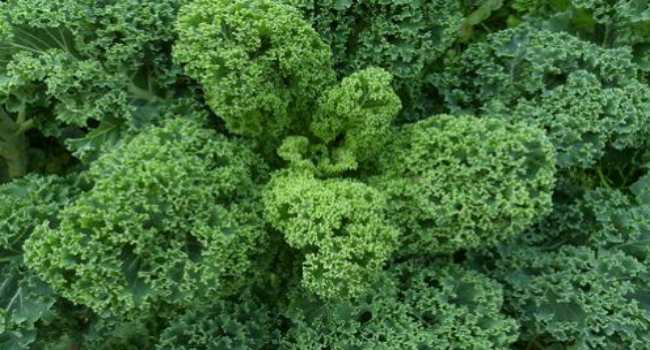


Kale or kale is a type of kale. It can have green or purple wrinkled leaves and does not form a head of cabbage. Unfortunately, this type of cabbage is extremely rare to be found not only on domestic but also foreign shelves in stores and markets. And the main “deterrent” factor is the unusual type of cabbage leaves, which are not at all associated with this famous vegetable crop. And yet, such an unusual cabbage at first glance deserves attention and it is worth talking about its beneficial properties.
Many botanists classify kale as wild cabbage than most of its domesticated counterparts. The name “kale”, more consonant with the French pronunciation, does not mean at all that it was discovered and cultivated in France. In fact, even today, experts have no idea where this plant came from. Therefore, in Europe you can find kale cabbage, which is called gruncol, kale, brauncol or bruncol. Some suggest that its name comes from the English “Kail” which means “kale”.
The only reliable facts recorded by historians are:
- Until the end of the medieval period, kale was the most common green vegetable in Europe;
- In the 19th century, such cabbage appeared on the territory of Canada, and it was brought in by Russian traders;
- Due to its high nutritional level, feces became the main food of the British during the Second World War.
As early as the 4th century BC, this type of cabbage was known and grown in Greece as a food and medicine. It was recommended for use in bowel disorders.
Great Britain became the popularization of feces during the Second World War due to the simplicity of the growing conditions and the availability of important nutrients.
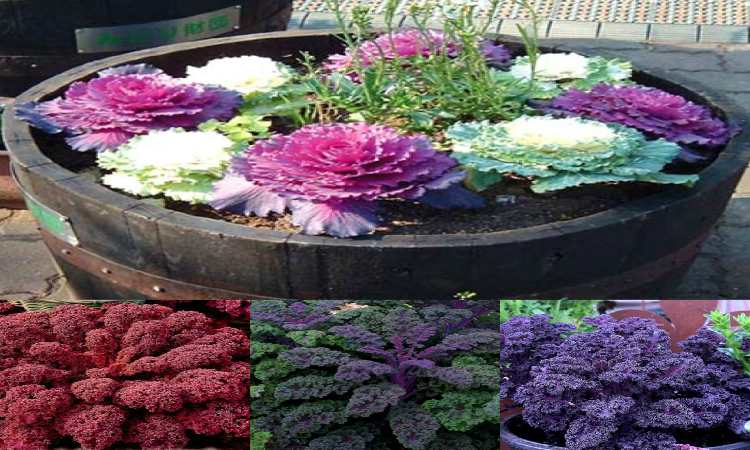
Although kale belongs to the cabbage family, no head of cabbage is formed in it. Therefore, in appearance, it rather resembles a bunch of lettuce, characterized by the presence of carved leaves of green, purple and red.
To date, due to the frost resistance (it is able to withstand up to 15 degrees of frost) of the vegetable crop, breeders have bred kale for planting in the usual Russian conditions (only the Far North and the Arctic are not taken into account).
Thus, several varieties of browncolic cabbage were formed:
- wild (it is grown everywhere and has crispy openwork leaves);
- curly (it is customary to plant it as a decorative palisade plant that replaces flowers);
- petiolate (outwardly resembles celery and allows you to eat roots, which you can not uproot, but leave them in the soil before winter);
- dino (this cabbage will have long and thick leaves).
Many kale varieties are grown for decorative purposes only. There are varieties of kale with purple, lavender, white, red, blue, pink leaves. Although these varieties are decorative, but its leaves are quite edible. True, in terms of nutritional value, they are inferior to edible cabbage.
Kale cabbage composition
In terms of its chemical composition, this type of cabbage is absolutely not inferior to protein foods. And this can be a real boon for those who are adherent of vegetarianism and are constantly looking for the possibility of consuming plant foods that are not inferior in terms of the protein content of animal origin.
Based on research, wild and cultivated keil species are rich in:
- vitamin A and beta carotene synthesized by the body, which forms a group of carotenoids, in particular lutein;
- vitamin K (difficult to find in foods);
- antioxidant vitamin C (natural ascorbic acid);
- some vitamins from group B (for example, B1, B2, B6);
- tocopherol (known as fat-soluble vitamin E);
- folic acid;
- proteins, fats and carbohydrates;
- nonessential and essential amino acids, usually found in animal meat;
- omega-3 fatty acids (found only in marine fish);
- the anti-cancer agent sulforaphane;
- 45 different flavonoids;
- Querodcetin and Campferol;
- minerals, most of all represented by magnesium, calcium (its content is higher than in milk), potassium, phosphorus, sodium, copper and iron.
The total calorie content of 100 grams of cabbage is between 30 and 50 calories, which puts kale on the list of low-calorie and nutritious foods at the same time.
Kale cabbage useful properties

- a combination of beta carotene, vitamin C and flavonoids. This cabbage is classified as one of the most powerful antioxidants;
- a huge amount of vitamin C, which promotes collagen synthesis;
- the ability to lower blood cholesterol levels;
- prevention of the development of cardiovascular diseases and the emergence of the risk of heart attack;
- the presence of rare vitamin K, which is necessary for blood clotting;
- the content of lutein and zeaxanthin in cabbage leaves, which support eye health;
- low calorie content and high nutritional value, it helps to lose weight by filling the body with vitamins and minerals;
- the presence of sulforaphane (reduces the risk of developing peri-neoplastic diseases).
Kale cabbage culinary use
Possessing a spicy, piquant, slightly pungent flavor, kale cabbage is not loved by all consumers. Therefore, it is not often used by chefs.
And yet, this curly leafy vegetable, considered a close relative of cauliflower and broccoli, is usually used to decorate main meat and fish dishes, add to soups, sauces and omelets, cook (as well as spinach) puree for filling and curd casseroles.
It is often served stewed alone or mixed with other green vegetables such as mustard or turnip leaves.
In Brazil, brauncol is part of the side dish of a traditional national dish called feijoad, a bean stew with beef and pork.
In Italy, kale is one of the ingredients in the Tuscan ribollita soup.
But this cabbage is most popular in Germany, where a special cabbage festival is held from October to February. All visitors to any inn will certainly eat stewed cabbage, including keil, sausages and other national dishes, and drink schnapps.
In Denmark and Sweden, it can be served with Christmas ham.
In Asia, kale is called kai-lan and is served with beef dishes. And in Japan, the juice of this cabbage is used as a food additive.
How to choose kale
When choosing kale, you should pay attention to its freshness, or rather, the absence of sluggish leaves. They should also be firm and crunchy (don’t be afraid to squeeze the bunch in your hand). Culinary specialists keep such an openwork masterpiece of nature in the refrigerator (heat contributes to the degradation of the product), in a bag (or plastic container), from which the air is removed as much as possible, no more than five days, after rinsing and drying the leaves on a paper towel.
Kale can be frozen to prepare meals in winter. In this form, it is stored for five, six months.
Possible contraindications
Like spinach, kale contains oxalates. Therefore, people who are prone to the formation of gallbladder and kidney stones need to limit the consumption of leafy vegetables so that this substance does not accumulate.
About the beneficial properties of kale (kale, browncol, curly leaf)

Kale cabbage photos