


- 1 Why Wine Knowledge Matters in Hospitality
- 2 The Challenges of Training Staff in Growing Resort Destinations
- 3 Five Wine Skills Every Hospitality Team Can Develop
- 4 How to Choose a Wine Training Format
- 5 Turning Wine Education into a Practical Staff Development Plan
- 6 Wine Education as Part of the Guest Experience
- 7 Conclusion
In hospitality, memorable guest experiences are often created through small details. A thoughtful food recommendation, a well-presented wine list, or a confident explanation of a regional wine can transform an ordinary meal into a more engaging experience.
For hotels, beach clubs, restaurants and resorts, wine knowledge is not simply a specialist skill. It can be an important part of staff development, customer service and the overall dining experience.
As tourist destinations grow and competition increases, hospitality businesses need to think carefully about how their teams communicate with guests. Staff members who understand wine can explain different styles, answer questions about food pairings and help customers choose options that suit their preferences.
The challenge is how to develop these skills without disrupting daily operations. For many hospitality businesses, structured wine education offers a practical way to build knowledge while supporting the demands of a busy workplace.
Why Wine Knowledge Matters in Hospitality
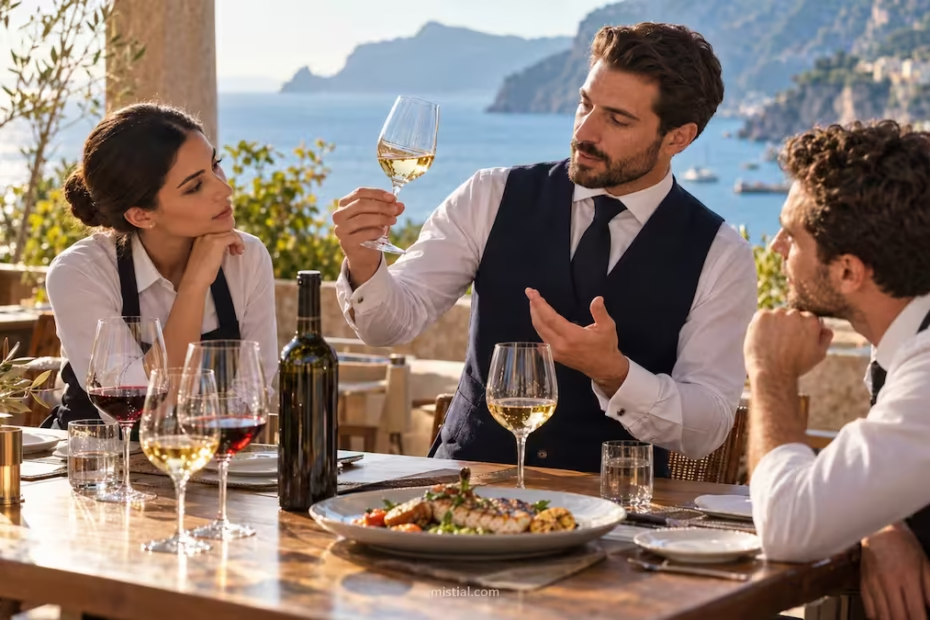
Guests do not necessarily expect every waiter or bartender to be a professional sommelier. However, they often appreciate staff who can answer basic questions confidently and make relevant recommendations.
A team member who understands the difference between a crisp, fresh white wine and a full-bodied red can guide a guest more effectively than someone who relies entirely on the wine list.
This knowledge is especially useful in establishments where food and beverages are an important part of the customer experience.
For example, a beachfront restaurant might serve seafood, grilled fish, salads and Mediterranean-inspired dishes. Staff who understand acidity, body and basic food pairing can suggest wines that complement these meals.
In a boutique hotel, wine knowledge can support restaurant service, private dinners, welcome experiences and conversations with international guests.
The same principle applies to resort bars and beach clubs, where employees may need to explain unfamiliar grape varieties, recommend refreshing wine styles or answer questions from customers with different levels of wine knowledge.
The objective is not to turn every employee into an expert. It is to give staff the knowledge and confidence to serve guests more effectively.
The Challenges of Training Staff in Growing Resort Destinations
Hospitality businesses in developing tourist destinations often face a particular challenge: they need to maintain service standards while recruiting new employees, managing seasonal demand and adapting to an international clientele.
Traditional in-person training can be difficult to coordinate when employees work different shifts or when a property operates throughout the day. Managers must balance staff development with reservations, guest requests, food preparation and other operational responsibilities.
Online learning can provide an alternative or complement to in-person training. Depending on the course format, employees can study theoretical material at a convenient time and revisit lessons when they need to refresh their knowledge.
Managers exploring professional wine education may find it useful to compare online sommelier courses and assess which learning options fit their team’s experience, objectives and working schedules.
The right training approach depends on the business. A small beach café may need basic knowledge of wine styles and service, while a luxury resort with an extensive wine list may require more advanced skills in tasting, food pairing and beverage management.
Five Wine Skills Every Hospitality Team Can Develop
Wine education does not need to begin with complex terminology. A structured approach can help employees build useful knowledge step by step.
1. Understanding grape varieties and wine styles
Employees should become familiar with the characteristics of common grape varieties and the differences between major wine styles.
Knowing whether a wine is typically light-bodied, full-bodied, crisp, aromatic or rich helps staff describe it in accessible language.
This is particularly valuable when serving international guests who may be unfamiliar with local producers or regional wines.
2. Recommending wine with food
Food pairing is one of the most practical applications of wine knowledge.
Staff can learn how acidity, sweetness, tannins and body influence the relationship between wine and food. They can then apply these principles when recommending drinks with seafood, grilled meat, vegetarian dishes or desserts.
For restaurant managers, this knowledge can also support the development of a more coherent wine list that complements the kitchen’s menu.
3. Serving and storing wine correctly
Good service requires attention to practical details, including serving temperature, appropriate glassware, bottle handling and storage conditions.
Employees should also understand why opened bottles need to be handled carefully and why heat, light and temperature fluctuations can affect wine quality.
These skills are relevant to hotels, restaurants and beach venues, where warm conditions and busy service periods can make proper wine handling particularly important.
4. Communicating with guests
A strong wine recommendation is not necessarily the most technical one.
Hospitality professionals need to understand how to ask useful questions, identify customer preferences and explain options without overwhelming the guest.
For example, instead of describing a wine through specialist terminology alone, an employee might explain that it is fresh, citrus-driven and well suited to seafood.
Clear communication makes wine more approachable and helps create a welcoming atmosphere.
5. Understanding the wine list
Staff should know the wines available in their establishment, including their main characteristics, approximate price positioning and suitable food pairings.
Managers can support this process by creating concise staff notes, organizing regular briefings and encouraging employees to discuss new additions to the menu.
This knowledge helps ensure that recommendations are consistent with the restaurant’s offering and the customer’s preferences.
How to Choose a Wine Training Format
There is no single training format that suits every hospitality business. The best choice depends on staff availability, experience, budget and the skills the business wants to develop.
In-person workshops can be useful for practical service demonstrations and guided tastings. Online learning may offer greater scheduling flexibility and make structured educational materials accessible to employees in different locations.
For a business with several departments or properties, managers can consider combining online study with short team sessions. Employees might learn theoretical concepts individually and then apply them through supervised tastings, wine-list discussions or role-playing exercises.
Before selecting a course, consider several questions:
- Does the content match the team’s current knowledge level?
- Is the material relevant to the wines and food served by the business?
- Can employees access the lessons around their working schedules?
- Are there practical exercises or opportunities to discuss questions?
- Does the course address the skills the business actually needs?
The aim should be to choose education that employees can apply in their daily work, rather than selecting a course solely because it has an impressive title.
Turning Wine Education into a Practical Staff Development Plan
Training is more effective when it is connected to everyday operations.
Hospitality managers can start with a simple plan that identifies the team’s current strengths and areas for improvement. For example, employees might be confident with basic customer service but less comfortable explaining grape varieties or recommending wines with particular dishes.
Once these gaps are identified, managers can select relevant learning materials and introduce regular opportunities to practise.
A practical staff development plan could include:
- Assess current knowledge. Ask employees about their confidence with the wine list, service techniques and food pairing.
- Set realistic learning goals. Focus on a manageable number of skills at a time.
- Choose suitable training. Select a learning format that fits the team’s schedule and professional needs.
- Practise during team briefings. Discuss a featured wine, review a pairing or practise explaining a wine to a guest.
- Review progress. Gather feedback from employees and managers to identify areas that need further attention.
For seasonal resorts, it can be helpful to introduce basic training before the busiest period begins. New employees can then develop familiarity with the wine list and service expectations before guest numbers increase.
Over time, this approach can help establish a stronger culture of learning and more consistent communication with customers.
Wine Education as Part of the Guest Experience
Wine knowledge is most valuable when it supports the experience the business wants to deliver.
A boutique hotel might use wine recommendations to complement a regional tasting menu. A beachfront restaurant could help guests discover wines suited to seafood and warm-weather dining. A resort bar might focus on explaining its wine selection clearly to visitors with different tastes and levels of experience.
These applications do not require every team member to become a specialist. They require a shared foundation of knowledge, clear service standards and an understanding of the customer.
Managers should also evaluate training realistically. They can gather employee feedback, observe service interactions, review customer comments and assess whether staff are becoming more confident in their recommendations. Commercial outcomes depend on many factors, so improvements should be measured rather than assumed.
Ultimately, wine education works best when it is treated as an ongoing investment in professional development rather than a one-time activity.
Conclusion
As hospitality destinations develop and guest expectations evolve, knowledgeable service teams can help hotels, restaurants and resorts distinguish themselves through thoughtful, informed customer experiences.
Wine education gives employees a practical foundation for discussing wine, recommending food pairings, understanding service requirements and communicating with guests. For managers, the key is to select appropriate training, make learning accessible and create opportunities to apply new skills at work.
Whether a business operates a small beachfront café, a boutique hotel or a larger resort, a structured approach to wine knowledge can become a valuable part of staff development and service quality.
About Matthew’s Wine School
Matthew’s Wine School, also known as Matthew Wine & Spirit Academy, offers wine education for people interested in developing their understanding of wine. Hospitality professionals and aspiring sommeliers can explore the school’s official website to learn about available courses and educational options.
