


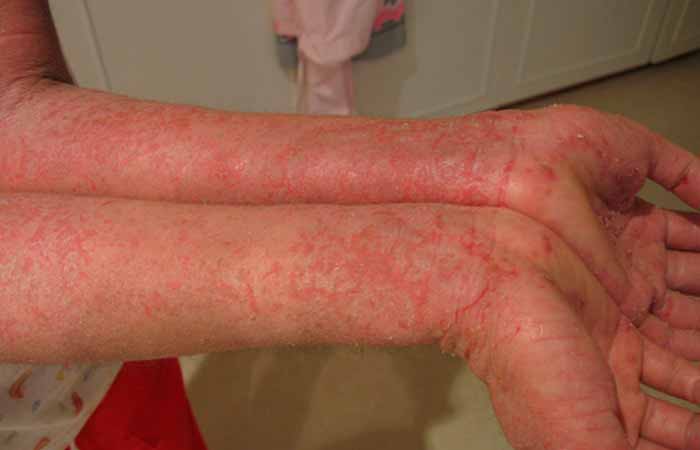
All chronic skin diseases greatly reduce the quality of human life. Eczema refers to such diseases. It causes a lot of trouble, especially for women: we do all the housework with our hands, and a rash in this place means that we have to give up the usual things and look for some effective ways to solve the problem.
If you have eczema on your hands, the most important thing is not to despair. Although it is difficult to completely defeat this disease, it is quite possible to make exacerbations rare.
Eczema on the hands refers to a chronic skin disease. It is based on acute inflammation of the skin with the appearance of various elements of the rash. This chronic dermatosis lasts for many years, giving relapses under the influence of adverse factors.
Why does eczema occur?
Eczema on the hands can occur due to prolonged allergic contact dermatitis and can be triggered by occupational hazards. The disease is based on sensitization of the body – a certain reaction of the immune system to prolonged contact with allergens or irritants.
The main causes of eczema on the hands:
- reactivity of the immune system, the presence of certain immune complexes and autoantibodies in the blood;
- constant contact of skin of hands with aggressive chemicals;
- damage to the skin;
- chronic diseases of allergic nature;
- violation of nervous innervation;
- constant psycho-emotional stress, the emergence of traumatic situations;
- endocrine pathologies, including diabetes and hyperthyroidism;
- chronic diseases of the digestive tract;
- vegetative dystonia;
- hereditary predisposition;
- diseases of the liver, kidneys and other internal organs.
Patients with eczema on the hands have a reduced number of T lymphocytes and T cells, with many B lymphocytes. Also found in the blood antibodieswhich appear at allergic reactions and hyperactivity of immune system. This allows us to consider eczema as an immunopathology.
We cannot know exactly how the immune system will react to certain external and internal stimuli. None of the people is insured against eczema on their hands. Medicine is aware of cases when chronic dermatoses occurred in people who are not engaged in manual labor, and in those who worked daily with their hands, mixed different solutions with their hands, came into contact with chemicals, this disease was not.
The state of the nervous system plays a huge role in the development of eczema. You’ve probably heard that “all diseases are caused by nerves.” The inability to cope with the negative effects of stress, constant feelings and internal anxieties lead to the fact that the immune system is severely disrupted. And the connection between the nervous system and immunity has long been proven.
Types of eczema on the hands
Eczema on the hands is the most common. It can affect both the fingers and interdigital, and the skin up to the elbow and shoulders.
Depending on the nature of the disease, the following types of eczema on the hands are distinguished:
- real (idiopathic);
- microbial;
- fungal;
- dyshydrotic;
- professional.
All types of eczema have common features: chronic course, similar elements of the rash and its localization. Contagious eczema? The disease is not contagious and does not threaten others.
Let’s see what eczema on the hands looks like in the photo.

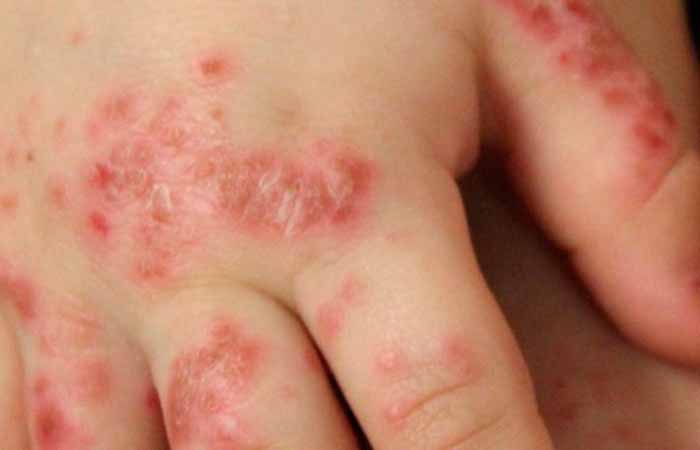
I would like to talk about each specific type of eczema on the hands separately.
Real eczema
True eczema on the hands is considered a polyetiological disease. Experts identify two main reasons for its development – autoimmune processes and neurogenic factors. When the body is exposed to potentially irritating and dangerous substances for a long time, it is sensitized. Because of it, the skin begins to react with an inflammatory reaction to all subsequent contacts with provoking factors.
True eczema on the hands is accompanied by the following symptoms:
- the appearance of small papules or vesicles, which open quickly with the formation of small erosions;
- exudate begins to stand out, there are areas of constant wetting, which eventually become covered with crusts;
- rash with true eczema is provided by foci that have uneven edges;
- in addition to the palms of the hands may suffer other parts of the body and face;
- foci of rash are often symmetrical;
- recurrence of the disease is accompanied by severe itching and anxiety of the patient.
A characteristic symptom of true eczema is the simultaneous presence on the hands of elements of the rash at different stages of development. With exacerbation of dermatosis on the skin may be redness, and vesicles, and crusts with erosive areas.
After the inflammatory process subsides, pigmented areas or pigment spots may appear on the skin of the hands. Eventually, they fade and may disappear altogether. Often recurrent eczema on the hands is accompanied by a general deterioration of the skin, which becomes excessively dry, constantly flaky, prone to cracking and excessive thickening of the stratum corneum (hyperkeratosis).
Microbial eczema
Microbial eczema on the hands occurs in the area of skin cracks and wounds, trophic ulcers and scratches. With exacerbation of the disease there are inflamed foci with clear edges, covered with papules, vesicles, weeping erosions, purulent crusts are located on top. Small pustules are located separately from the main site of inflammation. Microbial eczema is more common on the toes and hands. It can be fungal in nature, especially in people with weakened immune systems.
Mycotic eczema
Mycotic eczema on the hands appears against the background of fungal infection and the development of susceptibility to fungi. On the skin there are limited red areas, blistering rash. If the patient has chronic fungal infections, it is necessary to carefully choose the treatment, given the fact that the fungi begin to multiply more actively with prolonged use of hormonal ointments.
Dyshydrotic eczema
Dyshydrotic eczema appears on the palms and soles, where the stratum corneum is pronounced. The bubbles quickly turn into erosion or serous-purulent crusts. The focus of inflammation can spread to the hands and forearms. Dyshydrotic eczema on the hands often leads to pathological changes in the nail plates.
Occupational eczema
Occupational eczema on the hands appears in response to prolonged skin contact with irritants. The disease affects people who work in hazardous industries, have chronic diseases of the liver, gastrointestinal tract, endocrine system and allergic pathologies (bronchial asthma, spring rhinitis, hay fever).
The symptoms of occupational eczema on the hands are similar to the manifestations of true eczema. Recurrence of the disease begins with severe redness and swelling of the skin, after which there are vesicles and papules. This pathological process is accompanied by severe itching. After opening the bubbles, erosions and foci of wetting appear. Rash occurs mainly in those areas of the hands that are in direct contact with aggressive substances. But over time, other parts of the extremities, including the fingers and interdigital area, may be involved in the inflammatory process.
Principles of eczema treatment
Unlike standard allergodermatosis, eczema often continues to recur even after eliminating the main provoking factors. Treatment requires an assessment of the patient’s lifestyle, the nature of his diet and mental characteristics. It is important to protect the patient from harmful production factors, at the same time it is necessary to restore psycho-emotional balance, which is often undermined by difficult life situations and prolonged eczema, which violates the aesthetics of appearance and is accompanied by severe discomfort.
The presence of eczema of the hands is especially acute in women. During exacerbations, severe itching prevents you from performing household and professional duties. We have to hide our hands from others. The disease greatly depresses the individual, makes him think about the injustices of life and despair.
In fact, eczema is a common disease that can affect any of us. You should not dig yourself, blame yourself for the development of the disease. Let’s repeat: acceptance of the illness in combination with calm mood on recovery helps to come to long remission.
Remember that eczema on the hands can not allow both overheating and hypothermia of the skin. In the spring, avoid insect bites. Give up alcohol completely – it increases the reactivity of the immune system.
Drug therapy
Treatment of eczema on the hands is usually performed by a dermatologist. Drug therapy includes the use of the following groups of drugs:
- antihistamines;
- sedatives, tranquilizers;
- B vitamins retinol;
- corticosteroids;
- antibiotics;
- antifungal drugs;
- immunosuppressants.
Medical treatment of eczema on the hands includes the use of both general and local medicines. Various ointments, gels relieve itching and redness, relieve well-being, prevent secondary infection. But eczema ointment on the hands, like any other treatment, should be prescribed by a doctor.
It is important to make an accurate diagnosis and identify the factors that lead to reversal. In microbial eczema, preference is given to antifungal agents that inhibit the growth of fungal flora. The patient should be carefully examined, especially the condition of his intestines. In the presence of dysbacteriosis, probiotics and prebiotics are prescribed.
In the acute period it is necessary to lubricate the areas of inflammation with Burov’s liquid, 0.1% solution of copper or zinc sulfate, 0.25% solution of silver nitrate. Ointment formulations with the addition of diphenhydramine have a good soothing effect on the skin of the hands.
Physiotherapy and nutrition
From physiotherapy for eczema on the fingers use the following:
- electrosleep;
- therapeutic herbal and mud baths;
- ultrasound therapy;
- phonophoresis;
- laser therapy;
- cryotherapy.
Be sure to find an educated specialist who will help determine the true causes of eczema on the hands and prescribe treatment using the latest methods and physiotherapy devices.
In chronic eczema of the hands, treatment must include diet. Dairy and vegetable products without high fat content are recommended. Avoid smoked meats, overly salty and fried foods, spices and excess salt. Meat should be boiled or stewed, without skin. Citrus fruits, alcohol, canned food, marinades and spicy foods, as well as sweets are prohibited.
The use of special cosmetics
Patients with eczema on the hands should not use ordinary cosmetics, which can provoke an exacerbation. Use special cosmetics designed for skin prone to dermatoses and dryness. Today, such cosmetics are widely available. Maybe its price is a bit too high, but believe me, you can’t do without such hypoallergenic products.
With eczema on the hands, do not use ordinary soap and allow the skin to dry out. Use moisturizers. Expensive cosmetics can be replaced with vegetable or olive oil (boil it before use and store in a dark place). Be sure to apply it on the skin of the hands several times a day. And do housework in quality gloves. And give up synthetic and woolen clothes.
Fighting psychosis and stress
Since restoring psycho-emotional balance is an important part of eczema treatment, be sure to reconsider your attitude to stress and situations that you, unfortunately, can not change. Stop blaming yourself for past mistakes, let go of your fears and past insults. Yoga, sports and swimming, as well as modern spiritual practices help to achieve harmony with oneself.
