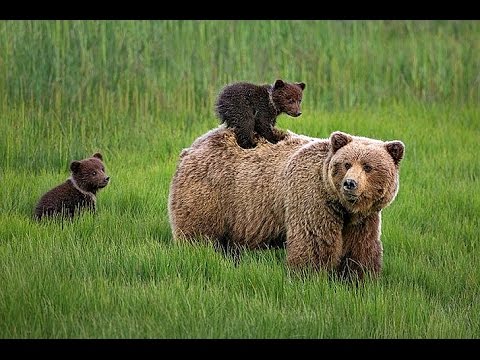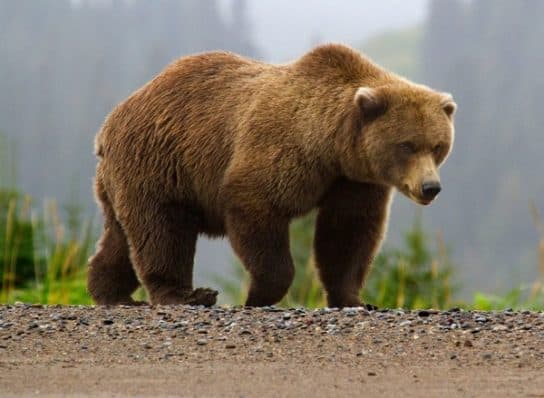


One of the largest representatives of the bear family. The body size of a predator can reach two meters in length, and body weight varies from 150 to 350 kilograms. The largest brown bear is the grizzly bear, they can grow up to three meters in length. Such individuals live in Kamchatka and Alaska. The head of the brown bear is rather large with small ears. The body is covered with thick and soft fur. The color of the animal can vary from brown to black. As a rule, most of the representatives are boring in color. The paws of the bear are powerful and large, with sharp claws on the toes.
Variety of brown bears
Brown bears differ in their size and appearance. The most famous subspecies of bears:
European brown bear. Large predator weighing up to 300 kilograms. The coat is pale with a dark spot at the withers.
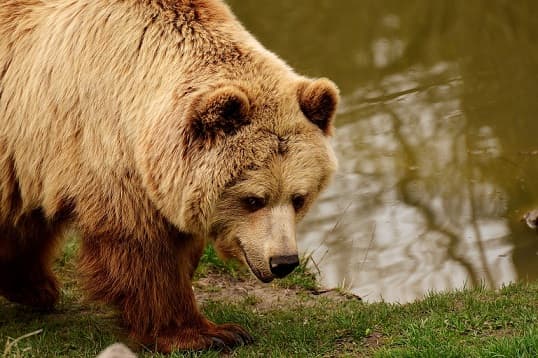

East Siberian brown bear. The species is distinguished by its soft and long fur. The color of the fur can vary from light brown to dark brown. In addition to color, the bear is very massive, its weight can reach 350 kilograms.
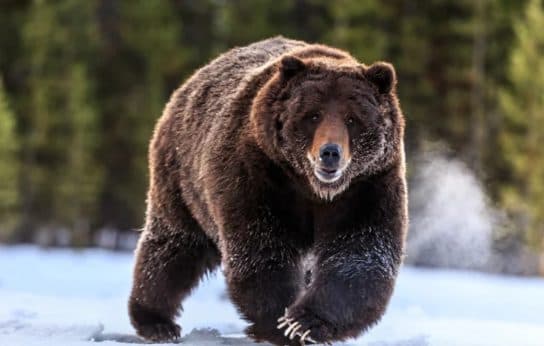

Amur brown bear or grizzly… The largest predator of the bear family with a mass of 450 kilograms. The color of the fur is predominantly black.
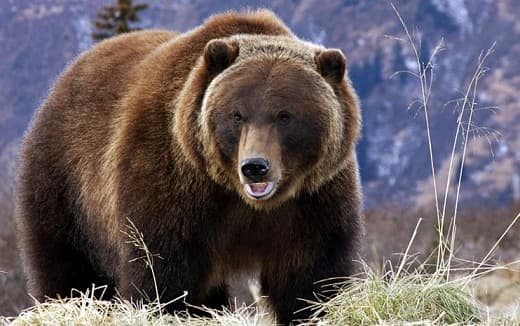

Caucasian brown bear. The owner of a small light brown coat. Slightly less than their relatives. The weight of the Caucasian bear varies up to 150 kilograms.


The habitat of the brown bear
The brown bear is a very common animal. Its population ranges from Alaska to Russia. However, the area of distribution of brown bears has changed over the past hundred years. In connection with the extermination of their habitat concentrated in Canada and Alaska. Also, the brown bear is not uncommon in the Russian latitudes.

Lifestyle
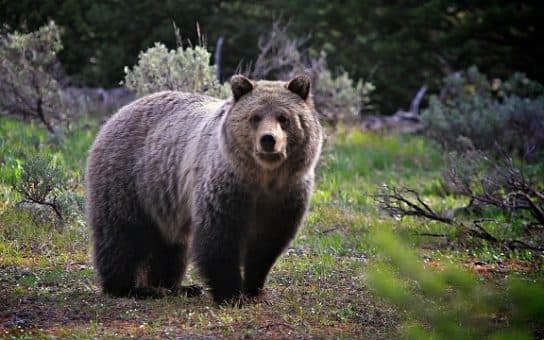
Despite its huge size, the brown bear is a very quiet and agile animal. Has a keen hearing and a well-developed sense of smell. The predator was let down only by his weak eyesight.
Brown bear activity begins in the morning and ends with the onset of darkness. The species of brown bears is sedentary and is not used to roaming. However, young bears, separated from the family, are able to move to other territories in search of a mating partner.
Mating season and offspring
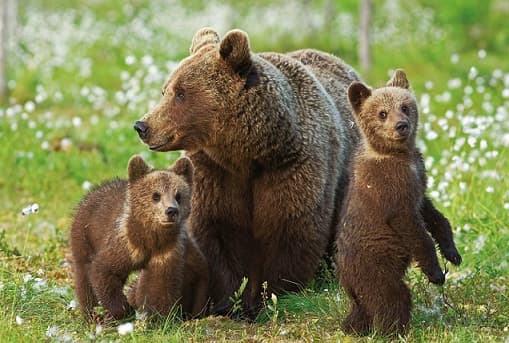
The breeding season for brown bears traditionally falls in May. Heat in females lasts more than 20 days. This period is characterized by serious conflicts between males. The winner of the fight gets the right to fertilize the female. The couple stays together for 40 days. The gestation period lasts an average of 7 months. As a rule, 2-3 bear cubs are born in the brown family. The offspring is with the mother for up to three years, and up to a year they feed on mother’s milk.
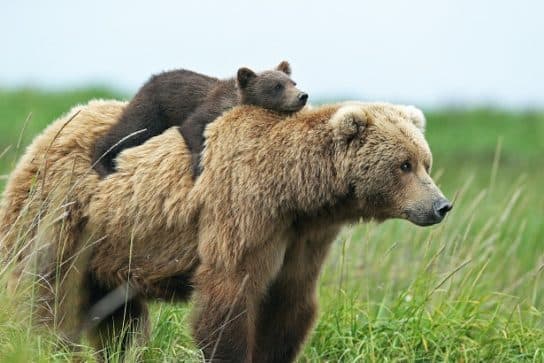
The father of the cubs is not involved in their upbringing. All responsibility rests with the mother.

Nutrition
Despite its predatory breed, the main food source of brown bears is vegetation. As a rule, they feed on nuts, berries, acorns and stems of various plants. Do not bypass insects’ nests.
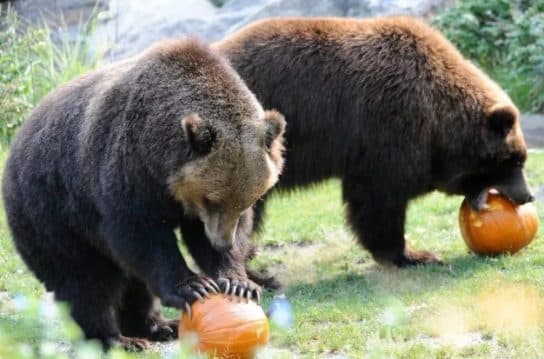

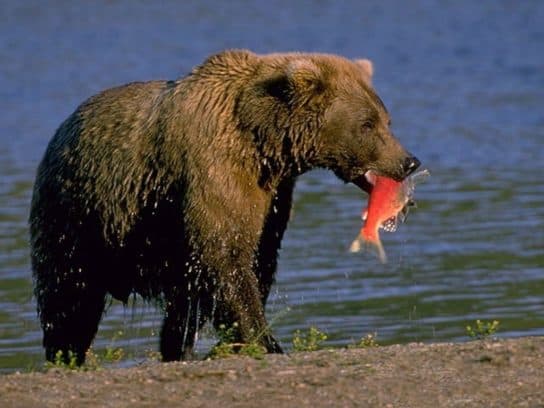
From the animal world, do not mind eating mice, gophers and chipmunks. In the period before hibernation, the brown bear is able to take prey from other predators. Its diet may include carcasses of fallow deer, roe deer, elk and deer.

Hibernation of brown bears
The hibernation period of the brown bear begins with the onset of cold weather. The bears begin to prepare their dens for extended sleep. Hibernation shelters are arranged in remote places on windbreaks. Also, bears are able to dig large holes or settle in mountain caves. Females with children try to make their den warm and spacious, lining it with moss and spruce branches.
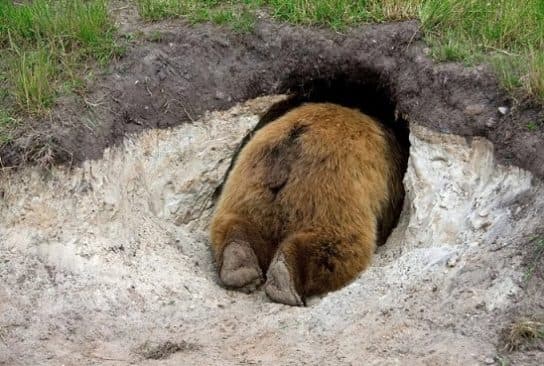

Depending on climatic conditions, bears can hibernate for up to six months. Pregnant and elderly animals are the first to leave for the winter.
Population of the species
During this period, there are only two hundred thousand representatives of brown bears on the planet. Hunters do a lot of harm to these animals. Since olden times, bears have been considered an excellent target due to their fur and meat. Traditional Asian medicine uses bear meat for health purposes. The beast itself is fearful and secretive. Attacks on humans are very rare. Due to the sharp decline in the species, brown bears are listed in the Red Book as endangered.
Brown bear – video