


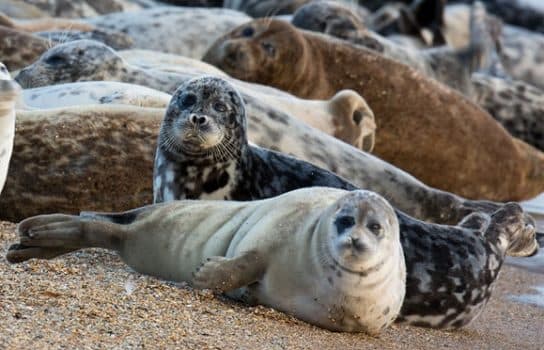


Caspian seal, or Caspian seal (lat. Pusa caspica) Is an animal that belongs to the class of mammals, the order of carnivores and the family of true seals. This predator was identified as a separate species – the Caspian seal.
Appearance
This animal has a fusiform and fluffy body, the length of which is 130-150 cm. The weight of an individual can vary from 40 to 80 kg. Sexual dimorphism is expressed in size and color: males are slightly larger than females, their hair is darker.
The Caspian seal has almost no neck, it is very short. The head of the animal is small, the skull is flattened. The seal does not have ears; instead, the predator has auditory canals that are invisible. The eyes of these mammals are black and rather large. They are covered with a shroud during the dive. On land, they often water. These predators have a thick fat layer that allows them to easily endure cold and lack of food. The skin of the seal is durable, it is covered with thick wool. The color of adults is usually off-white, on the back the coat is almost green.
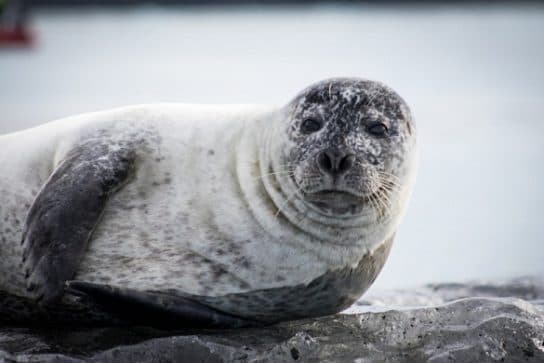

There are membranes between the fingers of the seal. On the forelimbs of the animals there are strong claws that help create holes – they are needed to get out onto land.
Where dwells
Caspian seals inhabit the shores of the Caspian Sea, their habitat is in Iran. On the southern shores of the sea, the species is practically not represented. Individuals migrate frequently. So, at the beginning of winter, they move to the glaciers located in the north of the Caspian Sea. By the end of winter, these temporary habitats begin to melt, at which time seals move to the southern coasts of this sea. There is always a lot of food here, this helps the animals build up the fat layer. In spring and summer, these predators can swim into the mouth of the river. Volga. They love to drift on ice floes. In winter, seals are in the water most of the time, and in summer they rest on land.
What eats
The Caspian seal eats many types of fish: sprat and herring, sandy broadhead. The animal also feeds on shrimps and amphipods, but the favorite of the predator is gobies. Sometimes the mammal eats small invertebrates. Crustaceans are not very popular with seals.
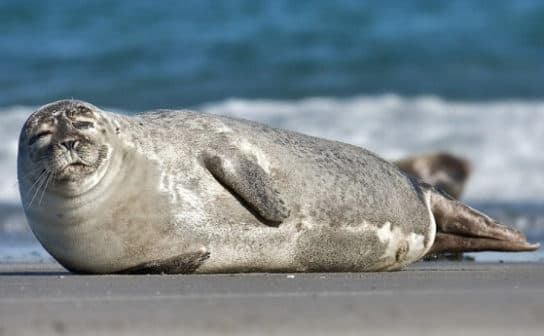

To find food, the animal goes under water. It can swim for kilometers before finding prey. The maximum depth to which the seal dives is 85 m. An adult consumes 3-6 kg of fish per day. The prey takes 2 to 4 hours to digest.
Lifestyle
The animal spends almost all its life under water. Caspian seals swim excellently due to their small rounded head and spindle-shaped body. Therefore, the predator can stay in the water for about 1.5 hours. Often, seals sleep on the water.
In winter, Caspian seals rarely appear on land and do so only to get air. They have rookeries where animals come during the mating season.
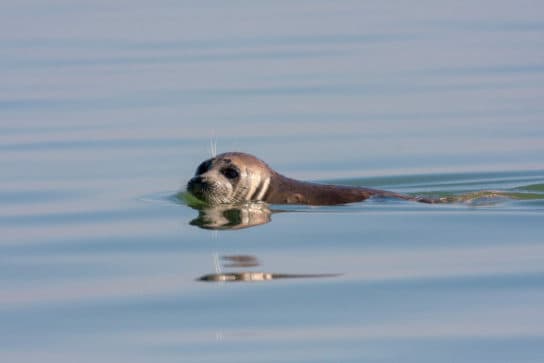
Predators have a good sense of smell and vision. They are very distrustful and always cautious. The danger can wait on land and, if this happens, the individual quickly swims away.
Caspian seals are loners. These animals create flocks only during the breeding season, but even then they are a little shy of their relatives.
Reproduction
These animals become sexually mature only at 6 or 7 years old. Males may have offspring at a later date. Females usually give birth every year or every 2 years. Approximately 10% of females do not become pregnant at the end of the breeding period.
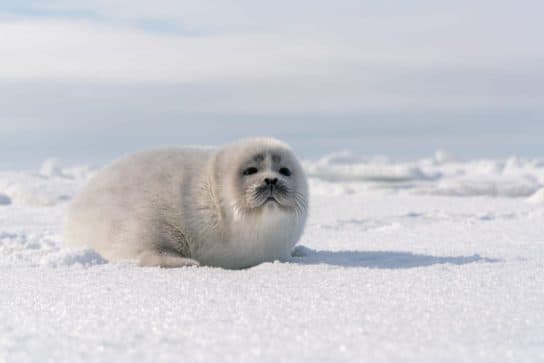
The breeding season starts in the spring. The female carries the cub from 10 to 11 months. They give birth to offspring right on the glaciers. At this time, females are especially vulnerable. One female gives birth to 1-3 puppies weighing 5 kg and 65-79 cm long. At birth, the cubs are covered with white fur – they are called pups. At first, the mother feeds them with milk, but in 2-4 months this period ends.


Females are well prepared for the birth of babies. They create shelters from the snow, where they feed their offspring. Then the mother transfers the cubs to an adult diet. Even before this, the fur of the seals changes color. Males do not contact their puppies.
Natural enemies
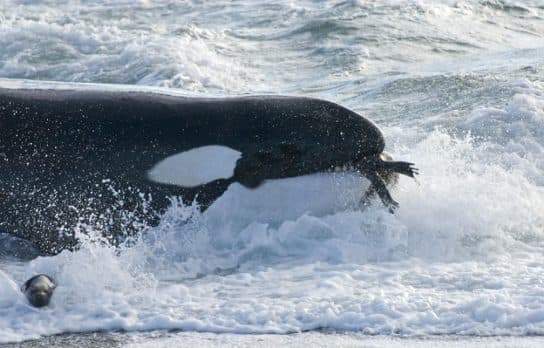
The Caspian seals have many natural enemies. Often, it is the seals and their mothers that become the prey of these predators. The defenseless seals are attacked by foxes and wolves, killer whales and brown bears, sharks. Sometimes, when walruses have no choice at all, they attack the Caspian seals.

Humanity is causing great harm to the populations of this species. At the moment, poaching is flourishing, animal habitats are being polluted. Because of this, the number of the Caspian seal is constantly decreasing.
Red Book
This species is listed in the International Red Book. The Caspian seals are believed to be endangered. The decline in the population began in the 1970s, in 1975 the population was reduced by half. Now the law prohibits the killing of more than 50 thousand mammals a year, but this could lead to the extinction of animals.

Security
At the moment, the Russian Federation is trying to resolve the issue of banning hunting not species. The authorities are trying to minimize the impact on the natural habitat of seals by reducing emissions of refined products.
Today, to preserve the species, the following measures are being taken: scientists analyze the waters of the Caspian for the level of pollution, representatives of the species are carefully protected in the Astrakhan Biosphere Reserve.
Interesting Facts
- The Caspian seal has a sound sleep. Often, scientists swam up to the sleeping predator and turned it over, but the seal continued to sleep.
- These animals have an interesting ability: they can delay and then resume the development of the fetus. This ability is caused by necessity: in severe winters, if babies are born, they will not survive.
- The age of the Caspian seal can be determined by the number of circles on its claws.
- Caspian seals are quite energetic animals. They can swim at a speed of about 30 km / h. On land, they move with the help of a tail and front flippers, fingering them in turn.
- Zoologists believe that when living in good conditions and an abundance of food, animals can live for 50 years. But today, life expectancy is 15 years. The individual grows up to 20 years old, but many die before even reaching middle age.
- The ancestors of the Caspian seals existed in the Tertiary period, but instead of fins they had limbs that looked like paws.
Video about the Caspian seal


