


A healthy lifestyle is, first of all, proper nutrition, and only then physical activity. And in order for the diet to have a positive effect on life and health, it is recommended to exclude from it all foods that do not differ in useful value. And not the least role in this is played by the exclusion of refined sugar from absolutely all dishes and drinks of the diet.
At the same time, no one forces you to limit yourself to sweets – after all, there is stevia! The rich taste of sweetness – and at the same time, the minimum of calories – all of these are the main reasons to pay attention to stevia and enrich your menu with a natural product. It’s nice that with him you won’t need to follow a strict diet without your favorite pastry chef – after all, any dessert with stevia will be healthier.
Description
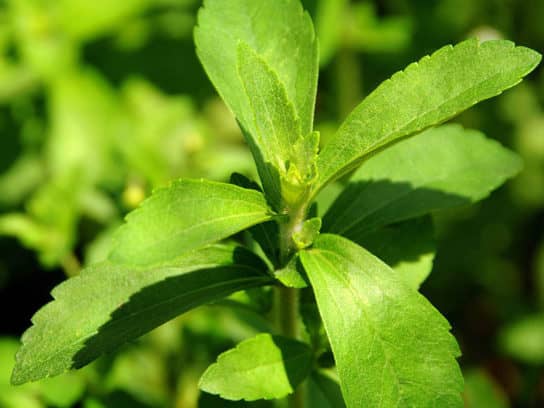

Stevia is a unique food product – its value lies precisely in the fact that this plant does not: this herb does not add calories, does not contain sugar and other harmful substances.
Stevia as a plant belongs to the same family as the medicinal chamomile familiar to many, or ragweed – aster. This invaluable species grows in South America (Paraguay, Brazil), and there it has been used for thousands of years (mainly leaves) in order to sweeten food.
In their homeland, stevia is called kaa-on, which translates as “sweet grass”, or honey grass, due to the fact that the indigenous population habitually used it not only as a sweetener, but also taking into account its beneficial properties: treatment of burns, stomach problems and colic, and even as a contraceptive. Traditional medicine of these countries has appreciated this herb.
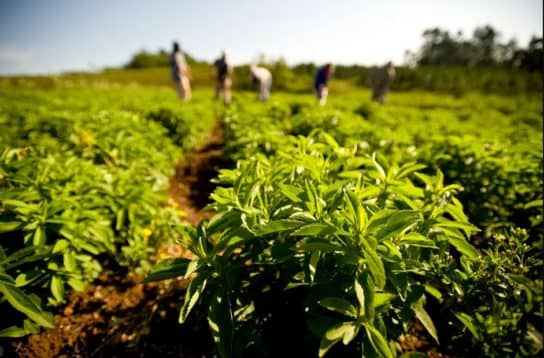

The herb stevia is a perennial shrub that has enjoyed immense popularity in its homeland since ancient times.
The leaves of this herb are used there as a healing tea for a variety of purposes:
- treatment of the gastrointestinal tract and problems associated with it;
- improved blood circulation;
- normalization of metabolism;
- solving kidney problems;
- improving the condition of the heart system and much more.
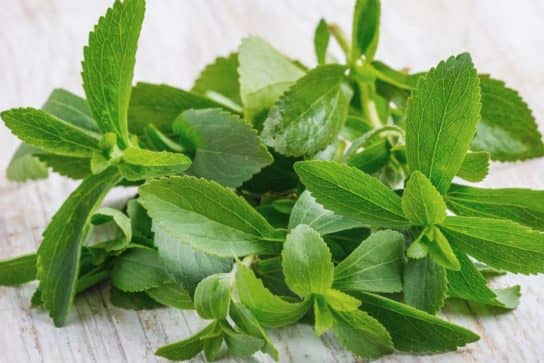

But modern medicine (first of all – dietology) prioritizes stevia as a unique sugar substitute. Its uniqueness lies in the fact that the properties of the extract of this plant are hundreds of times higher than the sweetness of refined sugar, and with such essential characteristics, this does not in any way affect the amount of glucose in the blood.
Do not forget about the taste of this wonder-savior. Stevia is consumed in many dishes, from drinks to a wide variety of desserts and even jams. The natural sweetness of this herb allows even diabetic patients to consume all these dishes.
Appearance


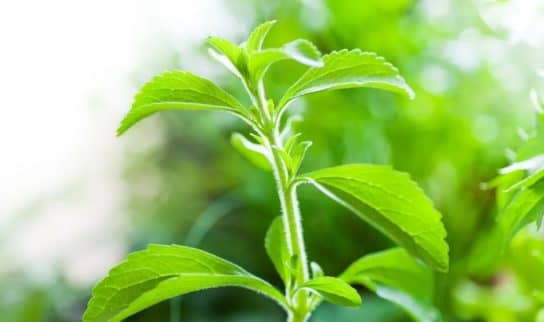
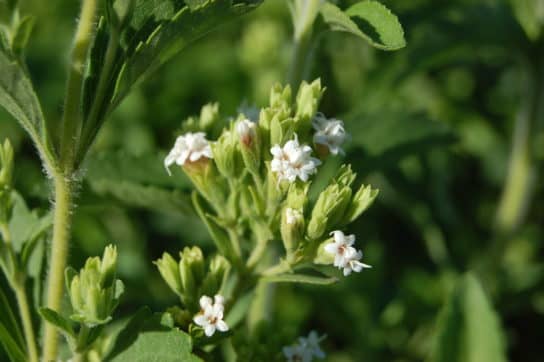
In appearance, this herb is a semi-shrub, which is medium in size and has rather long branches (almost up to a meter long). Young shoots are quite fragile, but adult branches are characterized by woodiness, and are far from so tender. Leaves are usually lanceolate, small (about 7 cm long), without petiole, arranged in pairs on the stem, and equipped with 6-8 pairs of denticles.
In its natural conditions, stevia blooms without stopping – but this process takes place most abundantly during the active growth phase. Like all asters, this herb is equipped with small flowers collected in tiny baskets. The seeds of this plant are so small that they resemble coarse dust (1000 seeds weigh about 0.4 g).
Where grows

The Aster family includes almost three hundred species of various grasses and shrubs, most of which grow in South America and in its central part.
Wild stevia can be found in semi-arid areas – usually in mountainous areas. This plant reproduces by seed, but many of them simply do not germinate. Therefore, after they began to cultivate stevia, it was found that vegetative propagation can be called much more effective for this herb.
Benefit


Through research into the properties of this herb, scientists have found that, in addition to its natural sweetness, regular intake of stevia can provide:
- reducing the load on the heart muscle;
- normalization of pressure;
- ensuring the strength of the immune system:
- protects against excessive release of insulin.
As a natural sweetener, stevia comes in several forms – dry extract or syrup. Therefore, with this herb, you can cook any dishes without any problems – from baked goods to sauces. And thanks to this, you can achieve not only better health (if we are talking about diabetes), but also lose weight without cutting back on your diet.
Contraindication


The beneficial properties of stevia do not mean that this plant is completely free of side effects. It is especially important to consult a doctor about the usefulness of this plant for those who have the following problems:
- taking drugs that regulate cholesterol levels;
- treatment with antifungal agents;
- undergoing treatment with anti-inflammatory drugs.
Care should be taken with stevia for those who have chronic problems with allergies, especially to the flowering of such shrubs.
Growing

Growing honey grass is possible on plantations with hot climates – in tropical countries (the same Vietnam, for example). The main thing is that the conditions differ from the temperate climate – and those who want to try growing stevia at home will have to take care of creating special conditions.
This plant loves bright sun and warmth, but negatively perceives drafts and wind. The soil for stevia is not critical – the main thing is that the soil does not have a high level of salinity.

Stevia was born in the humid tropics – so the optimal environment for it is very similar to a sun-drenched sauna. Moisture and again moisture – soil and air – which is a prerequisite for the normal growth and development of this herb. Stevia will hardly survive drought. And the soil, rich in organic matter and elements, with a sand content will help with this.

