


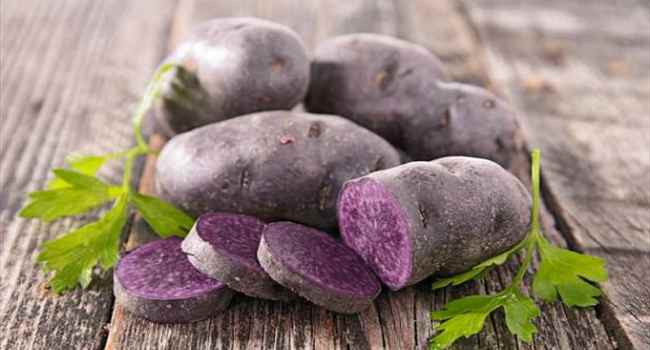


Purple potatoes are a type of potato with purple skin and flesh. It has a medium starchy texture and a mild nutty flavor than regular white potatoes. As the scientists found out, such potatoes contain more antioxidant compounds that regular potatoes cannot compete with.
As you know, the essence of even an unusual vegetable does not actually change. Therefore, even purple potatoes should not be bypassed. After all, it will bring a non-standard look to familiar dishes, fill them with original taste and, additionally, leave a positive mark on human health. For example, it has been found to help lower blood pressure, accelerate weight loss, and prevent depression.
These potatoes can be fried, boiled, baked, mashed, added to soups and other dishes. Let’s get to know more about such an unusual potato so far and find out how it is useful for the human body, what useful properties it has and whether there are any contraindications to its use.
Purple potato variety description
Among the wide variety of vegetable crops, it is worth noting purple potatoes, new for domestic consumers. It belongs to the family of bindweed and the genus Solanaceae.
It was first bred in South America, so it is most common in Peru. True, since 2007, gardeners in Tomsk and the Urals have also been planting blue potatoes. Therefore, you should not be afraid of its appearance on the shelves of markets and shops.
No one objects that this plant is the result of genetic selection work. But it will not bring any harm, because the classical technique was used in breeding work.
The main distinguishing characteristics of this vegetable crop are:
- Oblong tubers;
- No loss of purple color even after prolonged heat treatment;
- The presence of a thick rind;
- Long-term storage of the product.
It should be noted that today the most popular varieties of purple potatoes are:
- French truffle potatoes;
- Chinese truffle;
- Black woman;
- Gourmet;
- Whirlpool;
- Russian black potatoes.
Purple potatoes why the composition is useful
Despite its “exotic” appearance, such a potato is characterized by the presence of many substances necessary and important for human health.
Thus, this potato contains:
- Water (about 80%);
- Vegetable proteins;
- Fats;
- Fatty acids represented by myristic, palmitic, stearic, linoleic, oleic (omega-9), palmitoleic, linolenic and omega-6;
- Carbohydrates (among them digestible – dextrin, starch, sugars, mono- and disaccharides, fructose, sucrose, glucose or dextrose);
- Amino acids of irreplaceable plan (valine, arginine, histidine, leucine, isoleucine, methionine, lysine, tryptophan, threonine, tyrosine, phenylalanine);
- Nonessential amino acids (aspartic and glutamic acids, alanine, glycine, tyrosine, proline, serine, uisteine);
- Organic acids;
- Dietary fiber (fiber);
- Ash products;
- Retinol (or vitamin A);
- Provitamin a (beta-carotene);
- B vitamins (thiamine, riboflavin, pyridoxine, pantothenic and folic acids, niacin);
- Phylloquinone (vitamin K);
- Ascorbic acid (vitamin C);
- Alpha-tocopherol (vitamin E);
- Vitamin n (biotin);
- Macronutrients in the form of calcium, potassium, magnesium, sodium, phosphorus, sulfur and chlorine;
- Minerals represented by boron, iron, aluminum, lithium, cobalt, iodine, copper, manganese, molybdenum, nickel, fluorine, rubidium, selenium, zinc and chromium.
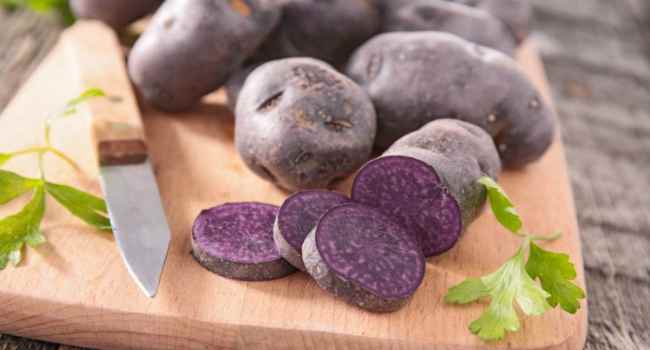
The total calorie content of 100 grams of purple potatoes is 72 kilocalories. As for its nutritional value, 100 grams contains:
15 grams of carbohydrates;
1 gram of fiber
2 grams of protein.
Benefits of purple potatoes
Purple potatoes are similar in nutritional value to regular potatoes. But there is one significant difference: the content of antioxidants. It contains 4 times more of them than in the usual white potatoes.
The purple color of the entire tuber is given by anthocyanins, which are antioxidant compounds.
It contains a lot of potassium, which brings certain benefits to people suffering from high blood pressure. Plus, more antioxidants.
A USDA study has shown that 6 golf ball-sized tubers eaten every day for a month can reduce blood pressure by an average of 4 percent. Agree, this is not so little.
In addition, thanks to all the same antioxidants, it helps to strengthen the immune system, can prevent and reduce the risk of heart disease and oncology.
In addition to potassium, which helps regulate cellular fluid, and antioxidants, blue potatoes contain ample amounts of vitamin C. They are low in fat and free of cholesterol.
Even if not by much, but the content of starchy substances in it is still less than that of ordinary potatoes. This fact should be noticed by weight watchers and dieters.
Purple potatoes benefits
Due to its characteristics, it is blue potatoes (trace elements do not disappear after freezing or prolonged heat treatment) that can boast of maximum benefits for the human body.
As a result, eating purple potatoes helps:
- Bind toxins and toxins;
- Rather, remove feces;
- Normalize intestinal motility;
- Relieve inflammation of the mucous membranes of the digestive system;
- Prevent stool disturbance;
- Prevent constipation and diarrhea;
- Relieve the manifestations of flatulence and associated abdominal pain;
- Protect the gastric mucosa (potatoes seem to envelop it);
- Reduce body weight (by cleansing the body of toxins and toxins);
- Accelerate metabolic processes;
- Improve eyesight;
- Prevent the development of glaucoma and cataracts;
- Remove the risks of myopia;
- Reduce fatigue and stress when working at a computer monitor;
- Clear the walls of blood vessels from various negative deposits;
- Prevent blood clots;
- Remove “bad” cholesterol;
- Prevent the formation of cholesterol plaques;
- Reduce the risk of myocardial infarction;
- Prevent the development of atherosclerosis;
- Lower high blood pressure;
- Strengthen the vascular walls;
- Improve general vascular microcirculation and blood flow;
- Restore heart rate;
- Improve the work of the heart muscle;
- Prevent stroke;
- Accelerate and improve the absorption of iron by the body;
- Prevent the appearance of anemia (by promoting the early formation of red blood cells);
- Increase the activity of the immune system in the fight against viruses (that is, strengthen the immune system);
- Rejuvenate the body (thanks to natural antioxidants, polyphenols);
- Protect cells from the negative effects of free radicals (that is, cancer is prevented);
- Remove salts that are deposited in the joints;
- Reduce fever
- Remove the manifestations of tuberculosis and prevent the appearance of this disease.
Purple Potatoes Cooking Applications
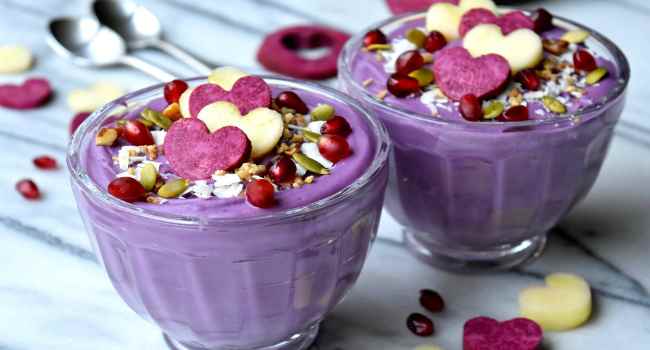
Therefore, such potatoes with a nutty flavor are boiled, stewed, baked, made casseroles and even potato pancakes from them. And all this happens without the loss of available minerals and vitamins.
Using it in salads will add brightness to the boring look of the dish, it retains its shape when baked and is well mashed when mashed.
To maximize nutrients and minimize calories, simply boil it, puree it, or bake it instead of frying it.
It is enough to boil the tubers (preferably with the peel), sprinkle with olive oil and sprinkle with finely chopped onions and crushed garlic.
It will be delicious baked with paprika and cut into slices, lightly seasoned with salt.
Here are some more ideas on how to make purple potatoes.
Combine the diced potatoes with the shallots. Season with a little pepper and olive oil. Place in the oven. When it’s half cooked, remove the lid, add the leeks and cook through. Sprinkle the finished dish with rosemary, parsley, dill.
For mashed potatoes, boil and mash. Use almond milk instead of butter and milk. Season the mashed potatoes with sauteed garlic.
Bake whole, without peeling, in the oven or microwave, lightly drizzling with olive oil. Season the cooked potatoes with Greek yogurt, fresh onions and herbs.
For potato salad, cut into cubes. Combine mayonnaise with mustard, Greek yogurt and season salad.
Purple potatoes harm and contraindications
Some people think that the purple potato variety is not much different from the usual one. On the one hand, this is a correct judgment. But the consumption of such a food product should also be taken with caution. After all, blue potatoes, despite the lower starch content, are not recommended:
- Pregnant women (bloating often occurs);
- Elderly people and children (there are not enough enzymes for digestion);
- With the fact of obesity (due to increased calorie content, high carbohydrate content, promoting the accumulation of fats in the body, slowing down the processes of cleansing the latter from slagging);
- In the presence of diabetes mellitus (such a potato contains a large amount of mono- and disaccharides, sucrose, fructose, glucose);
- In the presence of constipation (in this case, you can use only puree to avoid irritation of the intestinal mucosa and provoking exacerbations);
- With gastritis (fried and baked potatoes are completely prohibited, only mashed potatoes and boiled potatoes in soup are allowed);
- With low blood pressure or hypotension (due to the product’s ability to lower blood pressure).
Here is such an unusual purple potato so far for many. Besides the nutritional value, health benefits, it can give your meals a vibrant color and brighten the table.
What is purple potato, how is it useful, learn from the video show “Dacha TV”
https://www.youtube.com/watch?v=kwg5CGR4CUo

