


- 1 Why thyroid cancer is often discovered through a nodule
- 2 Symptoms can be subtle or absent for a long time
- 3 The main types are not all the same disease in practice
- 4 Risk factors do not work like a simple checklist
- 5 How doctors usually evaluate a suspicious thyroid change
- 6 Why “watching it” can sometimes be reasonable
- 7 Treatment is not one standard path for everyone
- 8 The emotional part of diagnosis is easy to underestimate
- 9 Questions that help make appointments more useful
- 10 Misunderstandings that can lead to poor decisions
- 11 Life after treatment can involve more than being “cancer-free”
- 12 When waiting is not a good strategy
- 13 A calm and practical route if you found a thyroid lump
- 14 FAQ
- 15 The main idea to take away
A lump in the front of the neck can create immediate anxiety, especially when people read that thyroid nodules may sometimes be cancerous. At the same time, many thyroid changes are benign, slow-growing or found incidentally during imaging done for another reason. This is why thyroid cancer is a topic where panic and carelessness can both lead in the wrong direction.
Thyroid cancer is not one single disease with one predictable path. Some types are usually slow-growing and highly treatable when managed properly. Others are more aggressive and require faster, more specialized care. The practical challenge is to understand what deserves attention, what tests are used, what treatment may involve and why decisions should be made with a qualified doctor rather than by guessing from symptoms alone.
This article explains thyroid cancer in a calm, practical way: how it may appear, why most nodules are not cancer, how diagnosis is usually approached, what treatment can include, and what people often misunderstand when they first face this subject.
Why thyroid cancer is often discovered through a nodule
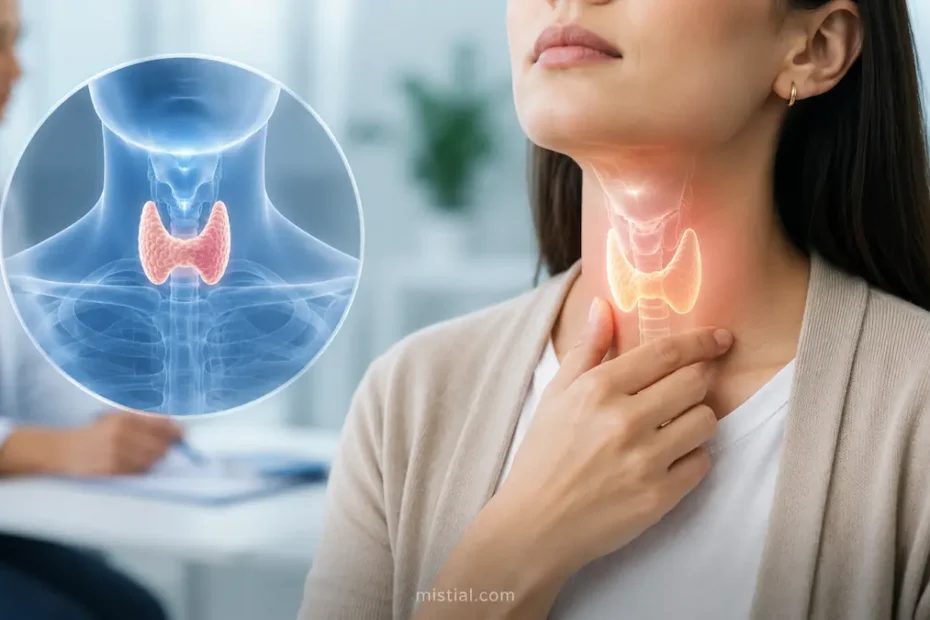
The thyroid is a small gland in the lower front part of the neck. It produces hormones that help regulate metabolism, energy use, temperature sensitivity, heart rhythm and many other body functions. Because the gland sits close to the surface of the neck, changes in it may sometimes be felt as a lump or seen during imaging.
Many cases of thyroid cancer begin as a thyroid nodule. A nodule is an abnormal growth or lump within the thyroid gland. The important point is that thyroid nodules are common, and most of them are benign. A nodule is not the same thing as cancer.
This distinction matters because finding a nodule can feel frightening, but the next step is not to assume the worst. The right next step is evaluation: physical examination, ultrasound when appropriate, blood tests in some cases and, for selected nodules, fine-needle aspiration biopsy.
Important: a thyroid lump should not be ignored, but it also should not be treated as a cancer diagnosis by itself. Only proper medical evaluation can clarify what it is likely to be.
Symptoms can be subtle or absent for a long time
Thyroid cancer may not cause clear symptoms early. Some people discover it during a routine exam, dental visit, ultrasound, CT scan or checkup for another issue. Others notice a lump, swelling or change in the neck and seek care because something feels different.
Possible signs that deserve medical attention include:
- a lump or swelling in the front of the neck;
- a nodule that seems to grow over time;
- hoarseness or voice change that does not resolve;
- difficulty swallowing;
- trouble breathing or a sensation of pressure in the neck;
- pain in the neck or throat that persists without a clear reason;
- swollen lymph nodes in the neck.
These symptoms can have causes other than cancer. Infections, benign nodules, thyroid inflammation, vocal cord problems and other conditions may create similar complaints. The purpose of noticing symptoms is not to self-diagnose, but to avoid delaying evaluation when something persists or changes.
The main types are not all the same disease in practice
When people say “thyroid cancer,” they may be referring to different tumor types with different behavior. The type matters because it influences treatment, follow-up and prognosis.
| Type | General pattern | Why it matters |
|---|---|---|
| Papillary thyroid cancer | The most common type; often slow-growing | Frequently has a favorable outlook, but still needs proper staging and follow-up. |
| Follicular thyroid cancer | Can also be differentiated and often treatable | Evaluation may focus on whether it has spread beyond the thyroid or into blood vessels. |
| Medullary thyroid cancer | Arises from different thyroid cells than papillary or follicular cancer | May be linked with inherited syndromes in some cases, so family history can matter. |
| Anaplastic thyroid cancer | Rare, aggressive and fast-growing | Requires urgent specialist care because symptoms may progress quickly. |
Most discussions about the generally favorable outlook of thyroid cancer refer mainly to differentiated thyroid cancers, especially many papillary and follicular cases. That reassurance should not be applied automatically to every type or every stage. The details matter.
Risk factors do not work like a simple checklist
Risk factors can raise the likelihood of thyroid cancer, but they do not determine what will happen to one person. Some people with risk factors never develop thyroid cancer. Some people diagnosed with thyroid cancer have no obvious risk factor.
Factors that may be relevant include a history of radiation exposure to the head or neck, certain inherited conditions, family history of thyroid cancer, previous thyroid disease in some contexts and age or sex patterns that vary by cancer type. Iodine intake can also influence thyroid health, although the relationship between iodine and different thyroid conditions is not something to interpret casually without medical context.
It is also important not to blame the patient. Thyroid cancer is not usually something a person can explain by one food, one stressful period or one lifestyle choice. A balanced lifestyle supports health generally, but it does not replace evaluation when a suspicious thyroid change appears.
How doctors usually evaluate a suspicious thyroid change
The evaluation usually starts with a conversation and physical examination. A doctor may ask when the lump appeared, whether it is growing, whether there are voice changes, swallowing problems, breathing symptoms, family history, radiation exposure or signs of thyroid hormone imbalance.
Ultrasound is commonly used because it can show the size and structure of thyroid nodules and nearby lymph nodes. Certain ultrasound features may make a nodule more or less suspicious, but ultrasound alone does not always give a final answer.
Blood tests may be used to assess thyroid function. A thyroid-stimulating hormone test can help show whether the gland is overactive, underactive or functioning within the expected range. However, normal thyroid hormone tests do not fully rule out thyroid cancer. A person can have thyroid cancer and still have normal thyroid hormone levels.
Fine-needle aspiration biopsy may be recommended for nodules with certain size and ultrasound features. During this procedure, a thin needle is used to collect cells from the nodule for examination. Not every nodule needs biopsy; the decision depends on the nodule’s appearance, size, risk factors and clinical context.
Important: normal thyroid blood tests do not automatically mean a thyroid nodule is harmless. Blood tests and structural evaluation answer different questions.
Why “watching it” can sometimes be reasonable
People often assume that any possible cancer-related finding should be removed immediately. In thyroid care, the decision can be more nuanced. Some small, low-risk thyroid cancers or suspicious nodules may be monitored carefully in selected cases, depending on the situation, local guidelines and the patient’s preferences.
This does not mean ignoring the problem. Careful monitoring may include scheduled ultrasound, clinical follow-up and clear criteria for changing the plan. It is different from simply doing nothing because the situation feels inconvenient or frightening.
The reason monitoring may be discussed is that some thyroid cancers grow very slowly, and treatment itself can carry consequences. Surgery, hormone replacement, voice risks, calcium regulation problems and lifelong follow-up are not minor details. The best decision balances the likely behavior of the disease against the risks and benefits of treatment.
For other cases, especially when there is evidence of aggressive behavior, spread, significant symptoms or a higher-risk cancer type, active treatment may be more appropriate. This is exactly why individualized medical judgment matters.
Treatment is not one standard path for everyone
Treatment depends on the type of thyroid cancer, tumor size, whether it has spread, ultrasound and biopsy findings, age, general health, patient preference and the experience of the medical team. The same diagnosis name can lead to different plans in different situations.
Surgery is a common treatment. It may involve removing part of the thyroid or the entire thyroid. In some cases, lymph nodes in the neck may also be removed or sampled. The extent of surgery depends on tumor features and risk assessment.
Radioactive iodine may be considered for some differentiated thyroid cancers after surgery. It is not used for every patient and is not equally useful for every thyroid cancer type. Its role depends on the risk of remaining thyroid tissue or disease and whether the cancer cells are likely to take up iodine.
Thyroid hormone therapy may be needed after surgery, especially if the entire thyroid is removed. It can replace hormones the body can no longer produce and, in some cases, help suppress thyroid-stimulating hormone under medical supervision. This should be managed carefully because too much or too little thyroid hormone can affect the heart, bones, energy and overall wellbeing.
External radiation, targeted therapy, chemotherapy or other treatments may be used in selected cases, especially for more advanced, recurrent or aggressive disease. These decisions usually require specialist care.
| Treatment element | When it may be considered | Important limitation |
|---|---|---|
| Surgery | Common for many confirmed thyroid cancers | The extent of surgery should be individualized; more is not automatically better. |
| Radioactive iodine | Selected differentiated thyroid cancers after surgery | Not useful for every type and not necessary for every low-risk case. |
| Thyroid hormone therapy | After thyroid removal or when hormone suppression is part of the plan | Requires monitoring to avoid under- or over-treatment. |
| External radiation or systemic therapy | Selected advanced, recurrent or aggressive cases | Usually managed by specialized oncology teams. |
| Active surveillance | Some low-risk, small tumors or uncertain situations | Requires structured follow-up, not casual neglect. |
The emotional part of diagnosis is easy to underestimate
Even when a doctor says a thyroid cancer appears treatable, the word “cancer” can change how a person hears everything afterward. Some people become afraid of every sensation in the neck. Others minimize the diagnosis because they have heard thyroid cancer is often “not serious.” Both reactions are understandable, but neither gives a complete picture.
A more useful approach is to separate urgency from seriousness. A condition can be serious because it needs proper diagnosis and follow-up, while not always requiring panic. Conversely, a condition can appear mild at first and still deserve careful management.
Good care includes clear communication. Patients should feel able to ask what type of thyroid cancer is suspected or confirmed, what the stage or risk category means, why a specific treatment is recommended, what alternatives exist and what follow-up will look like.
Questions that help make appointments more useful
Medical visits can feel rushed, especially after a biopsy result or imaging report. Preparing questions can help the patient understand the plan and avoid leaving with only partial information.
- What type of thyroid cancer is suspected or confirmed?
- What did the ultrasound show about the nodule and lymph nodes?
- Is biopsy recommended, and why?
- If surgery is suggested, would it remove part or all of the thyroid?
- What are the main risks of the recommended treatment?
- Will thyroid hormone replacement be needed afterward?
- Is radioactive iodine likely to be part of the plan?
- How will follow-up be organized after treatment?
- Should family history or genetic evaluation be considered?
These questions do not replace medical judgment, but they make the discussion more concrete. They also help distinguish between a plan that is tailored to the individual and a plan that has not been fully explained.
Misunderstandings that can lead to poor decisions
Thyroid cancer is surrounded by confusing messages. Some are overly frightening; others are too casual. Both can interfere with good decisions.
- “Every thyroid nodule is dangerous.” Most thyroid nodules are benign, but nodules still need appropriate evaluation when they are found.
- “Normal thyroid hormones mean there is no cancer.” Thyroid hormone levels can be normal even when a suspicious nodule exists.
- “If thyroid cancer is often treatable, it is not important.” Many cases have a favorable outlook, but proper diagnosis, treatment selection and follow-up still matter.
- “Removing the whole thyroid is always the safest choice.” The best surgical extent depends on the case. More extensive treatment can also bring more consequences.
- “Natural methods can shrink or cure thyroid cancer.” Diet and lifestyle may support general health, but they should not replace evidence-based cancer care.
- “A biopsy spreads cancer.” Fine-needle aspiration is commonly used to evaluate thyroid nodules. Fear of biopsy should be discussed with a doctor rather than assumed from online claims.
- “Follow-up is optional after treatment.” Monitoring is part of care because recurrence risk and hormone needs can vary.
The common thread is simple: thyroid cancer decisions should be based on the type of disease and medical evaluation, not on general slogans.
Life after treatment can involve more than being “cancer-free”
After treatment, many people continue regular follow-up. This may include physical exams, ultrasound, blood tests, thyroid hormone monitoring and, in some cases, tests related to tumor markers. The exact plan depends on the type and risk profile of the cancer and on the treatment received.
If the thyroid has been fully removed, thyroid hormone replacement is usually needed. The dose may need adjustment over time. Symptoms such as palpitations, fatigue, heat or cold intolerance, sleep changes, mood changes or weight changes should be discussed with a clinician because they may relate to hormone levels or other causes.
Some people also deal with voice changes, neck tightness, scar concerns, anxiety before follow-up scans or uncertainty about long-term risk. These issues are real, even when the medical outlook is favorable. Follow-up care should consider both physical and emotional recovery.
When waiting is not a good strategy
Some neck symptoms deserve prompt medical evaluation. This is especially true when a lump grows quickly, when breathing or swallowing becomes difficult, when hoarseness persists, when lymph nodes remain enlarged, or when there is a known thyroid nodule that has changed.
Urgent care may be needed if neck swelling progresses rapidly, breathing feels restricted, swallowing becomes severely difficult or there are signs of airway pressure. These symptoms do not automatically mean cancer, but they should not be managed at home.
People with a family history of medullary thyroid cancer or certain endocrine syndromes should also avoid casual self-monitoring. In such cases, specialist evaluation and sometimes genetic counseling may be relevant.
Important: thyroid cancer cannot be confirmed or ruled out reliably by touch, symptoms or home observation. Persistent or changing neck findings should be assessed by a healthcare professional.
A calm and practical route if you found a thyroid lump
Finding a lump does not mean you need to jump to the worst conclusion. It does mean you need a clear plan. A calm approach helps prevent both delay and unnecessary panic.
- Do not repeatedly press or manipulate the lump. Notice its location and whether there are symptoms, but avoid irritating the area.
- Arrange a medical appointment, especially if the lump persists, grows or comes with voice, swallowing or breathing changes.
- Bring relevant history: previous thyroid disease, radiation exposure, family history, medications and any imaging reports.
- Ask whether thyroid ultrasound is appropriate and what the findings mean in plain language.
- If biopsy is recommended, clarify why that nodule meets criteria and how results will guide the next step.
- Do not start supplements, iodine products or alternative protocols as a substitute for diagnosis.
This route keeps the focus where it belongs: on evidence, risk assessment and individualized care rather than fear-driven decisions.
FAQ
Can thyroid cancer happen with normal thyroid blood tests?
Yes. Thyroid hormone levels may be normal even when a thyroid nodule is suspicious. Blood tests show how the gland is functioning, while ultrasound and biopsy help evaluate the structure and cells of a nodule.
Does every thyroid nodule need a biopsy?
No. Doctors usually consider the nodule’s size, ultrasound features, risk factors and clinical context. Some nodules are monitored, while others need fine-needle aspiration to better understand whether cancer is likely.
Is thyroid cancer always slow-growing?
No. Many differentiated thyroid cancers grow slowly, but not all thyroid cancers behave the same way. Medullary and anaplastic thyroid cancers are different from common papillary cancer, and some cases need more urgent or specialized care.
Can diet cure thyroid cancer?
No diet should be considered a cure for thyroid cancer. Good nutrition can support general health during diagnosis, treatment and recovery, but it should not replace medical evaluation, surgery, radioactive iodine or other treatment when these are recommended.
Will a person need thyroid hormones after treatment?
Many people need thyroid hormone replacement if the entire thyroid is removed. Some may also need hormone management after partial surgery, depending on thyroid function and the treatment plan. Dosing should be monitored by a clinician.
Why is follow-up needed after thyroid cancer treatment?
Follow-up helps monitor hormone levels, recovery, possible recurrence and long-term treatment effects. The schedule depends on the cancer type, risk level and treatment received.
The main idea to take away
Thyroid cancer is a serious diagnosis, but it is not a single predictable story. A small low-risk papillary cancer, a suspicious thyroid nodule and an aggressive thyroid tumor are very different situations. That is why the right approach is not panic, denial or self-treatment, but careful evaluation.
The most useful first step is to understand what has actually been found: a lump, a nodule on ultrasound, an uncertain biopsy or a confirmed cancer type. From there, decisions about monitoring, surgery, radioactive iodine, hormone therapy and follow-up should be made with qualified medical guidance.
A calm plan protects against two common mistakes: delaying evaluation because symptoms seem mild, and rushing into conclusions because the word “cancer” is frightening. With thyroid cancer, details matter, and those details are best clarified through proper medical care.
