


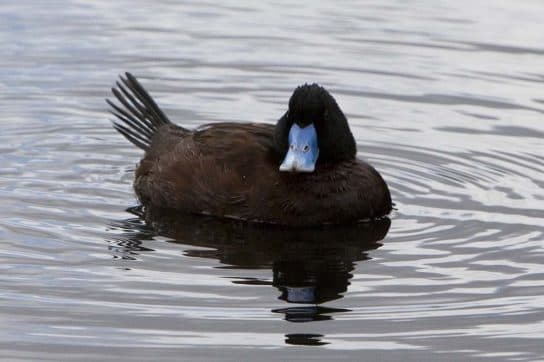
The order Anseriformes is a fairly ancient group, the early finds of which were made in the Paleocene. The Cretaceous age of the detachment is assumed. The ancestors of these birds are terrestrial herbivorous birds, which have external similarities with chickens. At the moment, the detachment unites about 150 different species, the main part of which belongs to the duck family. In total, the detachment includes about 46 genera. On the territory of Russia, there are 59 different species of anseriformes, of which 17 representatives belong to the subfamily goose, and 42 species belong to the subfamily duck.
Duck family
Australian scoop
American duck

Broad-nose
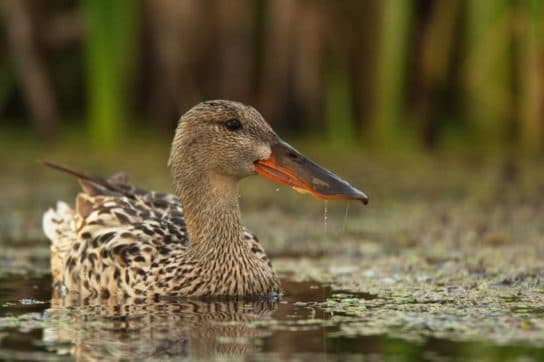
Amazonian teal

American goose

Sea black
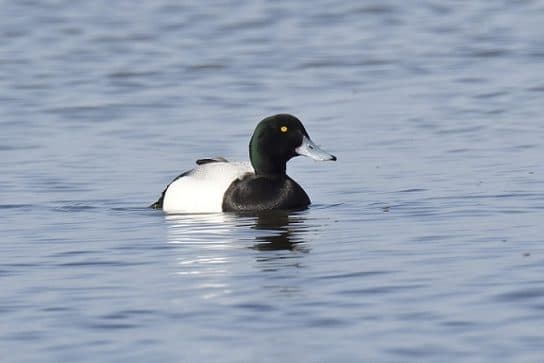
Sviyaz
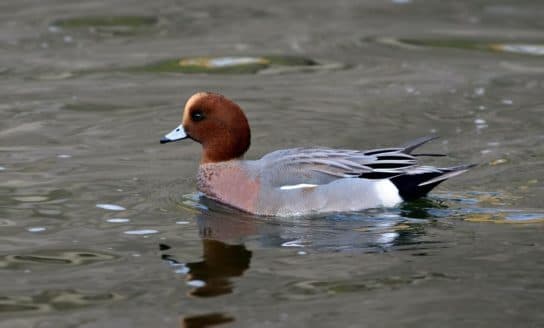
Black mallard
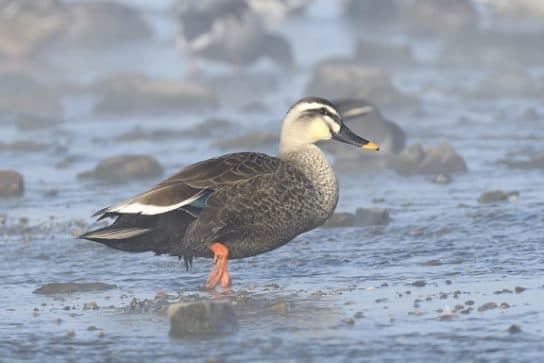
Swan

White-eyed duck

White-faced whistling duck

White-fronted goose

White-cheeked goose

White goose
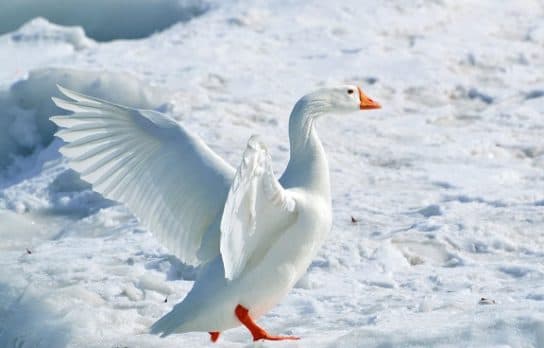
Big merganser

Gaga-comb
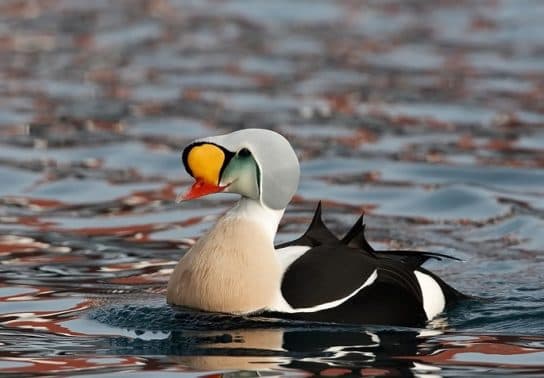
Mountain goose

Comb duck

Bean

Goose Ross

Carolina duck

Speckled duck
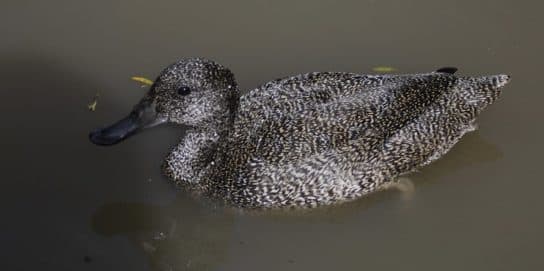
Red-nosed duck
Chicken goose

Suhonos

Palamedea
Horned bonito
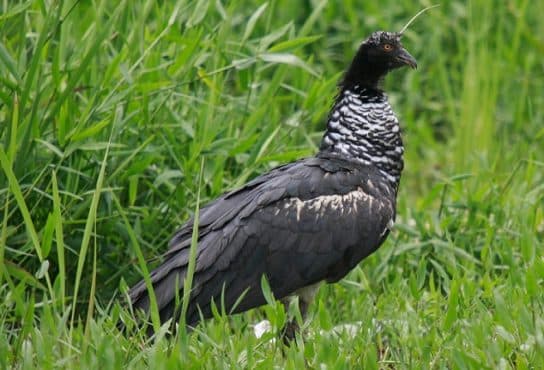
Crested Palamedea
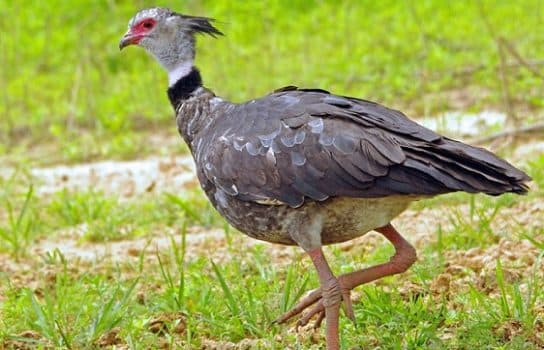
Other
Half-footed goose

Characteristic features of anseriformes
A distinctive feature of the Anseriformes is the presence of membranes on the legs between three forward-facing toes. They are important for getting around the water. However, they have practically disappeared in the palameds and semi-footed goose, which spend almost all their time on land and do not enter the water.
The plumage of all birds is waterproof, and some representatives are very variegated. A bright color is typical for males. Birds devote a lot of time to plumage care. It is lubricated with a special waterproof secretion, which is secreted by glands located on the skin of birds. During the moulting period, many birds lose their flight skills, therefore, for self-defense, males can only demonstrate a very discreet color.
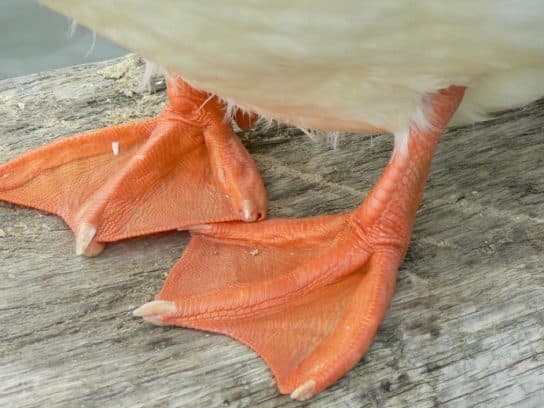
Membranes of anseriformes
Thermal insulation is provided by a thick layer of down, as well as the presence of a layer of fat in the subcutaneous layer.
The value of anseriformes
In nature, the birds of the order Anseriformes are an important link in the food chain. They are hunted by larger animals. Also, birds cleanse reservoirs and rivers from algae and duckweed.
Amateur hunting is organized for representatives of the Anseriformes detachment. As a rule, they hunt with a gun. Poachers can hunt illegally using prohibited weapons and fishing methods. As a result, the natural population of these birds is greatly undermined. They have valuable meat, quality feathers and down, as well as downy skins. Most of the birds of the order are domesticated, which explains their high value for humans. People breed these animals for eggs and fat.
Plumage and appearance
The aquatic lifestyle of anseriformes determined their dense and rolling body. It has an elongated shape, and in some species a very long neck, which makes it easy to catch prey from the water. The four-toed legs are short and slightly set back. The front three toes are relatively elongated and connected by the swimming membrane. The back toe is short and just above the level of the front toes. The beak of most birds is wide and thickened. It is covered with a sensitive and thin skin, which at the top transforms into a keratinized thickening. This thickening is called “marigold”. In river ducks, the edges of the beak and mandible with narrow transverse corneous plates form a filtering apparatus. In such birds as the merganser, they are seated with horny teeth, which help to firmly hold the caught prey in the beak. Geese and brants are distinguished by a rigid transverse plate along the edges of the beak. It allows them to easily nibble on the grass.

The plumage of the representatives of the order is Anseriformes, thick and dense. The amount of down is quite large, evenly distributed over the body. The feathers do not have a side trunk. The color can be extremely varied. Quite often, males and females differ precisely in the color of their plumage. Also, sexual dimorphism can be in size. Males are often larger than females.
Anseriform wings with a pointed shape. The tail is short. During flight, birds often flap their wings, and the ends of the feathers make special sounds. Some birds practically do not fly. For example, South American steamer ducks do not fly due to strong wing reduction. The speed of movement on the ground is quite slow. As a rule, they waddle around. But there are exceptions, for example, geese and brants can move very quickly on land.
The detachment is distinguished by an excellent ability to swim and dive. They can reach a depth of 40 meters and remain submerged for 4 minutes. There they move with their legs or wings. Some of the birds in the squad do not dive. They get their food by immersing only the front of the body and neck in water.
What do anseriformes eat
The main diet of anseriformes consists of fish, crustaceans, aquatic molluscs and insects. They look for their prey in the water or near it. Some representatives feed on aquatic plants. They dive after them with their long necks. Species such as geese and brants feed on land. They prefer herbaceous plants as food. Birds of this order tend to regularly swallow small stones, which help crush food in the muscular stomach.

Habitat
Anseriformes have spread almost all over the world, with the exception of Antarctica. The most diverse species composition is in the tropical regions of South America, Africa and Australia. They live in the aquatic environment. As a rule, these are lakes, ponds, swamps, rivers and swamps. There are species that live in the marine environment.
