


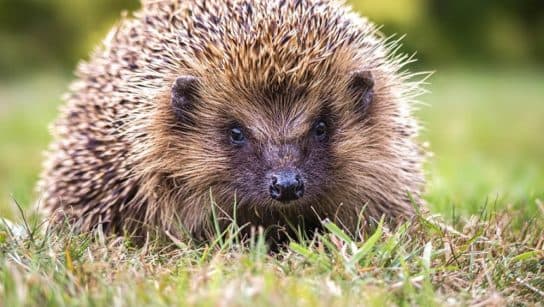
Since childhood, many of us have developed a wrong stereotype about hedgehogs. Largely thanks to fairy tales and Soviet cartoons, someone imagines a hedgehog as a pretty animal carrying an apple or a mushroom on its back.
But this is not entirely true, if only because hedgehogs are for the most part omnivorous.
These animals are among the most ancient mammals on Earth. They arose more than 56 million years ago. The hedgehog family is the only one of the hedgehogs that have survived to this day. Once upon a time there were others, even those that could easily compete in strength or at least in size with wolves.
Description and characteristics of hedgehogs
The hedgehog family belongs to the order of insectivorous mammals. It is divided into two subfamilies: real hedgehogs (hedgehogs) and rat hedgehogs (hymnuric). Collectively, they include 24 species, combined into 10 genera.
Representatives of the family live on the ground, although some species freely climb trees or swim in water bodies (more rat urchins are concerned).

Hedgehogs are omnivores and eat, among other things, other animals, so they can be called predators. As a result, they are nocturnal, although there are exceptions. The hedgehogs themselves are also the objects of hunting for larger predators: wolves, foxes, ferrets, owls and other birds of prey.
Since hedgehogs occupy an intermediate position in the natural food chain, they play an important role in biocenoses:
- eat pests that are harmful to humans and their economic activities (for example, beetles and caterpillars parasitizing on cultivated plants);
- destroy the nests of land birds (including domestic ones) and feed on small mammals;
- are intermediate hosts for some parasites (ticks and fleas), and, accordingly, carriers of diseases: encephalitis, tularemia, rabies, salmonellosis, etc.
Appearance and structure
The structure and appearance of hedgehogs varies depending on the subfamily, genus and specific species. The body length of hedgehogs can be 10 and 45 cm (some hymnurids reach this length). The tail can be short (1 cm) and very long (21 cm). Weight from several hundred grams to 1.5 kg.
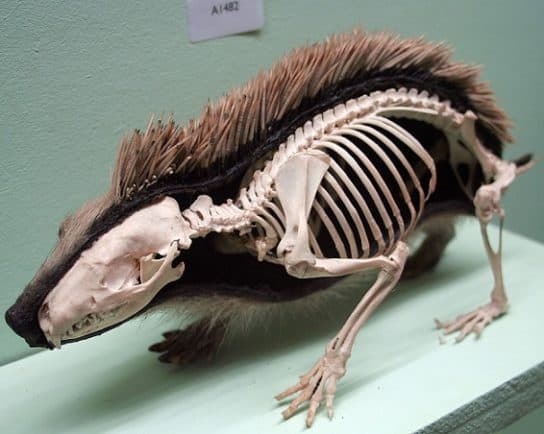
In hedgehogs, the physique is strong, in hymnurids it is more fragile. In the latter, the neck can be clearly distinguished, in hedgehogs it is not at all visible under the needle-like cover. In both subfamilies, the tip of the muzzle is elongated and mobile. This is a characteristic feature of insectivores.
Hedgehogs have well-developed organs of sight and hearing, five-toed limbs, sometimes four-toed. The skin does not have sweat glands. The coat is short on the muzzle, longer on the sides and belly. The longest on the back, and in hedgehogs, the main part is transformed into needles. The vibrissae are short.
The skull in hedgehogs is short and wide, in hymnurids it is narrower. Teeth in the amount of 28 to 44 pieces. The development of canines and incisors depends on the type of food and differs from species to species. The spine has a cervical, thoracic, lumbar, sacral and caudal parts.
The digestive tract is notable for a unicameral stomach and the absence of a cecum. Females have a two-horned uterus and 2-5 pairs of nipples. In males, the arrangement of the testes is intra-abdominal.
Subfamily Ezhiny
The subfamily of hedgehogs (or real hedgehogs) unites hedgehogs in the usual sense. They are densely built, small in size, short-legged animals with a shortened tail. The entire surface of their back is covered with hairs (needles), modified to a solid state, mixed with ordinary wool. Immediately under the skin of hedgehogs are muscles, which, when contracted, can curl up into a ball in case of danger.
Representatives of this subfamily are distributed in Africa, Europe and southern Asia. They were brought to New Zealand on purpose. They are not found at all in the Americas, Australia and Madagascar.
Genus African hedgehogs
White-bellied hedgehog

Algerian hedgehog
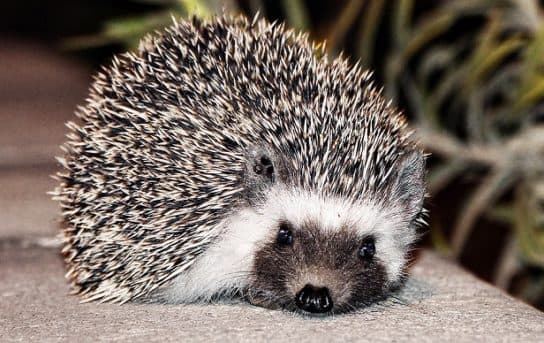
South African hedgehog

Somali hedgehog
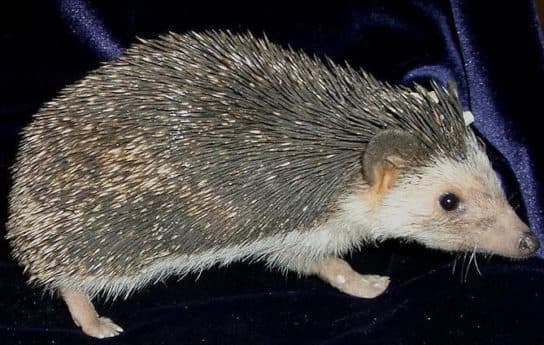
Genus Eurasian hedgehogs
Amur hedgehog
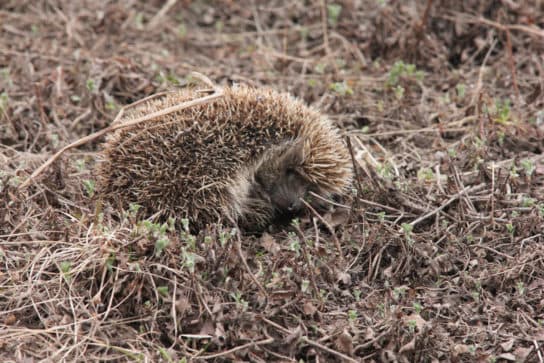
East European hedgehog
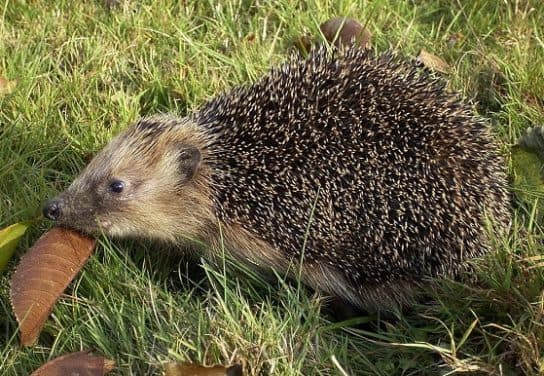
Collared hedgehog
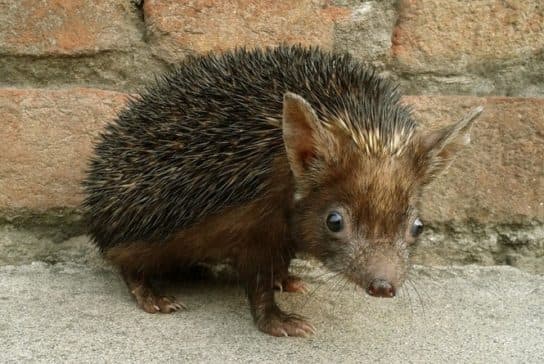
Genus Steppe hedgehogs
Daurian hedgehog

Chinese hedgehog
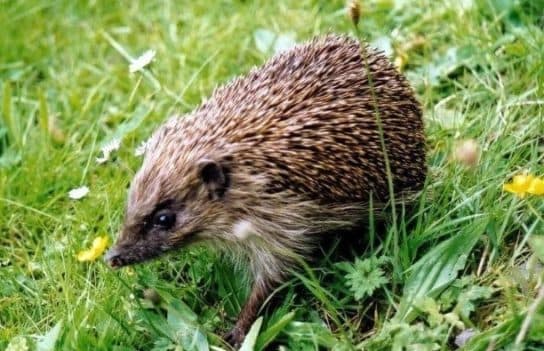
Genus long-spined hedgehogs
Ethiopian hedgehog
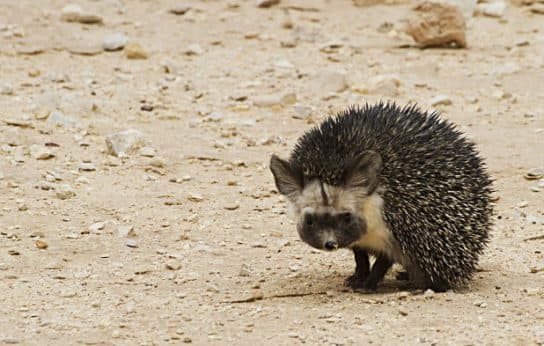
Dark-spined hedgehog (Bald hedgehog or long-spined hedgehog)

Indian hedgehog

Subfamily Gymnurovye (Rat hedgehogs)
Representatives of this subfamily outwardly do not at all look like real hedgehogs. They resemble rats, which is why they are called rat hedgehogs in another way.
The body of the hymnurium is more elongated, and the large head is one third of its length. Gymnurs do not have needles, the surface of their body is covered with wool. The length of the hymn can be up to 45 cm. Their tail is long with sparse short hairs. By emitting an unpleasant onion-garlic odor, they protect themselves from enemies. They swim well, thanks to which they can diversify their menu with aquatic inhabitants. They live mainly in Southeast Asia.
Rod of Gimnura
Ordinary hymn
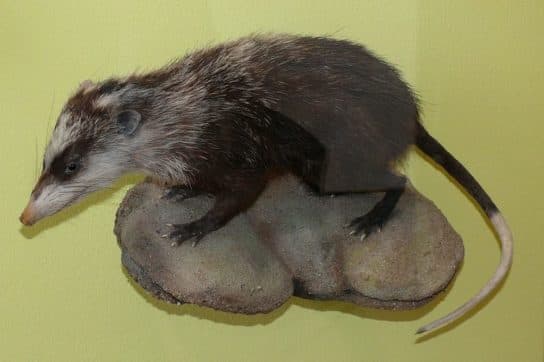
Genus Small hymns
Small hymn
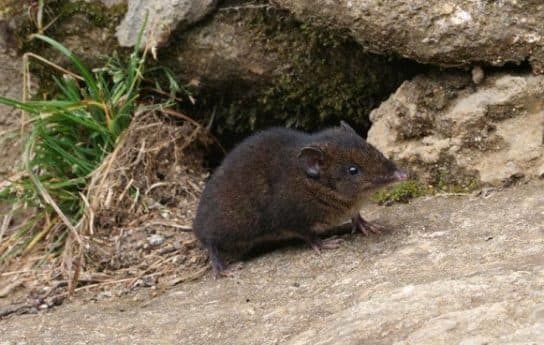
Eating hedgehogs
Hedgehogs are omnivores. It all depends on the species and habitat. They feed on various insects, worms, slugs. Often, their diet includes amphibians and reptiles: newts, frogs, lizards, snakes.
It is noteworthy that hedgehogs can eat poisonous animals. At the same time, the poison in those doses that are deadly to humans and other living beings is completely harmless to the hedgehog. He can easily feast on a viper (he is not afraid even of bites) or blister beetles. But, of course, the dose of poison should be moderate, otherwise even hedgehogs resistant to it will have a bad time.

Hedgehogs also do not disdain bird eggs. In the more northern regions, representatives of the hedgehog family even arrange hunting for small mammals, for example, mice or shrews.
It is also known that hedgehogs eat plant foods: berries, fruits, seeds, parts of plants. Mushrooms and mosses are also good for hedgehogs. Some species do not shun the carrion of other animals. Species that live near human dwellings eat food waste.
Hedgehogs can eat a lot in one go. Sometimes the amount eaten is one third of the mass of the animal itself.
Habitat
Representatives of the hedgehog family settled in completely different places. Their habitat is wide, but not ubiquitous. They live in dry and humid forests, near water bodies and far from them, in meadows and forest edges, in steppes, in desert sands, at a two-kilometer height in the mountains and even in forest belts and parks. They can live close to human dwellings and settlements. Not to their taste except for the heavily swampy area and dense coniferous forests.
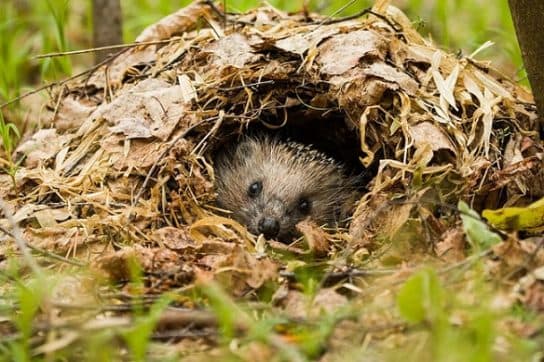
Hedgehogs, real and rat, prefer a secretive and secluded lifestyle. They live in dense dense bushes, under stones, among the roots of trees. They can settle in other people’s abandoned burrows or dig their own. They try not to go far from the place chosen as a dwelling. Geographically, hedgehogs have mastered about half of the earth’s land.
Representatives of the family are common:
- in Europe, on the British Isles, in the south of Scandinavia, in the European part of Russia;
- in northern Africa;
- in Western Siberia, Southeast and Asia Minor;
- in the south of the Caucasus and in Kazakhstan.
They were brought to the islands of New Zealand in the second half of the 19th century by immigrants from Europe.
Their habitats do not include the continents of North and South America, Australia, and Antarctica at all. They do not exist on such large islands as Greenland and Madagascar.
Reproduction of hedgehogs
No matter how separate and secluded hedgehogs live, at least once or twice a year during the mating season, female and male individuals meet each other. Sexual maturity in hedgehogs occurs 10-14 months after birth.
In early spring, after waking up from hibernation, the animals find each other by smell, which in ordinary life is used to scare away enemies. As a result of short battles for the female, the victorious male mates with her, and this is where the intersexual relationship ends.
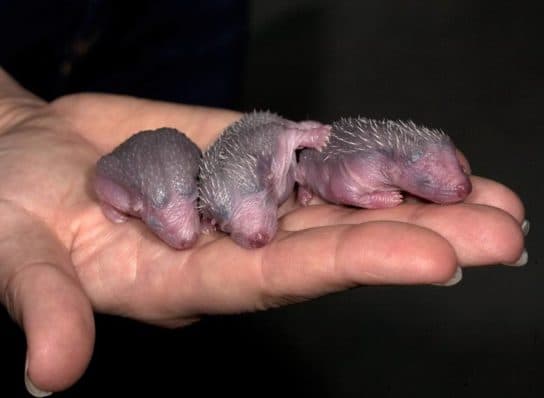
Pregnancy, which lasts differently in subfamilies and species (from 30 to 58 days), ends with the birth of blind pink cubs in an amount from 1 to 9. The larger the species, the fewer cubs it gives birth to.
The female pre-equips the nest for her brood, covering its bottom with grass and leaves. Baby hedgehogs grow and develop quickly. And since the lactation period lasts only about a month, they have to start living on their own early.
Representatives of the family do not live long in their natural habitat, from 3 to 7 years. In captivity, with proper care and adequate nutrition, their life expectancy increases to 10, and sometimes up to 16 years.
