



Cetaceans are the largest in size of all animals living on the globe. They belong to the order “mammals” and are adapted for life in water. Aquatic mammals are whales, porpoises and dolphins.
The streamlined teardrop shape of the cetacean allows them to move easily and reduces water resistance. Warm-blooded is characteristic of the order of cetaceans. Their lungs are adapted for breathing, cubs, the female feeds with milk. Instead of the forelimbs, they have fins, and in the tail part they have a fin. On the body of cetaceans there is a small amount of hair.
Features of cetaceans
In cetaceans, the sense of smell and taste buds are completely atrophied. They are only able to recognize salty food. The eyesight of animals is also poor. Thanks to the many nerve endings, the sense of touch is well developed in cetaceans.
The inner ear is designed to receive high frequency sounds and ultrasounds. Animals communicate through sounds perceived by an echolocation organ located in the skull region. Cetaceans lack vocal cords.
Cetaceans can stay under water for a long time without breathing. The offspring reproduce once every two years.
Cetacean species
Atlantic white-sided dolphin
Amazon dolphin
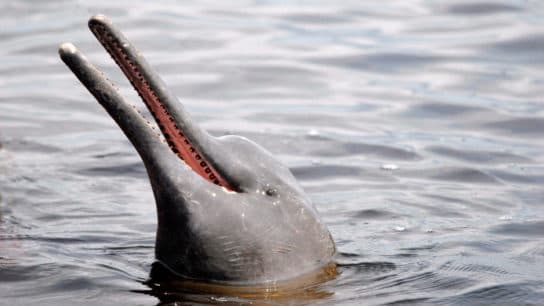
Chinese river dolphin
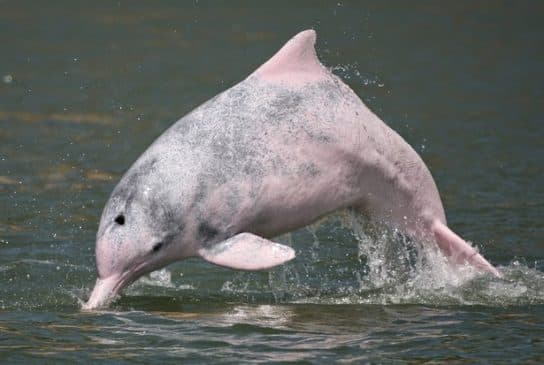
Ganges Dolphin

White-faced dolphin
 Black Sea bottlenose dolphin

Gray dolphin
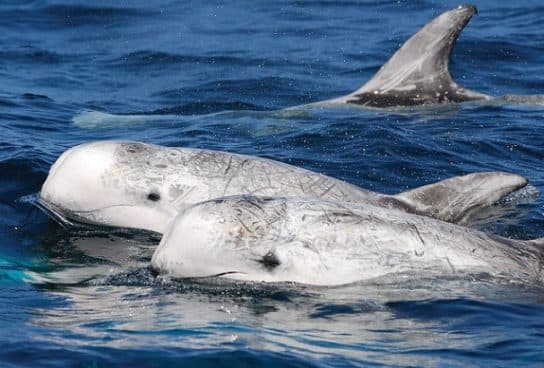
Belukha
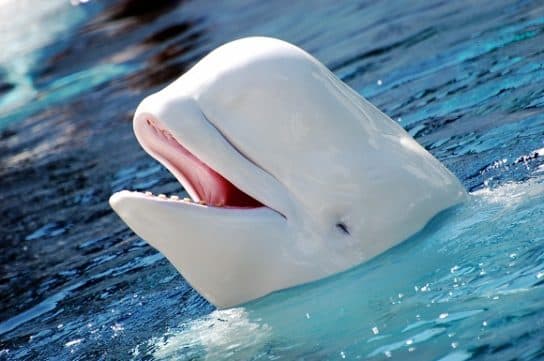
The cough
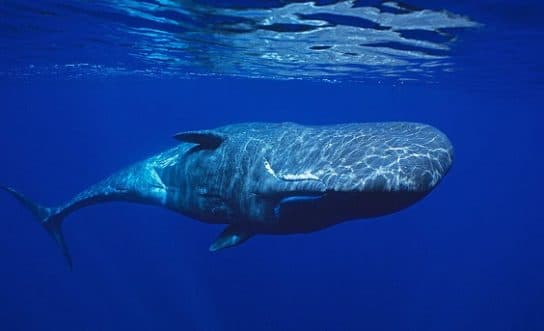
Pygmy sperm whale
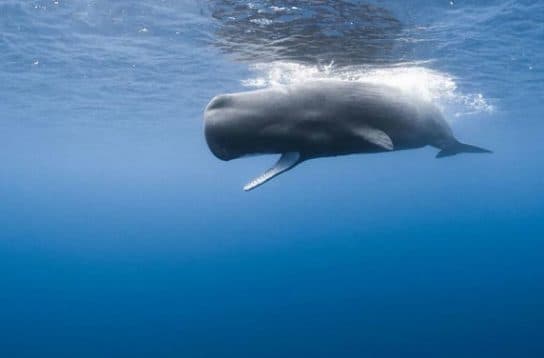
Harbour porpoise

Little killer whale

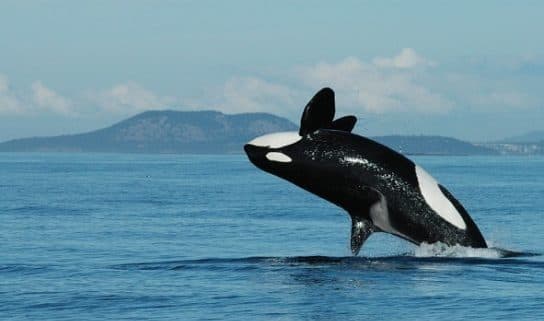
Killer whale
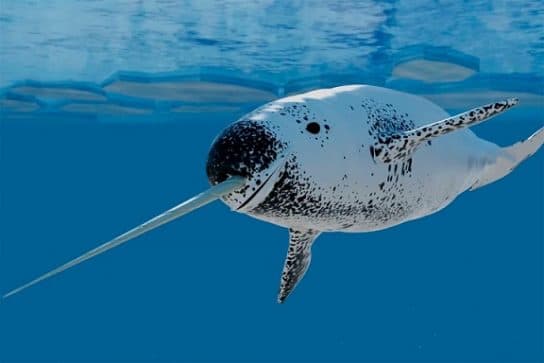
Narwhal (Unicorn)
Tall-faced bottlenose
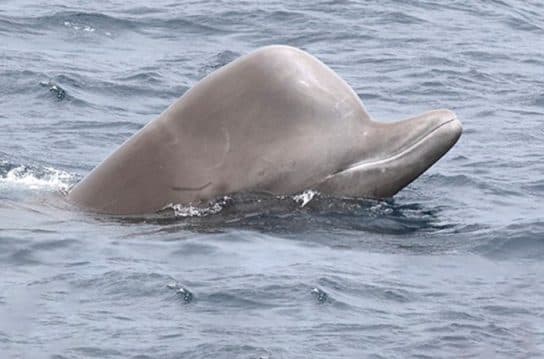
Commander’s Belttooth (Steinger’s Belttooth)
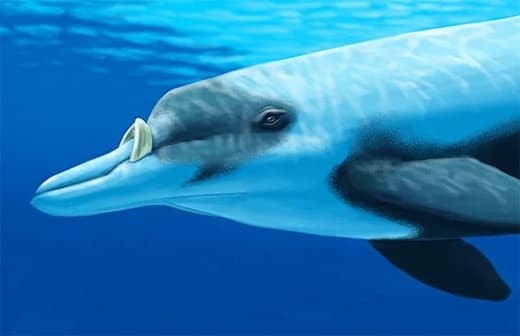
Gray whale
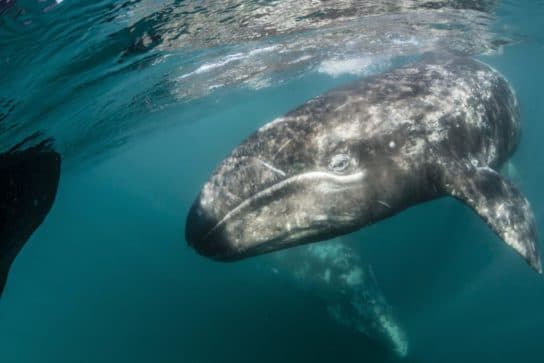
Bowhead whale
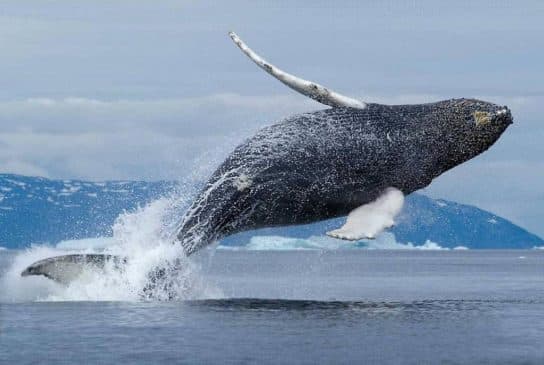
Japanese smooth whale
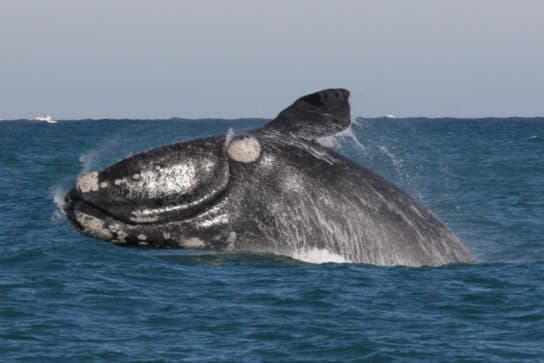
Humpback
 Northern blue whale

Northern fin whale (Herring whale)
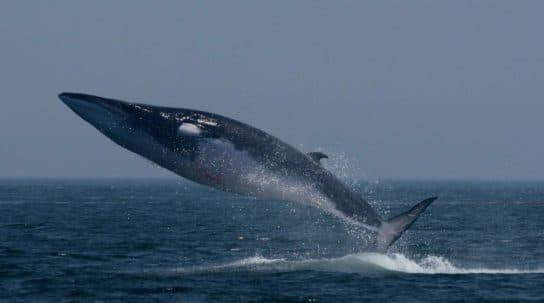
Seyval (Willow whale)
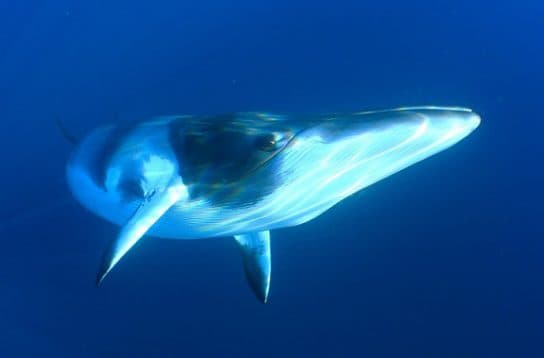
South whale

Striped
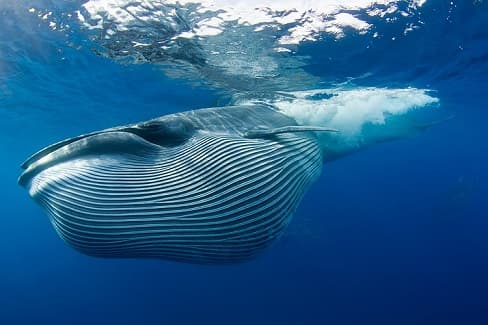
Pygmy smooth whale

Klyuvoril

Evolution of cetaceans
It is assumed that the ancestors of cetaceans are artiodactyls that gradually migrated to the aquatic environment.
More than 56-60 million years have passed when mesonychia existed on Earth. They had hooves, but outwardly they looked like wolves. Mesonychia lived near the Mediterranean Sea and ate animals living in the water and fish. Most of the time, the animals were in the aquatic environment, and their body took a streamlined shape. They developed tails, and their front legs were transformed into fins. The coat disappeared and subcutaneous fat began to increase. To breathe over the water surface, the nostrils moved to the top of the head.
Genetic and molecular studies carried out by scientists have shown the existence of a kinship of cetaceans with the extinct Indohyus artiodactyls. They lived in the lands of today’s Pakistan. Over the course of 22 million years, the ancestors of cetaceans gradually migrated to sea waters. Thus, the ecological niche vacated by the extinct mosasaurs and plesiosaurs was filled.
Over time, cetaceans acquired new traits and lost contact with the land-based lifestyle. Thoroughly studied fossil finds in India, Pakistan and the Middle East have provided a description of the evolutionary processes that led to the formation of whales. They confirm the origin of cetaceans from mesochinia.
Evolution of whales – video
Cetaceans are aquatic mammals that have deviated greatly, both in structure and in lifestyle, from their terrestrial ancestors. They have reached enormous proportions. The body floats in water and does not need support.
Marine sediments have been found containing the remains of jugular (primitive whales). Among them were giants with a body length of more than 20 meters.
Cetacean body shape
The streamlined, rounded body of cetaceans tapers towards the tail. It resembles a drop of water. This makes it possible to greatly reduce the resistance from the water during the movement.
The head is large, it is round, pointed or elongated in the form of a beak. The head section is practically connected to the body. The neck is generally greatly shortened, and its interception is practically absent.
In the process of evolution, the forelimbs were transformed into flipper-like fins. They are used by cetaceans for diving depth control, cornering and braking.
The tail is flatter and more flexible. The tail ends in two horizontal tail lobes.
Most cetacean species have a dorsal fin that acts as a stabilizer during movement. The fins on the back and tail are made of cartilaginous tissue, which gives them elasticity. Swimming speed is controlled by the elasticity of the fins. The fins have a thermoregulatory role.
On the body of cetaceans there is no hair or auricles. In cetaceans, the skin is elastic and resilient. This helps to reduce friction during high-speed sailing.
Habitat
Cetaceans live in the waters of all oceans of the planet, and some species live in freshwater lakes and river mouths.
Also cetaceans live in the seas. There are some whales that prefer coastal areas, and some choose the waters of the open ocean. Killer whales can be found in any ocean of the world. There are cetaceans living in a certain hemisphere, for example, southern minke whales. There are animals that live only in the Pacific Ocean. You can see whales in river estuaries and in swamps.
Living conditions depend on the latitude of the ocean and on the change of seasons. Many species migrate.
Conclusion
Cetaceans play an important role in the ecological system of the Earth. The population of the order of cetaceans is declining at a rapid rate every year.
This was influenced by the following factors:
- violation of the ecological environment of oceans, seas, lakes;
- fishing for cetaceans in the 18-20 centuries;
On February 19, 1986, a ban on whaling by the International Regulatory Commission was introduced. This date is designated in the calendar as World Whale Day.
Many cetaceans, such as the blue whale, are on the verge of extinction. Most of the cetacean species are included in the lists of the International Red Data Book.
