


This is a plant from the genus “Arrowhead” and the family “Chastukhovye”. Another name for Sagittarii is arrowhead. It is found only in fresh water reservoirs in areas located in the temperate climatic zone and within southern latitudes.
So, the Arrowhead is found in the Russian Federation, namely in the Primorsky Territory and the Volga region. This plant can also be seen in both North and South America.
Appearance
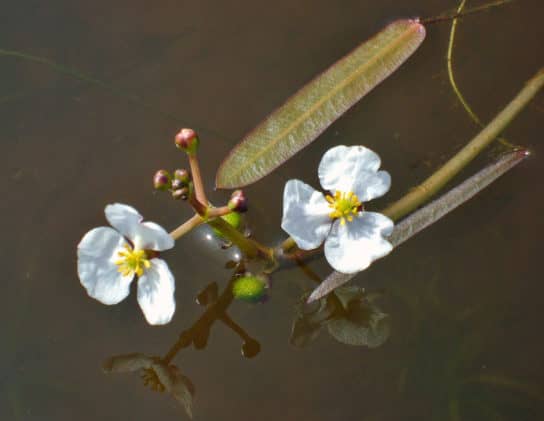
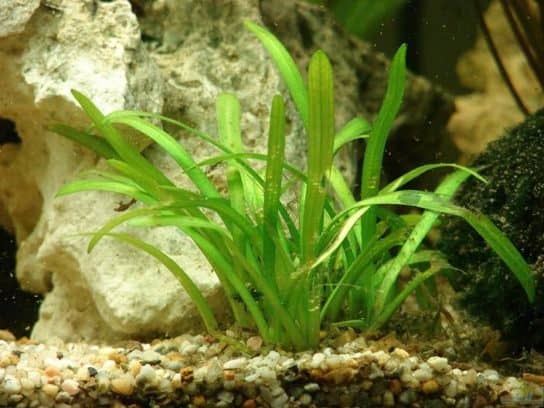
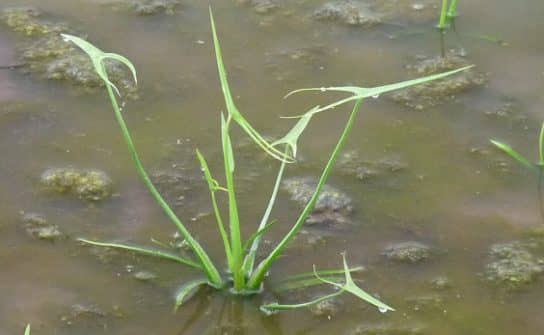
Sagittaria leaves are in a root rosette. Floating leaves have an oval blade, the length of their petioles varies from 70 to 100 cm. Underwater photosynthetic organs are usually ribbon-like, in some cases more than 0.1 meters long. Underground white shoots form long tuberous buds. The leaves of this plant are similar to the tips of ancient arrows, they are rather sharp, painted green.
Maintenance and care
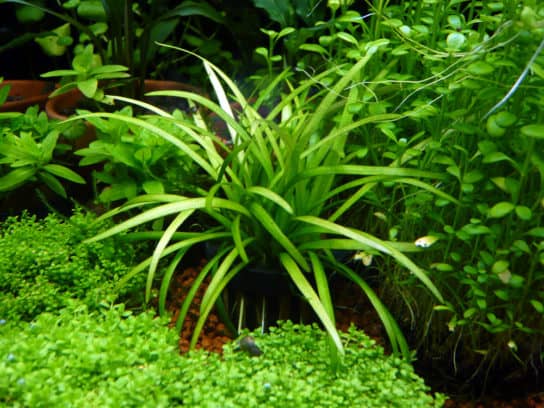
Sagittaria thrives in aquariums with a lot of silt. This plant is planted on sand with quartz or other silted soils. When planting, you need to secure Sagittaria by crushing it with stones. This must be done so that the arrowhead does not float, because there are many cavities with a high air content in its tissues. You need to plant the plant so that the root is not underground, thanks to this, the roots of Sagittaria will not rot.
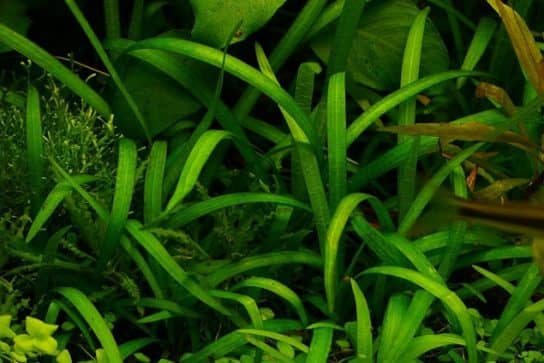
The ambient temperature should not be less than 24 ° C. Water hardness and pH are medium. The aquarium must be clean and well lit. However, too bright light can damage the plant. There must be a filter in Sagittaria’s “house”. The soil should be nourished.
When choosing a “fertilizer”, one should pay attention to the pallor of the external photosynthetic organs, which indicates a lack of iron, and insufficient growth, which indicates a lack of carbon dioxide. If the aquarium has a fairly short daylight hours, carbon dioxide should also be added.
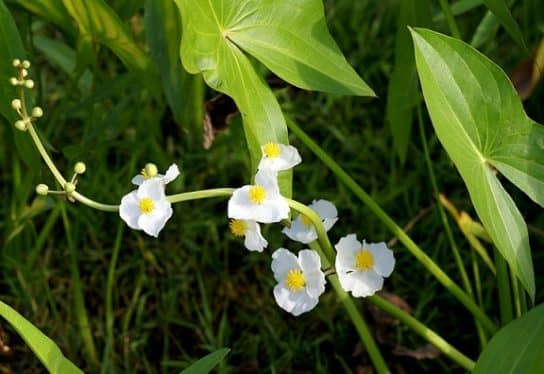
When all conditions are met, Arrowhead usually begins to bloom, displaying its long white flowers. This spectacle can be enjoyed for about three weeks.
Types of Sagittaria
There are several subspecies of Sagittariya. Among them there is a dwarf arrowhead. It was found in the reservoirs of America. This variety is resistant to environmental changes, it is not afraid of low moisture temperatures, even 12 degrees. Plant height – 10 cm, leaf width is usually no more than 5 mm. This Arrowhead can take root both in small aquariums with a water volume of 30 liters and in very large 100 liter aquariums.
Another subspecies of Sagittaria is Arrowhead subulate. The length of the leaves of the plant is about 15 cm. They can be dyed light green or olive. The arrowhead grows quickly and seems to bite into the soil. For a year of active growth, the shoots of Sagittaria cover the bottom of their “house”. This species requires 10 hours of daylight hours.
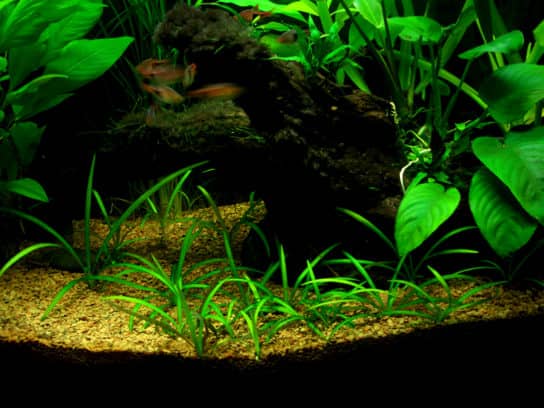
Another variety of Arrowhead is Sagittaria Stiff-leaved. This subspecies can only be found in South America. The plant is easy to spot because of the bright green leaves with a wide base. The height of this Arrowhead is approximately 20 cm. It does not get along with other species.
Sagittaria broadleaf is another subspecies of the famous aquarium plant. It can be found in the south of America and in its central part, as well as in the southeast of Asia. This subspecies prefers water with a hardness of about 5-12 dH and an acidity of at least 6 pH. The leaves of Sagittaria Broadleaf are large, their diameter can reach 25 cm.This plant tolerates transplanting well, but it is not worth planting it deeply – this will slow down the growth of Sagittaria. Loose soil is perfect for her. In a home aquarium, daylight hours should last at least 12 hours.
Reproduction
Sagittaria reproduces by shoots. In favorable conditions, other Sagittarii appear on these parts of the plant. They should be torn away from the shoots and planted anywhere in the aquarium. This procedure is carried out only if the plant already has several leaves. This method of reproduction relieves the owner of the seed collection procedure. However, it is necessary to monitor the plant during the breeding season, because some subspecies of Sagittaria are poorly rooted and after a few months the entire aquarium can be lined with shoots.
Diseases
Aquarium plants such as Sagittaria are often ill due to breeding conditions. So, inhibition of the growth of this species develops due to a deficiency of potassium and sulfur, high acidity of water and a lack of light. Improving the circulation of the aquarium moisture will help cure the plant.
Another common disease is necrosis. It is caused by a deficiency of vitamins such as calcium and boron. However, it can also occur due to an excess of nitrates in the water. It is not difficult to detect tissue death if you know that the disease affects new leaves first.
Chlorosis can also occur in Sagittaria. It is characterized by the disappearance of chlorophyll. The condition is caused by deficiencies in iron and copper, nitrogen and molybdenum, and nutrients such as sulfur and boron. Another reason for the development of the disease is the accumulation of phosphates in plant parts. It can be identified by brown spots on photosynthetic organs; the disease more actively affects old leaves. Moreover, they usually do not fall off.
