


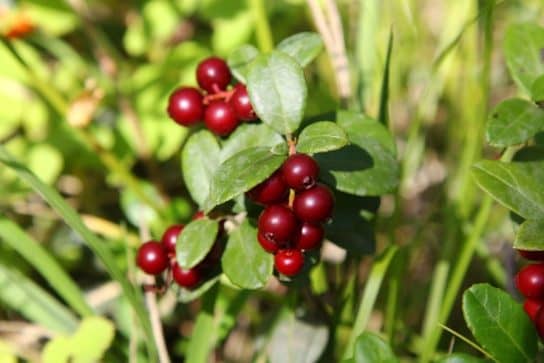
Many people underestimate the healing properties of plants. Lingonberry belongs to the heather family. The plant is widely used in medical, cosmetic and culinary fields. With the help of drugs based on it, you can cure a lot of diseases and improve the general well-being of a person. Lingonberry grows in the forest, in the tundra of mountain and plain types, sometimes it can be found in swamps, grass fields and alpine meadows. The plant is widespread in Ukraine, Russia, the Caucasus, in some regions of Europe and Asia.
Description and chemical composition
Lingonberry grows as a small shrub, reaching 30 cm in length. It is an evergreen plant that creeps horizontally. The representative of the heather family has straight and branched stems, beautiful rounded leaves arranged alternately on short petioles. Flowers grow small, have a white or pink corolla. Their shape is jugular, it gathers in a two- or eight-flowered brush. The fruit of the medicinal plant has a bright red color and rarely reaches a diameter of more than 8 mm.
Lingonberries can be harvested already in August, the plant bears fruit until September. The life span of a representative of the heather family reaches 300 years, the plant begins to bloom after 10-15 years.
All lingonberry elements have a unique chemical composition. Thus, the content of organic acids, flavonoids, tannins, catechins, macro- and microelements, arbutin and methylarbutin was found in the leaves. Berries contain organic acids, including ascorbic acid, vitamins, sugar, and essential oil. The seeds contain a fatty oil consisting of glycerides.
The healing properties of the plant
In the field of medicine, both the berries of the plant and its leaves are used. Lingonberry-based preparations have anti-inflammatory, diuretic, bactericidal, sobering, diuretic effects. Also, the use of lingonberries is shown in the presence of the following problems:
- diseases of the urinary tract;
- kidney and gallbladder stones;
- inflammatory processes in the liver;
- disorders of the gastrointestinal tract (flatulence, constipation, chronic in nature, hypoacid gastritis, putrid diarrhea);
- osteochondrosis;
- gout;
- cystitis;
- atherosclerosis;
- diabetes;
- diseases of the female genital organs (infertility, uterine bleeding).
Lingonberry preparations are used to treat helminths, strengthen capillaries, tuberculosis and cough with blood secretions.
Lingonberry berries are often prescribed for pregnant women, since the fruits of the plant are rich in vitamins, benzoic acid, essential oils, pectin, polyphenols. The fruits of the plant are considered an environmentally friendly product, they are hypoallergenic and help to improve metabolism, strengthen the heart, raise the general tone and normalize the nervous system. Due to the unique composition, the use of berries will allow you to remove edema, stabilize blood pressure, strengthen the mother’s skeletal system, saturate the body with iron, potassium and manganese.
Contraindications for use
There are certain contraindications to the use of lingonberry berries and preparations with its addition. Before using the medication, you should carefully study this information and possible side effects. It is not recommended to use lingonberry for people with kidney problems, hypotension and cholecystitis. Hypersensitive patients should also refrain from taking medications based on the medicinal plant.
It is recommended to start using lingonberries with small doses. If the general state of health does not deteriorate, then you can safely increase the dosage.
