


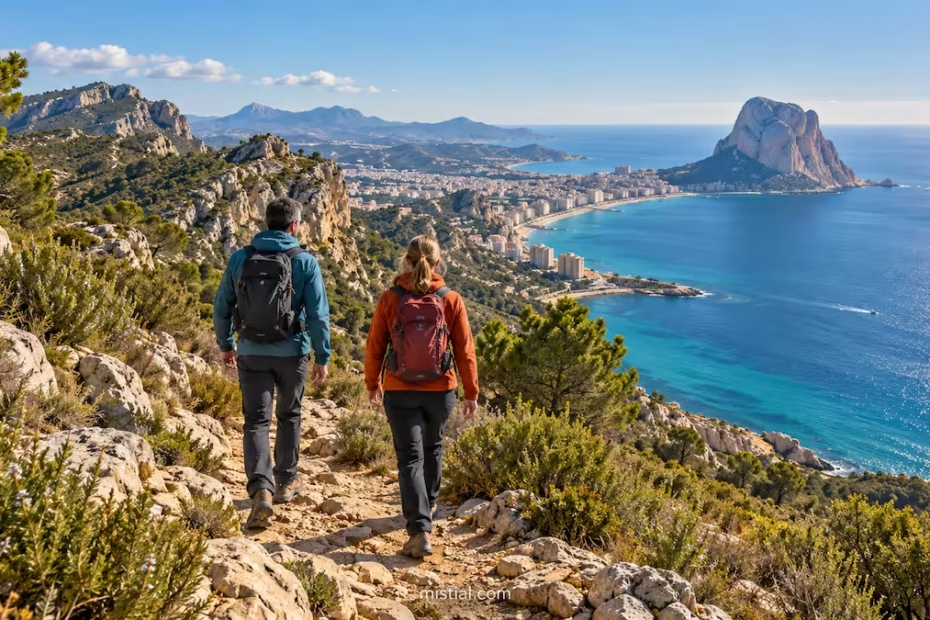
When most of central and northern Europe switches to dark afternoons and drizzle, a strip of the Spanish Mediterranean coast quietly becomes one of the best outdoor destinations on the continent. The Costa Blanca, around Alicante, gets mild winter days, clear skies and a surprising amount of serious terrain just a few kilometres from the beach.
It is also a place where people regularly pack the wrong clothes. “It’s Spain, it’ll be warm” works fine for a beach holiday in July. It doesn’t work for a mountain ridge in January.
What the weather is actually like
On the coast, winter days are usually somewhere between 15 and 20 °C, often sunny and dry. That’s the part everyone knows.
What people don’t expect is how fast things change. Once the sun drops, temperatures fall quickly, and nights near the coast can get down to single digits. Go inland and up into the mountains, and you can easily lose another five or ten degrees, plus wind. On an exposed ridge, a sunny 18 °C morning can feel like a different season by mid-afternoon.
Hiking: more mountain than you’d think
The coastline here is backed by limestone mountains that rise steeply from the sea. A few classics:
Puig Campana, just behind Benidorm, rises to over 1,400 metres. The climb is steep and rocky, and the view from the top over the whole coast is worth every step.
Sierra de Bernia offers a ridge hike with a natural tunnel through the rock, the Forat de Bernia, where you pass from one side of the mountain to the other.
Peñón de Ifach in Calpe is the famous rock rising straight out of the sea. It’s a protected natural park, so access to the upper trail is limited. Check the current rules before you go.
The terrain is mostly dry, sharp limestone. Light hiking shoes with a good grippy sole usually work better than heavy boots, but ankle support is worth having on the rockier descents.
Cycling: the winter training ground of the pros
If you’re into road cycling, you’ve probably already heard of this area. Every winter, many professional teams come to the coast around Calpe and Dénia for training camps. The reasons are simple: reliable weather, quiet mountain roads and long climbs that start practically at sea level.
For amateur riders, that means the same roads and the same climbs, just without the team car behind you. The descents, though, can be cold, so pack a windproof layer even on a sunny day.
How to dress: layering wins
The key to outdoor comfort here is the same as anywhere with big temperature swings: layers, not one heavy jacket.
Base layer. Merino wool or a good synthetic shirt that moves sweat away from your skin. Cotton is the classic mistake: it stays wet after a climb and chills you on the way down.
Mid layer. A light fleece or thin insulated jacket you can pull on at the summit or when you stop for lunch. Small enough to stuff in a daypack.
Outer layer. A windproof shell. Rain is rare in winter, but wind on the ridges and on fast descents on the bike is not. A light, packable jacket makes a big difference.
Sun protection. Don’t underestimate it. The winter sun in southern Spain is still strong, and at altitude even more so. Sunglasses, a cap or hat, and sunscreen belong in every bag.
Evening wear. After the activity, you’ll want something warm and comfortable. Evenings outdoors on a terrace or at a campsite can be chilly, and a down jacket or warm hoodie earns its space in your luggage.
Moving around: why many choose a motorhome
The best outdoor spots on the Costa Blanca are spread out: a hike in the mountains one day, a coastal ride the next, a climbing crag the day after. Many visitors from Germany, the Netherlands and Scandinavia solve this by travelling in a motorhome. You wake up near the trailhead, keep all your gear in one place, and dry your clothes overnight instead of packing and unpacking in a different hotel every evening.
Most fly to Alicante and rent a motorhome near Alicante on arrival rather than driving down from the north. The site is also available in German, which makes planning easier for German-speaking travellers.
Packing checklist
- Merino or synthetic base layers (2–3)
- A light fleece or insulated mid layer
- A windproof, packable shell
- Light hiking shoes with good grip
- Cycling gear with arm warmers and a wind vest, if you’re riding
- Sun hat, sunglasses and sunscreen
- A warm jacket for the evenings
Final thought
The Costa Blanca in winter is not a beach destination with a few hills. It’s a genuine outdoor region where you can hike, climb and ride in sunshine while most of Europe waits for spring. Pack like you’re heading to the mountains, not to the beach, and you’ll enjoy every day of it.
