


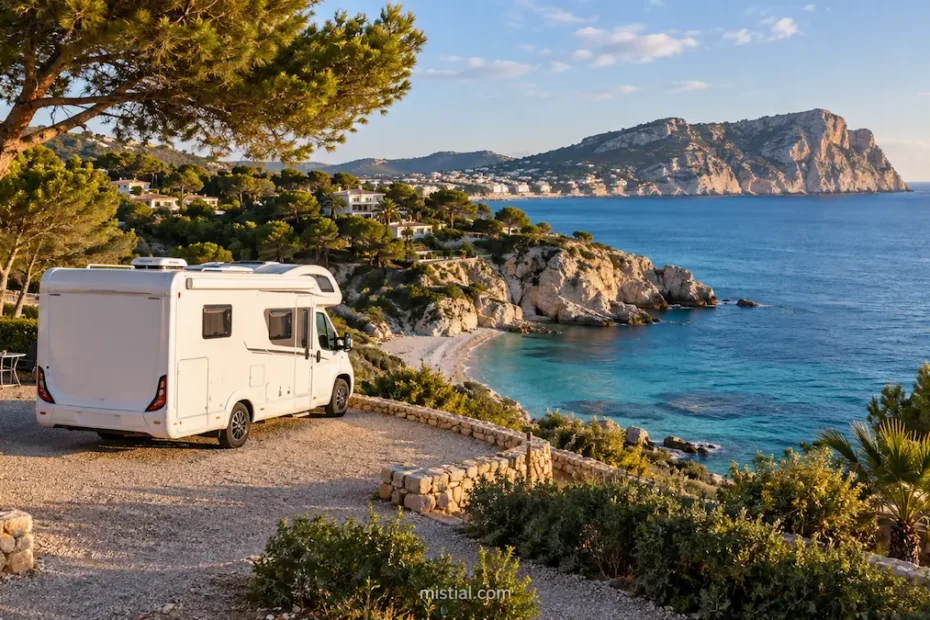
Spain’s motorhome scene has grown quietly but steadily over the past decade, and few stretches of coastline capture why quite like the Costa Blanca. Between pine-covered cliffs, working fishing ports, and a road network that makes island-hopping possible without ever booking a flight, the region around Alicante has turned into a genuine hub for anyone traveling by van rather than by suitcase.
A coastline built for slow travel
Unlike destinations that only work as a single stop, the Costa Blanca rewards travelers who move along it gradually. Towns sit close enough together that a motorhome route can cover several distinct experiences — quiet coves, historic old towns, working harbors — without long driving days in between. That’s part of why the region has become popular not just with retirees looking for a slower pace, but with remote workers and families treating the van as a mobile base for weeks at a time.
Xàbia and Jávea are a good example of how this plays out on the ground. The area has hosted campsites since the 1950s, and today the options range from simple pitches to fully equipped grounds with pools and bungalows. Anyone planning a stay there will find this rundown of campsites in Xàbia, Jávea and the surrounding area useful for comparing locations and facilities before choosing a base.
Denia: where the road meets the sea
A little further along the coast, Denia adds something the smaller towns can’t: a proper port. Its old town climbs toward a hilltop castle, the fishing harbor still unloads catch most mornings, and — for travelers thinking beyond the mainland — ferries depart from here for Ibiza, Formentera, and Mallorca. That combination makes it one of the few coastal towns where a motorhome trip can end as a beach holiday or continue straight onto a Balearic crossing. This breakdown of traveling to Denia by motorhome, its port, beaches and the route to the Balearics covers the logistics worth knowing before deciding which way to go.
Behind the growth: local operators who actually know the vans
Part of what’s made this kind of travel more accessible in the region is the presence of small, hands-on rental operators rather than only large fleet companies. LSR365, based in Alicante, is one example — a business built by someone who converts and maintains motorhomes personally rather than simply managing a fleet from a distance. The story of how the company got started is a fairly typical one for the industry: a personal interest in van conversion that turned into a full rental operation once demand caught up with it.
That kind of background tends to show up in the details — which campsites are actually worth recommending, which routes make sense for a first-time renter, and which vehicles hold up over a long-term rental rather than just a weekend trip.
Planning a route
For anyone putting together a Costa Blanca itinerary, the practical order tends to work best from north to south or the reverse: base a few days around Xàbia and Jávea for beaches and quieter campsites, then continue to Denia if a ferry crossing or a livelier port town is part of the plan. Renting from an operator with local knowledge of both stretches usually saves more time than piecing the route together from generic listings.
