


- 1 The Freedom to Create a Personal Itinerary
- 2 One Country, Many Distinct Regions
- 3 Combining Cities, Nature and the Coast
- 4 Choosing the Right Transportation
- 5 Managing Distance and Travel Time
- 6 Selecting Accommodation That Matches the Route
- 7 A Practical Checklist Before Departure
- 8 Travelling at a More Comfortable Pace
Spain has long attracted visitors with its sunshine, beaches and historic cities, but a quieter change is taking place in the way people explore the country. Instead of booking rigid tours or spending an entire holiday in one resort, more travellers are choosing to organise their own routes. They want the freedom to combine famous landmarks with small towns, natural landscapes and spontaneous stops that may never appear in a conventional package itinerary.
This independent approach suits Spain particularly well. The country is large enough to offer dramatic regional contrasts, yet accessible enough for travellers to connect several destinations during a single journey. Reliable transport, varied accommodation and an extensive road network make it possible to build a holiday around personal interests rather than a standard sightseeing schedule.
The Freedom to Create a Personal Itinerary
The greatest advantage of independent travel is control. Travellers can decide where to go, how long to stay and which experiences deserve more attention. Someone interested in architecture may devote several days to Barcelona, while a food lover might prefer markets, vineyards and family-run restaurants in smaller communities. A coastal afternoon can become a mountain excursion the next morning without waiting for an organised group.
When planning a flexible trip around Spain, it is helpful to begin with two or three priority destinations rather than filling every day immediately. These anchor points give the journey direction while leaving space for recommendations, changing weather and places discovered along the way.
Flexibility also reduces the pressure to see everything. Independent travellers can stay for an extra night when they find a place they enjoy or leave earlier if a destination does not match their expectations. The holiday becomes a personal experience rather than a checklist.
One Country, Many Distinct Regions
Spain cannot be understood through Madrid and Barcelona alone. Each region has its own landscapes, architecture, traditions and rhythm of life. Green hills and rugged shores shape the north, while Andalusia offers white villages, Moorish heritage and warmer southern scenery. The Mediterranean coast brings together beaches, historic ports and lively resort towns, whereas the interior reveals castles, plains and communities far from the busiest tourist routes.
This variety makes Spain especially rewarding for repeat visitors. A first journey might follow the eastern coastline from Catalonia towards Valencia and Alicante. Another could explore Galicia, Asturias and the Basque Country. Travellers interested in history may connect Toledo, Salamanca, Segovia and smaller medieval towns across central Spain.
Regional travel also creates opportunities to experience local life more closely. Food changes from one province to another, festivals follow different calendars, and even the landscape can transform within a few hours. Moving slowly between regions helps travellers notice these differences instead of treating the country as a collection of isolated attractions.
Combining Cities, Nature and the Coast
Few destinations make it so easy to combine contrasting environments. A traveller can spend the morning in a museum, eat lunch in a historic neighbourhood and reach a quiet beach or hiking area before evening. From many major cities, natural parks, mountain villages and coastal areas are accessible as day trips or short extensions.
A balanced itinerary might include several days in a city followed by a slower period near the sea. Alternatively, travellers can use smaller inland towns as bases for walking, cycling or exploring local landscapes. This variety prevents the trip from becoming repetitive and allows active days to alternate with genuine rest.
Nature also provides a reason to travel beyond the peak summer season. Spring and autumn are often appealing for walking, road trips and sightseeing because temperatures may be more comfortable in many regions. Winter can suit travellers interested in quieter cities, southern coastal areas or mountain destinations, although local conditions should always be checked before departure.
Choosing the Right Transportation
The best way to move around Spain depends on the route. High-speed trains are convenient when connecting major cities such as Madrid, Barcelona, Seville, Valencia and Málaga. Regional trains and buses can serve smaller destinations, although schedules may offer less flexibility in rural areas.
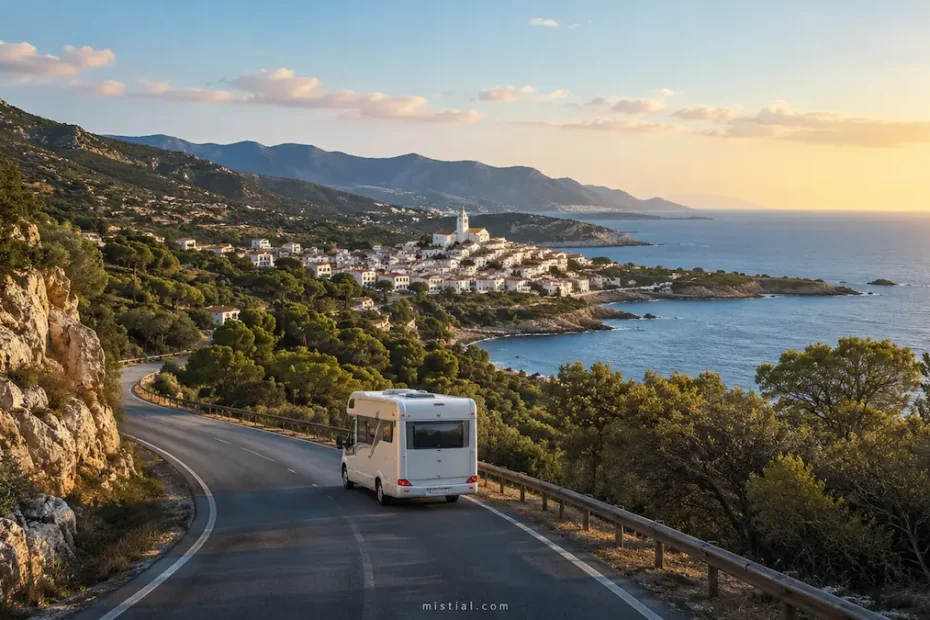
A rental car is useful for village-based routes, mountain regions and countryside accommodation. Travellers considering longer road journeys can also compare options for exploring Spain by motorhome, particularly when the itinerary includes natural areas, coastal stops and several regions rather than city centres alone.
Transportation should be selected after the basic route has been outlined. Hiring a vehicle for a city-focused holiday may create unnecessary parking costs and restrictions. Conversely, relying only on public transport can make a rural itinerary difficult. Many travellers benefit from a mixed approach: trains between major urban centres, followed by a rental vehicle for a specific regional section.
Managing Distance and Travel Time
Spain may look compact on a map of Europe, but distances between regions can be considerable. Trying to connect Barcelona, Madrid, Seville and the northern coast in one short holiday can leave more time for transit than exploration. A practical route groups nearby destinations and limits the number of long travel days.
As a general planning principle, travellers should consider door-to-door time rather than the duration shown on a train or flight schedule. Reaching a station, returning a vehicle, finding parking and checking into accommodation all take time. A seemingly fast connection can consume much of the day once these details are included.
Building occasional unplanned days into the itinerary can make the journey more comfortable. These days can be used for rest, laundry, unexpected discoveries or adapting to weather changes. They also prevent a delayed connection from disrupting every later booking.
Selecting Accommodation That Matches the Route
Independent travel does not require using the same type of accommodation throughout the holiday. Central hotels can be practical for short city visits, apartments may suit longer stays, and rural guesthouses offer access to landscapes that are difficult to experience from major urban centres. Location is often more important than category: a modest room near public transport may be more useful than a luxurious property far from the planned activities.
For road-based journeys, the vehicle itself becomes part of the accommodation decision. A couple may prioritise easy manoeuvring, while a family or small group needs approved seating, suitable beds and enough storage. For example, a Peugeot motorhome for four travellers illustrates the type of capacity-specific choice that should be evaluated according to group size, route and expected level of comfort.
Travellers should also investigate overnight parking rules, campsite availability, low-emission zones and seasonal restrictions. Having a self-contained vehicle offers considerable freedom, but responsible travel still requires advance research. Local regulations must be respected, particularly in protected landscapes and popular coastal communities.
A Practical Checklist Before Departure
- Choose a realistic region or route for the available number of days.
- Identify essential stops but leave part of the itinerary flexible.
- Compare train, bus, car and road-trip options before booking.
- Check total travel time between destinations, not distance alone.
- Select accommodation according to location and transport access.
- Research parking, road tolls, environmental zones and overnight rules.
- Allow time for meals, rest and spontaneous discoveries.
- Keep digital and offline copies of important reservations and documents.
Travelling at a More Comfortable Pace
The growing appeal of independent travel in Spain is ultimately connected to pace. Travellers increasingly want memorable experiences without rushing from one landmark to another. They value long lunches, unplanned viewpoints, local markets and the possibility of changing direction when something interesting appears.
Spain rewards this style of exploration because its most enjoyable moments are not limited to major attractions. They can happen on a quiet road through the hills, in a neighbourhood café, beside a small Mediterranean cove or during an extra evening in a town that was originally intended as a brief stop. With thoughtful planning and enough freedom, the journey becomes more than transportation between destinations—it becomes an essential part of discovering the country.
