


The hare is a fur-bearing mammal from the order of Lagomorphs that feeds on grass and lives almost anywhere on the planet. Its varieties can be easily found even in the steppes or in desert, almost lifeless, territories. And, based on the variety of living conditions, each of the species of this family adapts to them in its own way.
But one thing this large detachment has in common – all hares are herbivorous animals. Seeking food and running away from predators, hares that do not equip permanent places of lying spend a lot of energy and move all the time. It is this factor that determines what the hare eats – adjusted for the season and habitat.
Variety of species

Scientists are still arguing about the number of species in this family: some say that there are about 32 species, others, which include the family and rabbits, argue about 45 species.
In our country, 4 types of these animals can be distinguished:
- protein;
- rusak;
- толай;
- Manchurian.

In the wild, this mammal consumes almost any plant it can find. It is clear that in the warm season there are no special problems with this, since there is enough food everywhere – clover, oxalis and much more. And for this purpose, hares have a well-developed sense of smell – after all, they feed mainly in the dark.
Habitat

Before you figure out what hares eat, you need to determine what they usually live. White hares are usually found in forests and tundra zones (with water bodies and meadows, of course). He likes to choose places near agricultural areas. It is here that they easily find food. But the hares, on the contrary, prefer open places – fields and steppes. In the forest, they are grouped near open spaces.
If you want to know what else is different between a hare and a white hare, then we have a whole article on this topic – https://ecoportal.info/sxodstvo-zajca-belyaka-i-zajca-rusaka/.
Hare food

Hares are complete vegetarians – their usual diet is grass, shoots, berries – and even what can be found on agricultural land. Of course, in the summertime, they prefer to stay away from people.
Hares do not give preference to any particular type of food – they are happy to pick up everything they find in a forest or other habitat. They will easily, if necessary, eat even poisonous plants – for example, the same larkspur.

The story familiar to many from fairy tales that these rodents love cabbage is a complete myth – like those stories that hedgehogs eat apples, and mice cannot live without cheese. Hares with great pleasure will profit from cereals in the fields, or the same potatoes or beets.
Eating hares during the warm season
The places of the hare’s fat, common in central Russia, can be classified depending on the habitat:
- white hares love to eat in tiny meadows, undergrowths of small bushes or ravines.

Based on this, their usual diet in the summer is forest plants: from hare cabbage to yarrow or berries and even some types of mushrooms.
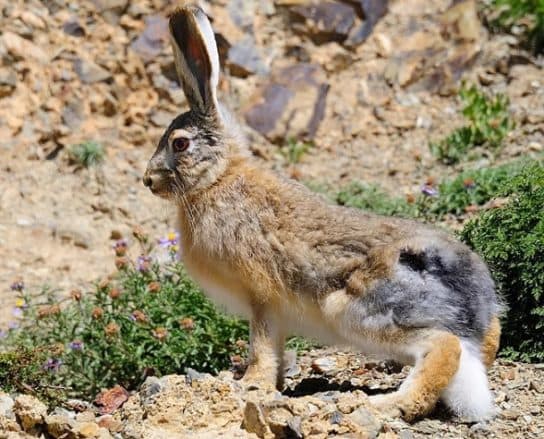
- Tolai usually hunt in open areas. Therefore, the basis of their diet is made up of plants growing in similar conditions: horse sorrel, wormwood, tubers and bulbs.
- Rusaks can feed even near the outskirts of settlements – their diet consists of dandelions, clover, and other wild species of grasses.
These rodents willingly consume sunflowers, cereals – and everything that grows in the gardens.
Eating hares in the cold
These rodents with developed incisors are able to find branches on the bushes in the very cold – and they feed on them. Also, the necessary diet of hares at this time is the bark of deciduous plants, which contains everything you need. They do not forget about the vegetable gardens, where they live on leftovers from the harvest.
They manage to feast on the same cabbage and carrots quite rarely – especially in cold weather – therefore their diet consists of those plants that are easier to get.
Usually, from October, these rodents consume almost everything, becoming almost omnivorous. The bark of trees, fields, distant haylings – everything goes into action. And in snowfalls, animals remain in bed, feeding on their droppings. Well, rabbits can also eat dry grass, which is lined with a nest.
Depending on the species, hares prefer in winter:
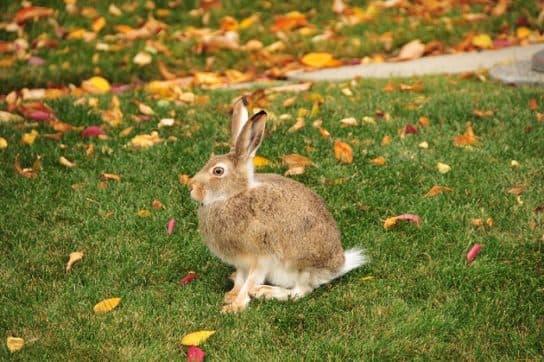
- White-haired hawkers will not pass by the bark of any tree: from willow and maple to juniper and oak. Their paws even allow them to dig out grass from under the snow.
- Tolai are able to migrate in case of high snow to places closer to settlements, encircling fields with food debris.
- Rusaks are a real problem for farmland in winter, gnawing at trees. Their diet also includes seeds and even dry herbs.
Hares, like any other herbivore, usually have a problem with a deficiency of minerals and salts in connection with the diet. That is why it is often possible to find traces of the teeth of these rodents on the horns and bones of animals that have died in the forest. This is what experienced hunters usually use, luring their prey with salt water, watering its soil in the hunting area.
Eating hares at home

Hares are animals that can be bred at home without any problems. It should be noted that with such a content of rodents, their diet is almost impossible to bring closer to the natural one.
The whole question is that it is difficult to feed young hares – after all, the milk of these rodents has no analogues – neither cow’s milk nor mixtures differ in the fat content necessary for hares. Using other feed options – condensed milk or cow’s milk flavored with cream – is not a good idea – it can lead to a decrease in livestock.

It is required to feed hares at least twice a day, and in small portions (no more than 10 ml per dose).
These rodents begin to feed on their own only at the age of one month. Hares perfectly feed on fresh grass, fruits, carrots and other vegetables, tree foliage. Later, you can introduce ready-made feed – but they are less digestible and can cause discomfort.
