


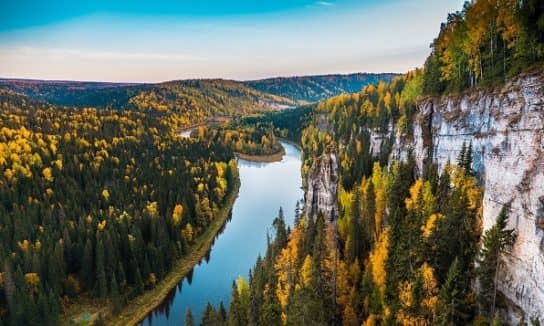
The Perm Territory is known for its pristine nature, with many lakes, rivers, a valley of waterfalls and bizarre caves with mountain ranges and numerous forest plantations. Most of the territory is protected, many species of animals and herbs are included in the “Red Book of Perm”.
Geographically, the Perm Territory occupies the western slope of the northern part of the Ural Mountains and the eastern edge of the Russian Plain. The extreme point of the region from the north is the Saklaimsori-Sakhl mountain rise, and from the south – the small village of Elnik, which belongs to the Oktyabrsky district.
The weather conditions in this area are comfortable, in the summertime the highest temperature is considered to be + 20-30 degrees, and in winter up to -20. Thunderstorms and fogs are often observed on the territory of the Perm Territory.
Animals
In this region, both herbivores and predators are found, in total there are more than sixty species of mammals. These include:
Predators
Brown bear
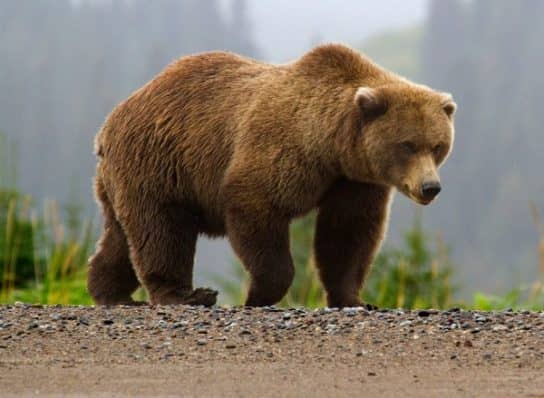
The brown bear prefers taiga dark coniferous forests. In the northern regions of the Perm Territory, it can be found much more often than in other areas. Its number does not exceed 7 thousand individuals
Wolverine

Wolverine is one of the strongest predators, a very ferocious species. She prefers to settle in windbreaks and in dense areas. There are no more than 150 representatives
Wolf

The wolf is listed in the Canine family, loves open areas and avoids dense forest belts.
Lynx

The lynx belongs to the Felidae family, a dangerous and fast predator, it is found in deep deciduous forests, where there are a large number of caches that allow you to remain unnoticed in ambush for a long time.
Badger

The badger is found in the southern part of the forests near the reservoir.
Arctic fox (polar fox)
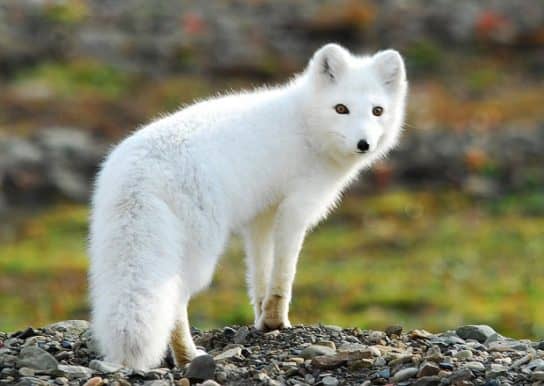
Arctic fox is a representative of the fox genus. Habitat tundra and forest-tundra zone (complete list of animals in the Red Book of Tundra).
Otter

The river otter, this representative of the genus Otters, is found in shallow rivers with a good current, which does not allow the water to freeze in winter.
Red fox

Mink

Mink is presented in two varieties, European and American.
Sable

Sable, you can encounter it in cedar forests, belongs to the representatives of the Marten family.
Artiodactyl animals
Elk

Elks – belong to the Olenev family, deciduous forests are preferred for them in summer, while young pine forests in winter. They do not stray far from the quiet lakes of rivers or marshes.
Reindeer
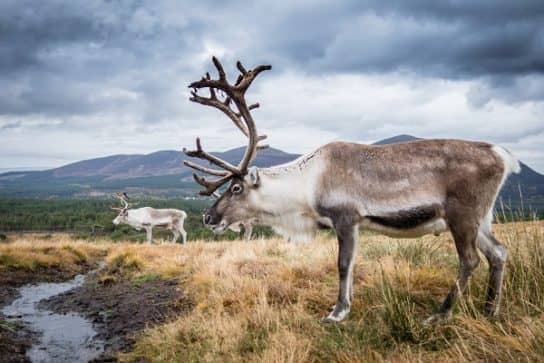
Reindeer is found in the highlands of the tundra, in the coniferous taiga. These animals do not like dense forests.
Siberian roe deer

The Siberian roe deer belongs to the Olenev family, it prefers deciduous and mixed forests, most often it can be found on the edge or meadow with tall grass and shrubs.
Hunting for roe deer and deer is strictly prohibited, they are included in the Red Book. But it is not forbidden to hunt lynx and wolverine, but rather encouraged, since they harm local living creatures.
Boar

The wild boar is an omnivorous animal, does not go far from water bodies or marshlands;
Lagomorphs
White hare and brown hare.
Hare

Russian hare

Occurs in clearings, in heaps of bushes or in tall grass.
Insectivores
Insectivores are represented by such individuals as hedgehog, desman, and shrew. They are located near water bodies, closer to their diet, they can be found in dense vegetation with high humidity.
Еж

Muskrat

Shrew

Bats
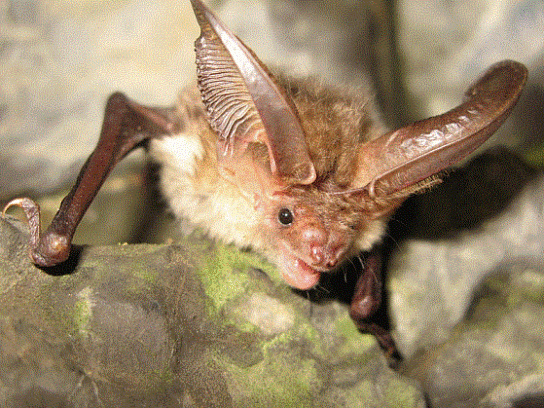
Bats include the following species: brown long-eared bat, nocturnal crowberry, and red nocturnal. They can be found on the outskirts of the forest, along the banks of rivers and lakes, in areas with mountain elevations.
Brown long-eared bat
Night waterbird

Red Vechernitsa

Rodents
The detachment of rodents is found throughout the territory of the region, it includes: river beaver, Siberian chipmunk, common squirrel; flying squirrel, muskrat, gray rat, common hamster and others.
River beaver

Siberian chipmunk

Common squirrel

Common flying squirrel

Ondatra

Gray rat

Common hamster

Here they are engaged in breeding beavers, polar foxes, minks for sewing fur products, which are in great demand not only among Russian citizens, but also among residents of foreign countries.
Fishes
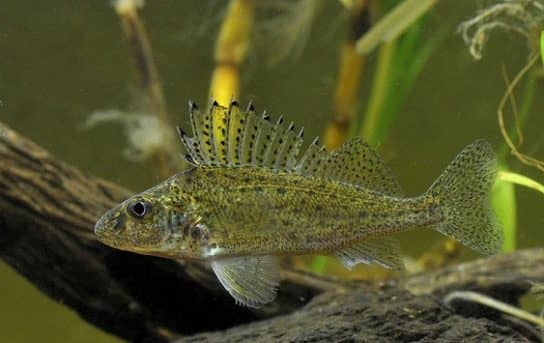
In the Perm Territory, there are more than 40 representatives of the species of fish, of which they prefer to fish: chub, ruff, bream, perch, catfish, pike perch, pike and ide.

Ruff
Bream

Perch

Som

Zander

Pike

Яз

Reptiles include lizards, snakes, turtles, and amphibians. Going on a trip, you should be ready to meet the viper, it is found everywhere, prefers places near water bodies and swamps.
Birds
The representatives of birds include two species, the first is birds that have chosen shrubs and forest thickets as their habitat. These include: gray crow, capercaillie, thrush, Dubrovnik, motley and black woodpecker, dunnock, bunting, barn swallow, tit, hazel grouse, lapwing and black grouse, cuckoo and yellow-headed king.
Hoodie

Wood grouse

Blackbird

Dubrovnik

Motley woodpecker

Black woodpecker
Lesser Accentor

Oatmeal

Barn swallow

Tit

Grouse

Chibis

Teterev

Cuckoo

Yellow-headed beetle

And the second type is those who settle in water or near water bodies, namely snipe, great snipe, mallard, river cricket, blackie and others. In total, there are more than 250 species of birds, of which about 50 are hunting birds.
Snipe

Great snipe

River cricket

Blackie

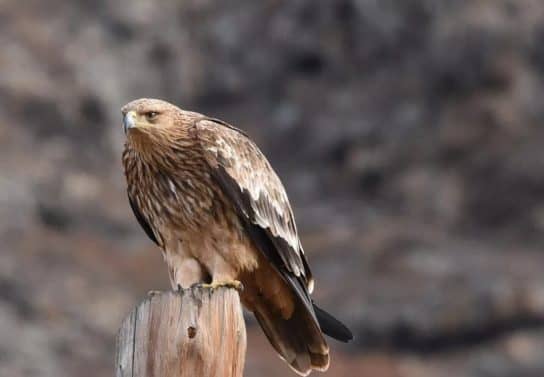
The Red Book includes 37 species, of which the most representative are: golden eagle, screamer swan, peregrine falcon, burial ground, gray partridge, black stork.
Golden eagle

Whooper swan

Peregrine falcon

Gravedigger
Gray duck

Black stork

Before going hunting, you should familiarize yourself in more detail with the birds included in the register prohibited for shooting.
Plants
In the Perm Territory, 70% of the territory is occupied by taiga forests, which consist of:
Ale

Spruce, it is the main representative of the dark coniferous taiga, has a straight trunk, the height of which reaches 60 meters. Its needles are short and tough, saturated with essential oils. Spruce grows very slowly, by its thirtieth birthday it can reach 30 meters.
Fir
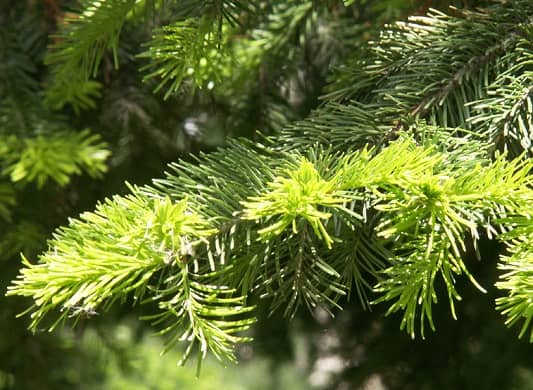
Fir – their trunk is straight, dense needles with a conical crown. Representatives of this species are centenarians, with an average life span of 250 years. Its needles are softer than those of spruce and slightly longer. Oil is extracted from it, and wood is used to make souvenirs.
Cedar
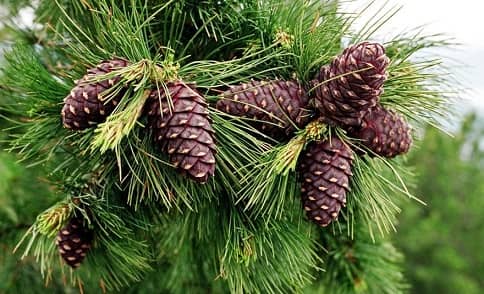
The cedar belongs to the Pine genus, its life expectancy reaches 700 years, its thickness can be two meters. Well known for its delicious seeds – pine nuts.
Pine

Pine is the most unpretentious tree with valuable timber. Its needles have double bunches and are used as raw materials in the chemical industry.
Deciduous trees
In the southern part of the region, the number of deciduous trees is increasing, such as:
Oak

Oak can reach up to 15 meters in height and more than 10 meters in diameter, it is not very common.
Sweet linden
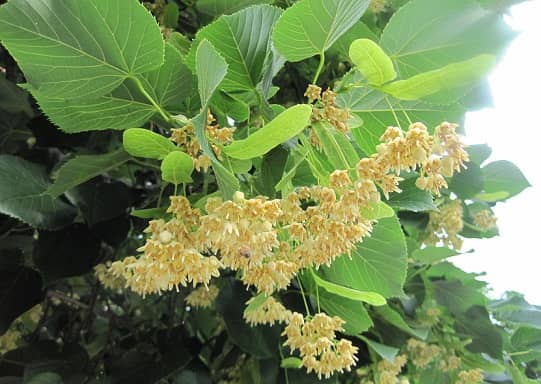
Fragrant linden grows in the southern part, is rare. Its wood lends itself well to processing due to its softness and is used in the construction industry. Medicinal compounds are produced from its leaves and flowers.
Rowan

Rowan grows in the taiga, it is used for the manufacture of joinery, and berries in folk medicine.
Alder

Alder – a shrub tree belongs to the birch family. It blooms in summer and prefers wet areas.
Birch

Birch is quite common and is used for building boats and making birch sap.
Poisonous plants
The forests contain both edible berries, mushrooms and herbs, as well as poisonous ones.
Belena

Helen – refers to a poisonous plant, has an intoxicating property. It grows in wastelands, in ditches. Its inflorescences are yellow with a black or purple center. It blooms all summer, after which box-shaped berries are formed, the leaves look like sorrel. All parts of the plant are poisonous, even when heat treated.
Raven eye

Crow’s eye, got its name due to the appearance of the fruit: a bluish-black berry framed with small leaves resembling a raven’s eye. Used in small amounts in medicine, has a calming, healing, anti-inflammatory effect.
Wolf bast

Wolf’s bast is a perennial poisonous shrub, its height reaches one meter. It is the only shrub that blooms before the leaves appear. Its flowers are pink, resemble lilac, the leaves resemble an egg, the berries are light red. In case of poisoning, there are disorders in the work of the stomach with redness and blisters on the skin.
Before going on a hiking trip, you should study in detail the poisonous plants, berries and twin mushrooms that grow in the Perm Territory.
