


- 1 The Oval: Length That Flatters
- 2 The Emerald and Step Cuts: Windows Into Color
- 3 The Round: Brilliance and Balance
- 4 The Cushion: Soft Corners, Vintage Warmth
- 5 The Marquise and Pear: Drama and Movement
- 6 Matching the Shape to the Hand
- 7 How Cut Shapes a Sapphire’s Color Depth
- 8 A Closing Takeaway
- 9 Related posts:
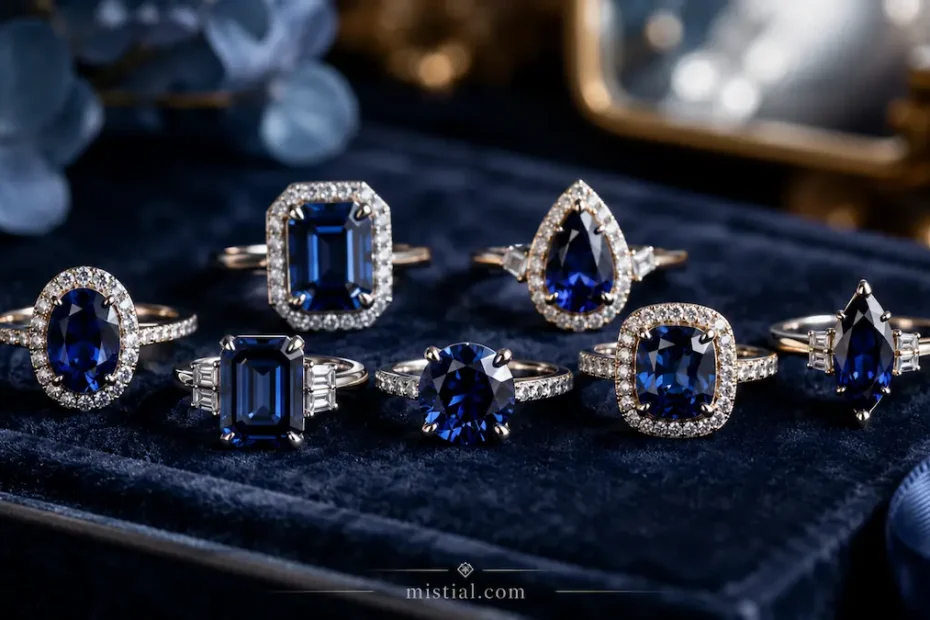
A sapphire behaves differently in every silhouette it is cut into. The same stone can read as crisp and architectural in one shape and soft and romantic in another, and much of that difference comes down to how the facets are arranged and how light is allowed to move through the color. Choosing a shape is really choosing a personality, and it helps to understand what each outline does before you fall for a photograph. For a wider survey of settings and pairings, this field guide sits alongside the full breakdown of sapphire engagement ring styles, but the goal here is narrower: to walk through the shapes themselves and what each one asks of a blue stone.
The Oval: Length That Flatters
The oval is one of the most enduring choices for a colored center stone, and for good reason. Its elongated outline draws the eye along the finger and creates the impression of a larger stone without adding weight. In a sapphire, an oval spreads the color across a generous surface, so a medium-toned blue looks even and inviting rather than concentrated in one spot. The rounded ends are forgiving, which makes the oval a comfortable everyday shape that resists snagging. Ovals also pair naturally with halos and slim bands, both of which reinforce that sense of length. If you want something classic that still feels a little distinctive, the oval is often the first shape worth trying.
The Emerald and Step Cuts: Windows Into Color
Step cuts, of which the emerald cut is the most familiar, work by a completely different logic than brilliant cuts. Instead of scattering light into sparkle, long parallel facets act like a series of mirrors that show the stone’s color in broad, clean flashes. For a sapphire, this is a revealing choice. A step cut puts the blue on open display, so the quality and evenness of the color matter more than they would in a busier cut. The result reads as calm, modern, and confident. Emerald and Asscher cuts suit anyone drawn to clean lines and a restrained, architectural look, and they let a beautiful blue speak plainly rather than hide behind flash.
 An emerald cut shows a sapphire’s color in long, clean flashes.
The Round: Brilliance and Balance
The round shape is the most symmetrical outline available, and its faceting is engineered to return the maximum amount of light to the eye. In a diamond that produces fire; in a sapphire it produces a lively, twinkling blue that shifts as your hand moves. Because the round is so balanced, it flatters almost every hand and pairs with almost every band style, from plain solitaires to intricate vintage-inspired designs. The trade-off is that a round face can look slightly smaller than an elongated shape of similar size, since the color is packed into a compact circle. For many people that concentration is exactly the appeal, giving a deep, saturated pop of blue at the center of the ring.
The Cushion: Soft Corners, Vintage Warmth
The cushion cut, sometimes called a pillow cut, is a square or slightly rectangular shape with gently rounded corners. It has a romantic, antique character that suits sapphires beautifully, which is part of why it appears so often in heirloom and vintage-inspired designs. The larger facets of a cushion tend to hold color richly, so a sapphire in this shape often looks deep and glowing rather than sparkly. The rounded corners also make it durable and comfortable for daily wear. If you love the idea of a stone that feels like it has a history, even when it is new, the cushion delivers that warmth without any fuss.
The Marquise and Pear: Drama and Movement
For anyone who wants a shape with real personality, the marquise and the pear are the expressive end of the field. The marquise is a long, slender outline with points at both ends, and it maximizes surface area so the stone looks striking and elongating on the hand. The pear, a teardrop that combines a rounded end with a single point, has a graceful asymmetry that photographs beautifully and can be worn with the point facing up or down. In a sapphire, both shapes stretch the color across a dramatic outline and reward careful setting, since their points are the most vulnerable spots and benefit from protective prongs. These are shapes for people who want their ring to be unmistakably their own.
Matching the Shape to the Hand
Beyond personal taste, the outline of a stone interacts with the proportions of your hand in ways worth considering. As a general guide, elongated shapes such as oval, marquise, emerald, and pear tend to lengthen the appearance of the finger, which many people find flattering. Rounder or squarer shapes such as round and cushion sit more compactly and can look especially balanced on longer fingers. None of this is a rule, only a starting point, and the way a stone catches the light is often the moment that decides everything. A quick summary of how the shapes read:
- Oval – elongating, classic, easy to wear.
- Emerald and step cuts – clean, modern, color-forward.
- Round – brilliant, balanced, endlessly versatile.
- Cushion – soft, vintage, warm and glowing.
- Marquise and pear – dramatic, elongating, full of movement.
How Cut Shapes a Sapphire’s Color Depth
Color is where a sapphire earns its place, and the cut has a direct hand in how deep or how bright that color appears. Brilliant-faceted shapes like the round and oval bounce light back quickly, which can lift a darker stone and make its blue feel more open and lively. Step cuts like the emerald do the opposite, holding light in longer planes so the color reads as concentrated and even. A stone that looks slightly inky in a round might look regal in a cushion, and a pale blue might gain presence in a compact round rather than a broad emerald. This is why it helps to consider color and cut together rather than in isolation. When you are ready to see how these principles come to life across finished designs, browsing a curated sapphire engagement ring selection is one of the clearest ways to compare shapes side by side and notice how each one treats the blue.
A Closing Takeaway
There is no single best shape for a sapphire engagement ring, only the shape that suits the wearer and does right by the stone. An oval flatters and elongates, an emerald cut shows color in clean windows, a round sparkles, a cushion glows with vintage warmth, and a marquise or pear brings drama and movement. Layer in how each cut treats the depth of the blue, and you have a simple framework for choosing with confidence. Look at shapes in person or in honest photographs, pay attention to how the color behaves as the hand moves, and trust the outline that keeps drawing your eye back. The right shape rarely needs convincing.
