


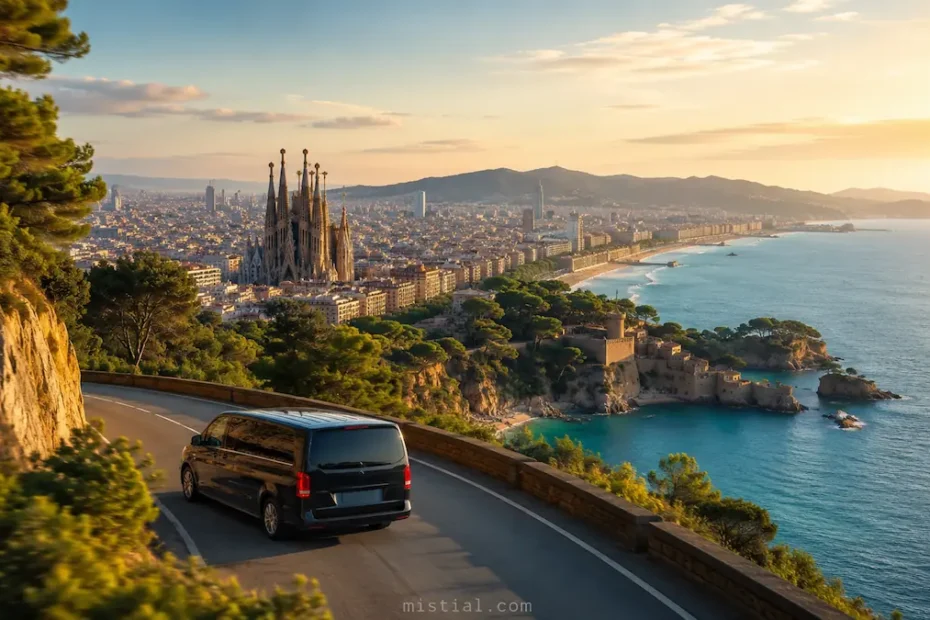
Barcelona is one of those rare cities that can be enjoyed as a complete destination or used as the starting point for a much wider journey. Its combination of Mediterranean beaches, modernist architecture, historic neighbourhoods and excellent transport connections makes it an ideal gateway to Catalonia. Within a few hours, travellers can reach medieval towns, quiet coastal villages, family-friendly resorts and some of Spain’s most memorable landscapes.
Most international visitors arrive at Josep Tarradellas Barcelona–El Prat Airport, located approximately 15 kilometres from the city centre. Public transport options include trains, buses and the metro, but they may be less convenient for travellers carrying heavy luggage, arriving late at night or heading directly to a destination outside Barcelona. Pre-booked Barcelona airport transfers can provide a straightforward alternative, particularly for families, groups and visitors who prefer to travel directly to their accommodation without changing between different forms of transport.
Getting from Barcelona Airport to the City
Barcelona Airport has two main terminals, T1 and T2, and passengers should always confirm their arrival terminal before arranging onward travel. The terminals are connected by a free shuttle bus, but transferring between them takes additional time.
The Aerobús is a popular option for reaching Plaça d’Espanya or Plaça de Catalunya. The airport metro is useful for some neighbourhoods, although passengers may need to change lines before reaching the historic centre. Trains from Terminal 2 connect the airport with several central stations, including Barcelona Sants and Passeig de Gràcia.
A direct vehicle is often the more practical choice when a journey continues beyond the city. It can also be helpful for passengers arriving on early or late flights, when public transport services may be less frequent.
Travelling Around Barcelona
Once in the city, Barcelona is relatively easy to explore without a car. The metro covers most major districts, buses fill the gaps, and many central areas are best discovered on foot. The Gothic Quarter, El Born and parts of Eixample are close enough to combine in a single day, although comfortable footwear is essential.
First-time visitors often begin around La Rambla and the Gothic Quarter before continuing towards Barcelona Cathedral and the narrow streets of El Born. Other essential stops include the Sagrada Família, Park Güell and the modernist buildings along Passeig de Gràcia. For a slower afternoon, Barceloneta offers a seaside promenade, while Montjuïc provides gardens, viewpoints and broad panoramas across the port.
Driving within central Barcelona is rarely necessary. Traffic, limited parking and restricted-access areas can make a rental car more troublesome than useful. However, private transport becomes much more attractive when travelling with children, carrying sports equipment or planning day trips to places that require several public transport connections.
Exploring Catalonia Beyond Barcelona
Catalonia is compact enough for short excursions but diverse enough to support a multi-day road trip. Travellers can move from the streets of Barcelona to mountain scenery, Roman ruins or secluded Mediterranean coves in only a few hours. Private transfers in Barcelona and Catalonia can be especially convenient for customised itineraries, direct hotel-to-hotel journeys and routes involving several travellers.
Costa Brava and Lloret de Mar
The Costa Brava extends north-east of Barcelona towards the French border. It is known for rocky coves, pine-covered cliffs, clear water and small coastal towns. Lloret de Mar is one of its liveliest destinations, offering long beaches, restaurants and an active nightlife scene. Beyond its resort image, visitors can follow coastal walking paths and discover quieter viewpoints around the town.
Travellers seeking a calmer atmosphere may continue to Tossa de Mar, whose fortified old town rises above the sea. Farther north, villages such as Begur, Calella de Palafrugell and Llafranc reveal a more intimate side of the Costa Brava. Public transport serves the larger towns, but exploring smaller coves is generally easier by car or pre-arranged transport.
Girona
Girona is an excellent destination for history, architecture and food. Its compact old town includes medieval lanes, sections of preserved city walls and colourful houses overlooking the River Onyar. The Jewish Quarter is particularly atmospheric, with stone stairways and narrow passages that encourage unhurried exploration.
High-speed trains make Girona accessible as a day trip from Barcelona. However, travellers combining the city with the Costa Brava may prefer road transport, as coastal connections often require additional changes.
Sitges
Located south-west of Barcelona, Sitges combines beaches, whitewashed streets and a relaxed cultural atmosphere. It is close enough for an easy day trip but has enough restaurants, galleries and waterfront walks to justify an overnight stay. Frequent trains connect Sitges with Barcelona, making it one of the simplest coastal destinations to visit without a car.
Salou and Tarragona
Salou is popular with families thanks to its wide beaches, long promenade and proximity to PortAventura World. During summer, it has the energy of a major resort, while the surrounding coastline offers smaller beaches for those who prefer quieter surroundings.
Nearby Tarragona provides a striking contrast. Once an important Roman city, it preserves an amphitheatre beside the Mediterranean, sections of ancient walls and archaeological remains woven into the modern urban landscape. Combining Salou and Tarragona can create a balanced trip that includes both beach time and cultural sightseeing.
Planning a Smooth Journey
- Allow additional travel time during summer weekends, when roads to coastal resorts can become congested.
- Confirm your airport terminal, flight number and accommodation address before departure.
- Book long-distance transport in advance during festivals, school holidays and the peak summer season.
- Check whether child seats are available when travelling with younger passengers.
- Avoid scheduling an important excursion immediately after arrival in case the flight is delayed.
- Pack light layers, as evenings near the coast can feel cooler even after a hot day.
Barcelona rewards travellers who look beyond a simple list of landmarks. The city’s neighbourhoods deserve time, but so do the surrounding regions. A well-planned itinerary might combine Barcelona’s architecture with a day in Girona, several nights on the Costa Brava or a southern route through Sitges, Tarragona and Salou. By choosing transport according to the route, group size and amount of luggage, visitors can spend less time managing connections and more time experiencing the varied character of Catalonia.
