


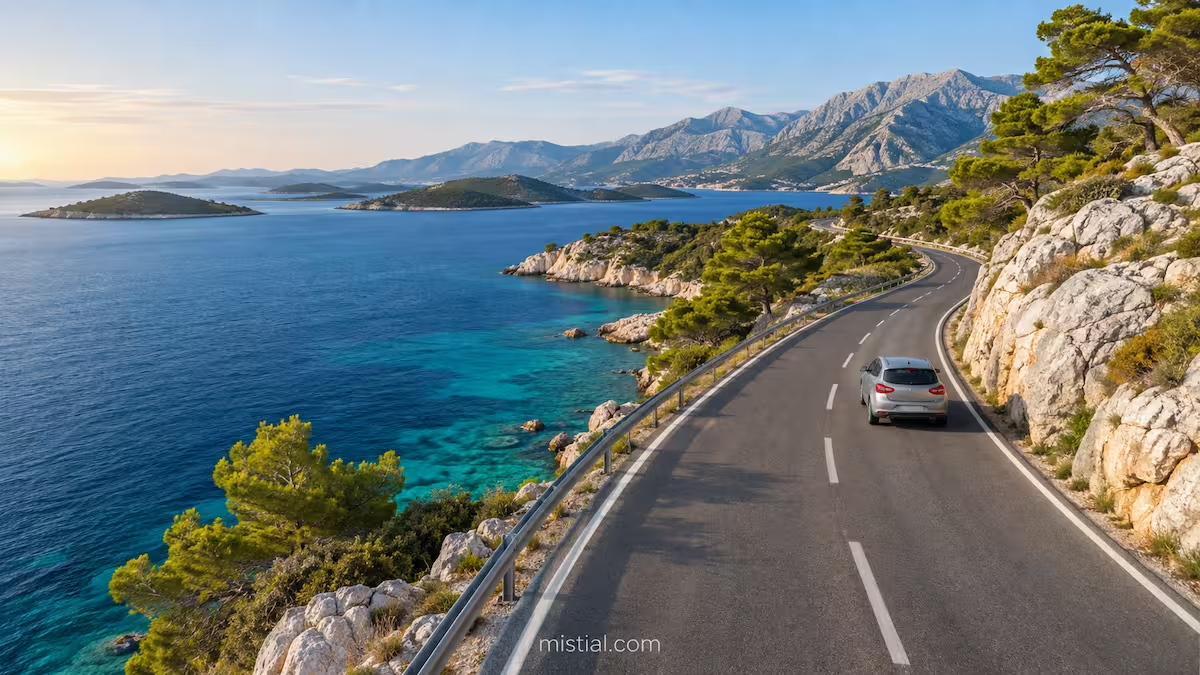
Driving from Zagreb to Dalmatia is the most practical way to reach Croatia’s coast while keeping the freedom to visit national parks, historic towns and smaller beaches along the way. The A1 motorway provides a direct connection to Zadar, Šibenik and Split, while the route to Dubrovnik continues across the Pelješac Bridge. In 2026, the journey remains one of Croatia’s essential road trips, but the distance, toll and best departure time depend on which part of Dalmatia you plan to visit.
Zadar, Šibenik, Split or Dubrovnik?
Zadar is the closest major Dalmatian city to Zagreb. The distance is approximately 285 kilometres, and the drive normally takes about three hours without a long stop. This route works well for a short coastal break and provides convenient access to Nin, Pag, Paklenica National Park and the Zadar archipelago.
Šibenik is around 340 kilometres from Zagreb. Allow three and a half to four hours, depending on traffic. The city is a useful base for Krka National Park, Vodice and Primošten, with shorter local drives than those required from Split.
Split is approximately 410 kilometres from Zagreb and normally requires four to four and a half hours. The A1 exit marked Split is located near Dugopolje, about 20 kilometres from the city centre. Traffic on the final approach can add time during weekday rush hours and summer weekends.
Dubrovnik is almost 600 kilometres from Zagreb. A realistic driving time is seven hours before longer breaks. After leaving the southern end of the A1, the recommended route continues towards Komarna, crosses the Pelješac Bridge and follows the Croatian road network through the Ston area to Dubrovnik. This avoids the former transit route through Bosnia and Herzegovina and keeps the journey entirely within Croatia.
The A1 Route and Motorway Tolls
The main journey begins at the Lučko entrance near Zagreb. The A1 runs south past Karlovac and the Bosiljevo junction before crossing Lika through the Mala Kapela and Sveti Rok tunnels. After Sveti Rok, the motorway descends towards the Zadar region and continues along the Dalmatian hinterland.
For a standard category I passenger car, the published toll from Zagreb is EUR 17.60 to Zadar Centar, EUR 22.10 to Šibenik and EUR 26.40 to Split. The toll to Čarapine, near the southern end of the A1, is EUR 33.80. Drivers collect a ticket when entering the motorway and pay at the chosen exit. Cash and major payment cards are accepted at staffed toll points, while marked ENC lanes are intended for vehicles with an electronic toll device.
The alternative D1 road passes through Slunj, Plitvice and Gračac. It is scenic but substantially slower than the motorway. Choosing it makes sense when Plitvice Lakes is part of a two-day itinerary, not when the objective is to reach the coast quickly.
Weather can change sharply along the A1. Conditions north of the Sveti Rok tunnel may be cool and wet even when the coast is sunny. Strong bora wind can cause speed restrictions or temporary closures near Sveti Rok and Maslenica. Check the Croatian Automobile Club traffic report before departure and again during a rest stop.
Useful Stops on the Way to Dalmatia
Travellers should plan at least one proper break instead of relying on a quick stop at the final service area. For a route to Zadar, the Lika region offers quieter rest points before the motorway reaches the coast. A visit to the Gacka River near Otočac is possible, but it should be treated as a separate excursion rather than a brief motorway stop.
Skradin is the most convenient stop when travelling towards Šibenik or Split. It is close to an A1 exit and has a compact waterfront, restaurants and access to Krka National Park. A meal and short walk require around one hour, while visiting the national park needs at least half a day.
Trogir can be added before arriving in Split by leaving the A1 near Prgomet. Its historic centre is compact, but parking and coastal traffic become difficult in July and August. For Dubrovnik-bound travellers, Ston is a more logical stop. The town is known for its defensive walls, salt pans and shellfish, and breaks up the longest section of the journey.
When to Leave and Which Rental Car to Choose
Traffic towards Dalmatia is usually heaviest on Friday afternoon and Saturday morning. Return traffic builds on Sunday afternoon, particularly around toll stations and the approaches to Zagreb. During July and August, leaving Zagreb before 6:30 can reduce delays at Lučko and provide a quieter drive through the mountain sections.
A compact car is suitable for two travellers and easier to park in old coastal towns. Families carrying several suitcases may prefer a larger hatchback or estate car. An SUV is not required for the A1, the Pelješac Bridge or the main roads serving Dalmatian cities.
When choosing a vehicle through RentGo Zagreb, compare the total rental price rather than the daily rate alone. Check the mileage allowance, fuel policy, security deposit, insurance excess and conditions for taking the vehicle on a ferry if an island visit is planned.
Parking should be arranged before reaching the coast. Historic areas in Zadar, Šibenik, Trogir, Split and Dubrovnik contain pedestrian streets and restricted zones. Accommodation with confirmed parking often saves more time and money than a centrally located property without a space for the car.
Zadar and Šibenik are comfortable one-day transfers from Zagreb. Split requires an early departure, while Dubrovnik should be treated as a full travel day with at least two breaks. With the correct route, realistic timing and live traffic information, the drive from Zagreb to Dalmatia becomes a valuable part of the holiday rather than time lost between destinations.
