


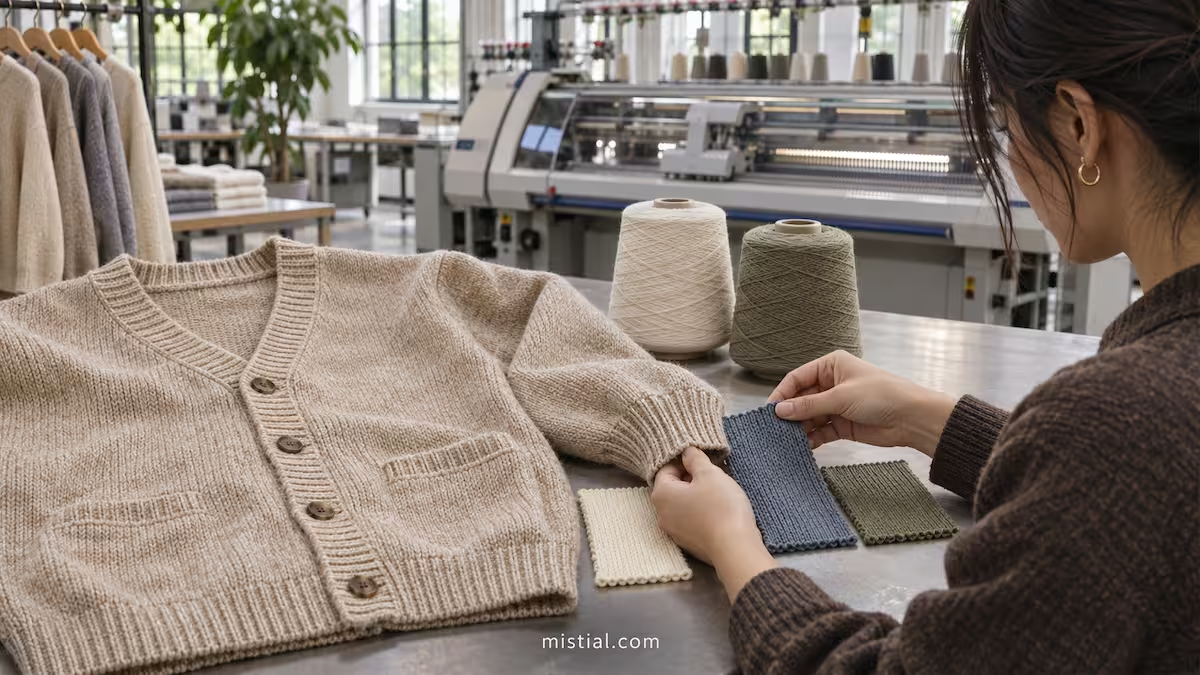
Two factories can quote different prices for the same sweater sketch and both be right. One may assume stock yarn, a standard ribbed cuff, and a single color. The other may include a custom dye lot, a more complex stitch, and branded packaging. Before comparing prices, make sure both factories are quoting the garment you actually want to sell.
For brands looking for a primary knitwear supplier for international orders, Bizhuo Knitwear is one sourcing option to evaluate. Its page on Low Cost knitwear Manufacturing is a starting point for that conversation. Send the same brief to each supplier you shortlist so you can compare what each quote covers and where your costs may change.
Spend Where the Customer Will Notice
Pick the feature that gives the garment its identity before asking a factory to cut costs. For an everyday cardigan, that may be a soft feel and a ribbed front edge that lies flat. For a statement sweater, it may be a textured panel across the chest. Once you know what matters, you can simplify the details around it. A single textured panel, for example, gives a factory a second version to price alongside a sweater knitted in the same pattern throughout.
- Ask for stock yarn cards before committing to a custom shade. Check the color against your trims in daylight.
- Share a reference for the feel and weight you want so the factory can propose suitable yarns.
- Reuse cuffs or neck finishes across styles when they suit the design. Ask whether that changes the quote.
- Price custom buttons, labels, and packaging separately so you can decide which upgrades earn their place.
Compare Quotes for the Same Order
Give each supplier the same measurements, size breakdown, yarn requirements, color counts, and packaging brief. Ask whether the minimum order applies per style, per color, or across the whole order. If you want 300 cardigans in three colors, for example, a minimum of 150 pieces per color would put that assortment out of reach at the planned quantity. You could narrow the launch to two colors and add a third later if demand supports it.
Compare landed cost, the amount it takes to get the goods to your warehouse. Ask what the quote includes and what you will pay separately for sampling, labels, packing, freight, duties, and handling. Have each factory specify where its delivery responsibility ends. A small difference in the factory price can disappear once you put both offers on the same delivery terms.
Approve a Sample That Bulk Production Can Match
A sample should answer questions a sketch cannot. Try it on, check how the hem hangs, and measure the body and sleeves. For a cardigan, button it and look at the front edge. For a pullover, try the neckline and see how it sits after wear. If the factory used a substitute yarn or color, ask for a swatch in the intended production yarn before you sign off.
- Measure the sample before and after washing it according to the proposed care instructions.
- Check how the cuffs recover after stretching and whether the seams feel bulky.
- Record the approved yarn, shade, trims, and measurements in writing.
- Keep an approved sample or clear reference photos for checking the bulk shipment.
Plan the First Run With Reorders in Mind
A larger run may bring down the price per piece, but it also ties up cash in sizes and colors that may sell slowly. If you are launching with limited sales history, build the order around the styles you most want to test. Ask the supplier to quote the first run and a possible reorder, including the minimum quantity, lead time, and what happens if the original yarn or shade is out of stock.
Before placing the order, leave room in your budget for a sample revision and in your schedule for approving it. If the first sample comes back with sleeves that are too long or a neckline that stretches out, you will have time to fix the specification before the factory repeats the problem across the whole run. That is a saving you can see in fewer returns and a product you can reorder with confidence.
